
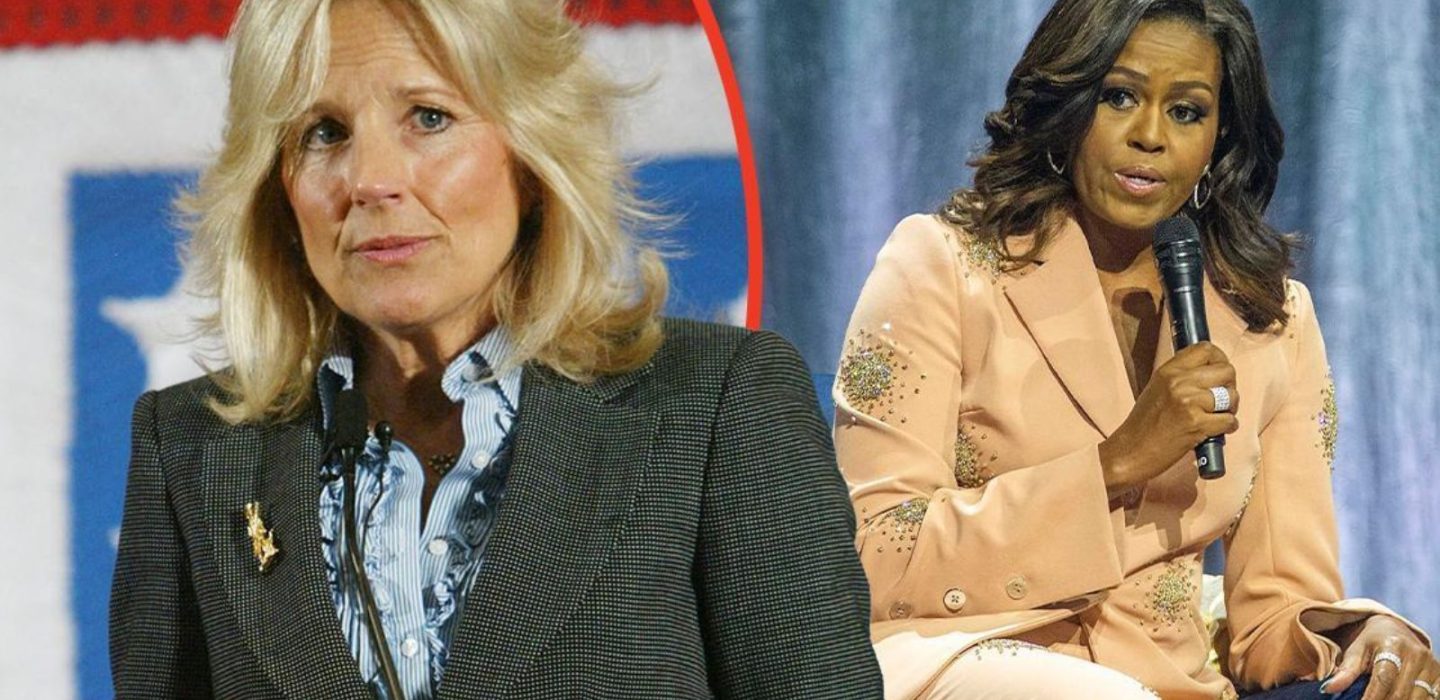

Jill Biden’s new memoir has reopened an old, deeply personal moment from the 2008 presidential campaign, and it is not the kind of story people usually expect from Washington. It is not about a policy fight, a campaign strategy, or a public insult. It is about grief, family, and the uncomfortable reality that even a funeral can become political when the people involved are famous enough.
According to the account shared from Jill Biden’s memoir, View from the East Wing, the former first lady recalled asking Michelle Obama not to attend the funeral of her mother, Bonny Jacobs. At the time, Barack Obama and Joe Biden were running together on the Democratic presidential ticket, and Michelle Obama was already one of the most watched women in American politics.
The decision sounds cold at first glance. A future first lady offers comfort, and Jill Biden tells her not to come. But the deeper story is not as simple as a headline about rejection or rivalry.
A Funeral Jill Biden Wanted to Keep Private

Jill Biden’s mother died just weeks before the 2008 presidential election, at a moment when the Obama Biden campaign was moving at full speed. The country was watching every public appearance, every family moment, and every sign of unity from the Democratic ticket.
That is exactly what Jill Biden feared.
In her telling, Michelle Obama called from the campaign trail after Bonny Jacobs’ death was announced. Michelle offered condolences and indicated that she planned to attend the funeral. For many families, that kind of gesture would have been received without hesitation.
But Jill Biden saw a problem that only people living inside a national campaign might fully understand. Michelle Obama’s presence would not have been ordinary. Reporters could have followed. Cameras could have gathered. The funeral could have shifted from a family farewell into a political moment.
Why Jill Biden Said No
Jill Biden explained that she had four sisters who were also grieving the loss of their mother. Her concern was that Michelle Obama’s attendance would pull attention away from the women who had just lost the center of their family.
That is the emotional heart of the story. Jill Biden was not only thinking as a political spouse. She was thinking as a daughter and a sister.
She reportedly told Michelle that the funeral needed to be about her sisters losing their mother, not about Jill Biden’s role in a historic campaign. The fear was not that Michelle would intentionally cause distraction. The fear was that the media would not be able to resist turning her presence into a spectacle.
In that sense, Jill Biden’s decision was less about shutting Michelle Obama out and more about protecting a fragile family moment from the machinery of politics.
Michelle Obama’s Response Matters

The most telling detail may be Michelle Obama’s reaction. According to Jill Biden’s account, Michelle understood immediately.
That detail changes the tone of the story. It suggests that this was not a feud, not a chilly power move, and not a hidden sign of bad blood between the two women. It was a difficult boundary set during a painful time, and Michelle Obama accepted it.
That kind of understanding is important because public life often turns private choices into public drama. In another version of the story, people might read the decision as disrespect. But Jill Biden presents it as an honest conversation between two women who understood how intense the campaign spotlight had become.
A Small Moment with a Bigger Message
The story also reveals something larger about American politics. Families of candidates do not just lose privacy on debate stages or at rallies. They can lose it in hospitals, churches, homes, and funeral rooms.
For Jill Biden, the death of her mother happened during one of the most public periods of her life. Joe Biden had joined Barack Obama’s ticket, and the campaign was nearing its final stretch. Every appearance had meaning. Every gesture could become a headline. That is why the funeral decision carries emotional weight. It shows how public life can invade the most private corners of a family’s grief.
Most people can mourn without considering whether a major political figure’s arrival will bring cameras. Jill Biden could not. Her family’s pain existed inside a campaign season, and she made a choice to keep that pain from being swallowed by the news cycle.
The Memoir Is Drawing Attention for More Than One Reason
While the Michelle Obama funeral story is striking, it is not the only part of Jill Biden’s memoir attracting attention. Much of the wider discussion around View from the East Wing has focused on Jill Biden’s defense of Joe Biden during his presidency and the intense scrutiny of his health during the 2024 election cycle.
The book reportedly addresses the difficult period surrounding Joe Biden’s re election effort, including the disastrous June 2024 debate against Donald Trump. Jill Biden has said she had never seen her husband appear the way he did that night, and the moment became one of the turning points in the national conversation about his fitness to continue campaigning.
That part of the memoir has sparked sharper criticism than the Michelle Obama funeral anecdote. Some commentators have accused Jill Biden of leaving out too much or defending too much. Others see the book as a personal account from someone who lived through years of pressure, grief, loyalty, and public judgment.
Why This Story Is Getting Attention Now
The Michelle Obama funeral story stands out because it is emotionally clear. It does not require readers to choose a political side. Anyone who has buried a parent can understand why a daughter might want the day to remain focused on family.
At the same time, the story has a built-in tension that makes people stop reading. Michelle Obama is one of the most recognizable women in America. Jill Biden later became first lady herself. The idea that one future first lady asked another future first lady not to attend a funeral sounds dramatic even before the explanation arrives.
But the explanation is what gives the story its meaning.
Jill Biden was protecting her sisters from being pushed into the background of their own mother’s funeral. Michelle Obama, by Jill’s account, understood that immediately. The result is a rare Washington story where the most powerful detail is not conflict, but restraint.
A Reminder That Grief Does Not Pause for Campaigns
Political campaigns are built around movement. There is always another city, another speech, another interview, another camera waiting. Grief works differently. It demands stillness, privacy, and space.
Jill Biden’s account shows what happens when those two worlds collide. Her mother’s death came at a time when the Biden family was being pulled deeper into national history. But in that moment, Jill Biden wanted to be something simpler and more human than a candidate’s wife.
She wanted to be a daughter.
That is why the story lingers. It is not really about whether Michelle Obama was allowed into a funeral. It is about how fame can make even kindness complicated, and how one grieving woman decided that her family’s goodbye mattered more than the optics of a campaign.


