

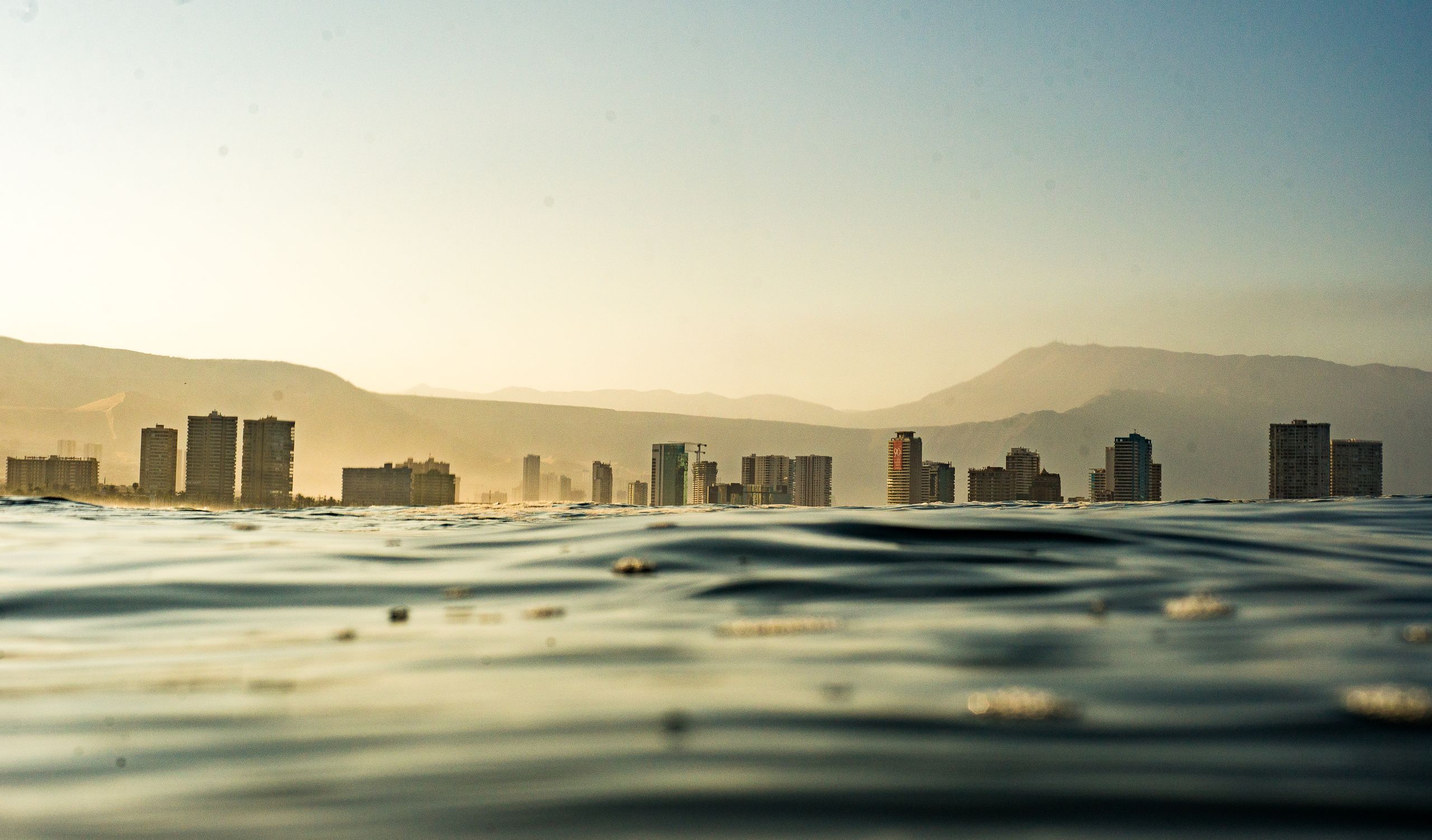
The ground beneath your feet is not as permanent as it feels. Right now, in cities across the world, the earth is giving way, not dramatically, not all at once, but consistently, measurably, and in some cases with terrifying speed.
Buildings tilt. Roads crack and buckle without explanation. Flood zones expand year after year even without new storms. Subway tunnels shift. Ancient monuments lean at angles their builders never intended.
This is urban subsidence, the slow, largely invisible sinking of cities into the ground beneath them, and it is one of the most underreported environmental crises of the century.
It is caused by a combination of natural geology and human choices: pulling too much water out of the ground, building too much too fast on soil that was never meant to carry the weight, and draining the wetlands and deltaic sediment that once cushioned the foundations of entire metropolises.
Here are eight cities where it is already happening, and what it actually looks like on the ground.
Jakarta, Indonesia
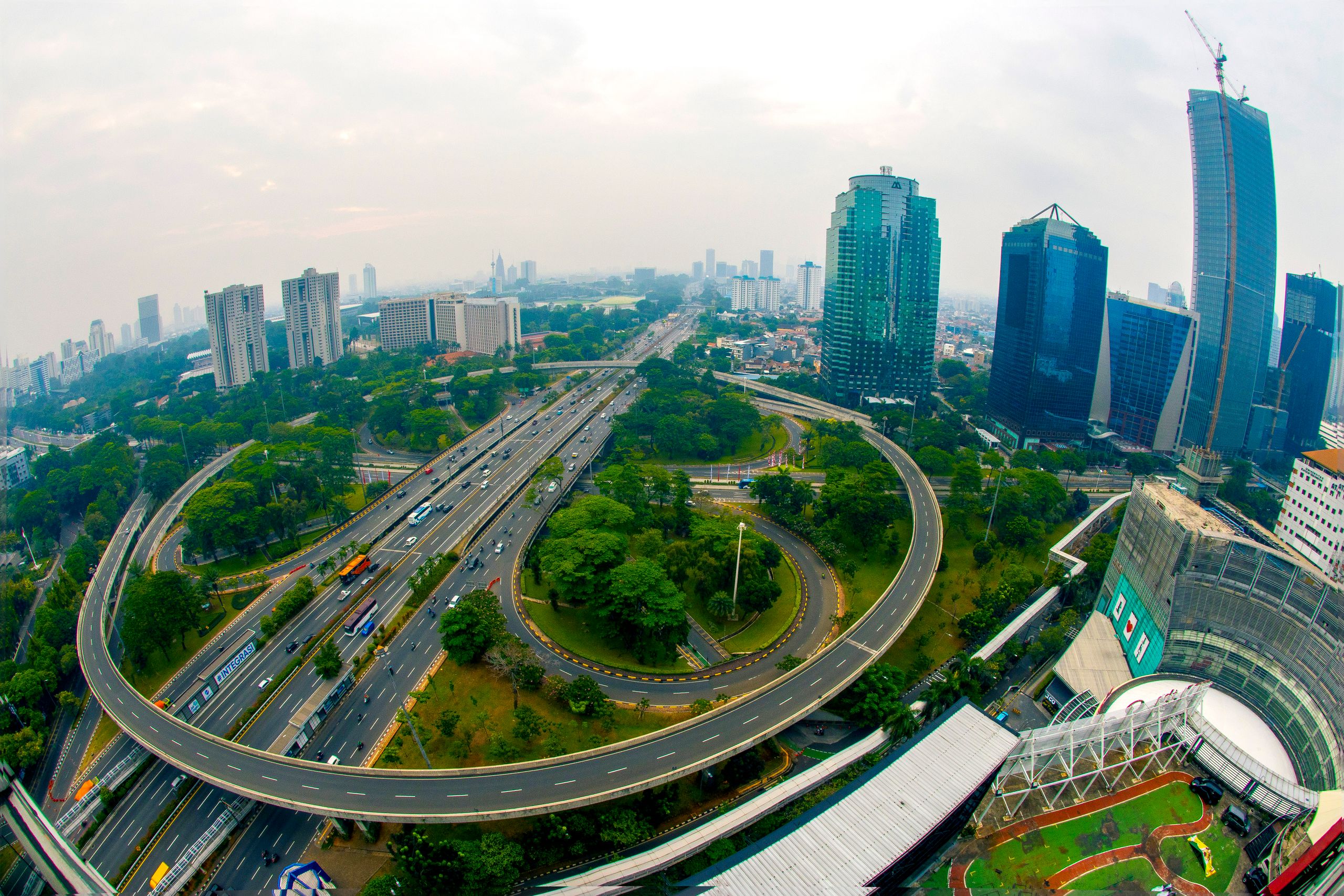
Jakarta is the most urgent subsidence story on the planet, and the numbers are not subtle. Parts of North Jakarta have sunk more than 2.5 meters over the past three decades.
Some areas are dropping at a rate of 25 centimeters per year. The city, built on soft coastal sediment and a network of rivers, was never geologically suited for the megacity of over ten million people that grew on top of it.
The primary driver is groundwater extraction. Jakarta’s piped water infrastructure has historically served only a fraction of its population, which means millions of residents and businesses have relied on private wells drilled directly into underground aquifers.
As water is pumped out, the soil above compresses to fill the space, and the city descends.
The consequences are severe enough that Indonesia announced plans to relocate its capital entirely to the island of Borneo, a project called Nusantara that is currently underway.
Jakarta is not being abandoned, but the decision to move the capital is, in part, an acknowledgment that the ground beneath the existing one is losing the argument.
Mexico City, Mexico
Mexico City was built on a catastrophic geological misunderstanding. When Spanish colonizers conquered the Aztec capital of Tenochtitlán in 1521, they inherited a city built on an island in the middle of Lake Texcoco, a feat of engineering that worked brilliantly in its original form.
The colonizers drained the lake. The city they built on the exposed lakebed is now paying for that decision five centuries later.
The clay beneath Mexico City is extraordinarily compressible, when water is extracted from the aquifer below, it compresses like a sponge being squeezed, and the city above descends with it. Some areas of the city have sunk more than 10 meters over the past century.
The sinking is not uniform, which creates its own problems: different parts of the city descend at different rates, warping roads, cracking building foundations, and causing the kind of structural stress that makes engineers lose sleep.
The Metropolitan Cathedral in the city center has sunk so unevenly that engineers spent years carefully excavating soil from beneath certain sections to level it out.
The building is, in a very literal sense, being jacked up from below while the city around it continues to descend.
Tehran, Iran

Tehran is not a city most people associate with geological crisis, but it is sinking at some of the fastest rates measured anywhere in the world, up to 25 centimeters per year in certain districts, according to satellite data.
The cause is straightforward and brutal: water scarcity. Tehran sits in a semi-arid region with limited surface water, and the city of nearly ten million people has long depended on groundwater to meet demand that far exceeds natural replenishment rates.
The aquifers are being emptied faster than rainfall can refill them, and the ground above is collapsing into the void.
The subsidence is not evenly distributed, which creates fault-like boundaries between areas sinking at different rates, boundaries along which roads crack, pipes rupture, and buildings develop the kind of structural damage that does not get cheaper to fix over time. Iran’s water crisis and its urban stability crisis are, at root, the same crisis.
Venice, Italy
Venice has been managing its sinking problem for centuries, which gives it a certain grim expertise that other cities on this list have not yet developed.
The city is built on wooden piles driven into the soft sediment of a lagoon, and it has been slowly subsiding since it was founded. For most of its history, this was manageable.
What is no longer manageable is the combination of ongoing subsidence and accelerating sea level rise in the Adriatic.
The flooding events known as acqua alta, high water… now occur more frequently and more severely than at any point in Venice’s recorded history.
The MOSE barrier system, a massive network of inflatable barriers installed at the lagoon’s inlets, became operational in 2020 after decades of delays and corruption scandals, and it does provide protection against acute flooding events. What it cannot do is reverse the underlying trend.
Venice is not going to disappear next year. But the long-term question of what the city looks like in a hundred years, at current rates of sea rise and subsidence, does not have a comfortable answer.
New Orleans, United States
New Orleans made the problem visible to the world in August 2005, when Hurricane Katrina struck and the levee system failed, flooding roughly 80 percent of the city and killing more than 1,800 people.
What Katrina exposed was not just inadequate flood infrastructure but the geological reality that had been building for decades.
New Orleans is built on deltaic sediment that compacts naturally over time, and the flood control systems that protect the city from the Mississippi River have, paradoxically, accelerated that compaction by preventing the seasonal sediment deposits that once replenished the delta.
Significant portions of the city now sit below sea level, in some areas by as much as two meters. The system of levees and pumps that keeps New Orleans dry is one of the most extensive in the world, and it works… until it does not.
The city is not sinking into the ocean slowly so much as it has already sunk, and is now in permanent, active negotiation with the water around it.
New Delhi, India

New Delhi’s subsidence story is a version of Tehran’s but playing out at larger scale. The city and its surrounding region sit above aquifers that are being depleted at rates that consistently exceed natural recharge.
As the underground water table drops, the soil above compresses, and the city descends.
Satellite monitoring has revealed ground subsidence across large sections of the Delhi metropolitan area, with some neighborhoods dropping several centimeters per year.
The effects are visible in cracked building facades, uneven road surfaces, and drainage systems that increasingly fail to function as designed because the ground around them has moved.
Delhi’s water stress is among the most severe of any major city in the world. Addressing the subsidence problem and addressing the water scarcity problem are not separate tasks, they are the same task, and the window for managing it on favorable terms is narrowing.
Beijing, China
Beijing has the advantage, relative to several other cities on this list, of having recognized and actively monitored its subsidence problem for years.
Satellite-based radar measurements have tracked ground movement across the city’s major districts with considerable precision, identifying the areas of fastest sinking and the relationship between groundwater extraction and land movement.
The Beijing Plain, on which much of the city is built, has experienced cumulative subsidence of more than a meter in certain areas over recent decades.
Industrial and residential groundwater use drove the problem, and the Chinese government has invested heavily in water diversion infrastructure, most notably the South-to-North Water Diversion Project, to reduce reliance on local aquifers.
Whether these interventions arrive fast enough and at sufficient scale to stabilize the situation is still an open question. Monitoring the problem carefully is not the same as solving it, but it is a necessary precondition.
Houston, United States

Houston’s subsidence story is unusual because it involves not just groundwater extraction but oil and gas extraction as well, pulling multiple types of fluid from underground and leaving the soil structure above with less support than it had before.
The Houston-Galveston region has experienced some of the most dramatic subsidence in North America over the twentieth century.
The San Jacinto Monument area sank by several meters between the 1900s and the late twentieth century before regulatory limits on groundwater extraction helped stabilize some zones.
The subsidence has direct consequences for flood risk in a city already vulnerable to extreme rainfall events.
When ground level drops, the margin between land elevation and flood level shrinks, which means storms that would previously have caused moderate flooding now cause catastrophic flooding.
Harris County, which includes Houston, has spent billions on flood mitigation infrastructure, much of it addressing problems that were made worse by the ground moving out from underneath the city for decades.
Conclusion
What connects every city on this list is not geography or climate or geology in isolation. It is the collision between human demand and natural limits, the aquifer that cannot keep up, the sediment that cannot bear the weight, the delta that cannot replenish what the levees prevent.
Subsidence is almost never dramatic. It does not announce itself. It accumulates in millimeters that become centimeters that become meters over decades, and by the time the consequences are visible in cracked foundations and flooded streets, the underlying causes have been operating for a generation.
The cities that manage this best will be the ones that treat what is under the ground as seriously as what is being built on top of it.
The ones that do not will find out, slowly and expensively, that the earth beneath a city is not a resource to be extracted. It is the foundation everything else depends on.


