How to Lay Landscape Fabric for a Weed-Free Garden

Landscape fabric is a critical component for maintaining a healthy garden and yard. It is a versatile tool that prevents weed growth, promotes proper drainage, and helps keep your garden beds tidy and attractive.
In this comprehensive guide, we will walk you through the best practices for installing landscape fabric, ensuring long-lasting results for your landscaping projects.
What is Landscape Fabric?
Landscape fabric, also known as weed barrier fabric, is a woven or non-woven material used to cover the soil to prevent weed growth. It is typically made from polypropylene or polyester, both of which are durable and allow water and air to pass through, ensuring the soil underneath remains healthy.
By laying down landscape fabric, gardeners can reduce the need for chemical herbicides and manual weeding, saving both time and effort.
Why Should You Use Landscape Fabric?
The primary benefits of using landscape fabric in your garden are:
- Weed Control: Landscape fabric is one of the most effective ways to control weeds, blocking sunlight and preventing their growth.
- Soil Health: The fabric allows water, air, and nutrients to reach the soil, promoting healthy plant growth.
- Moisture Retention: It helps retain moisture in the soil, reducing the need for frequent watering.
- Erosion Prevention: In areas prone to erosion, landscape fabric provides a stabilizing layer, protecting soil from being washed away.
- Low Maintenance: Once installed, landscape fabric reduces the need for frequent weeding and maintenance, making it ideal for busy gardeners.
Tools and Materials Required for Installation
Before you start, gather the following tools and materials for the job:
- Landscape fabric (woven or non-woven)
- Landscape staples or pins
- Garden scissors or utility knife
- Shovel
- Rake
- Tape measure or ruler
- Wheelbarrow (optional for moving soil)
- Mulch (optional for covering fabric)
Step-by-Step Instructions for Installing Landscape Fabric
Prepare the Area
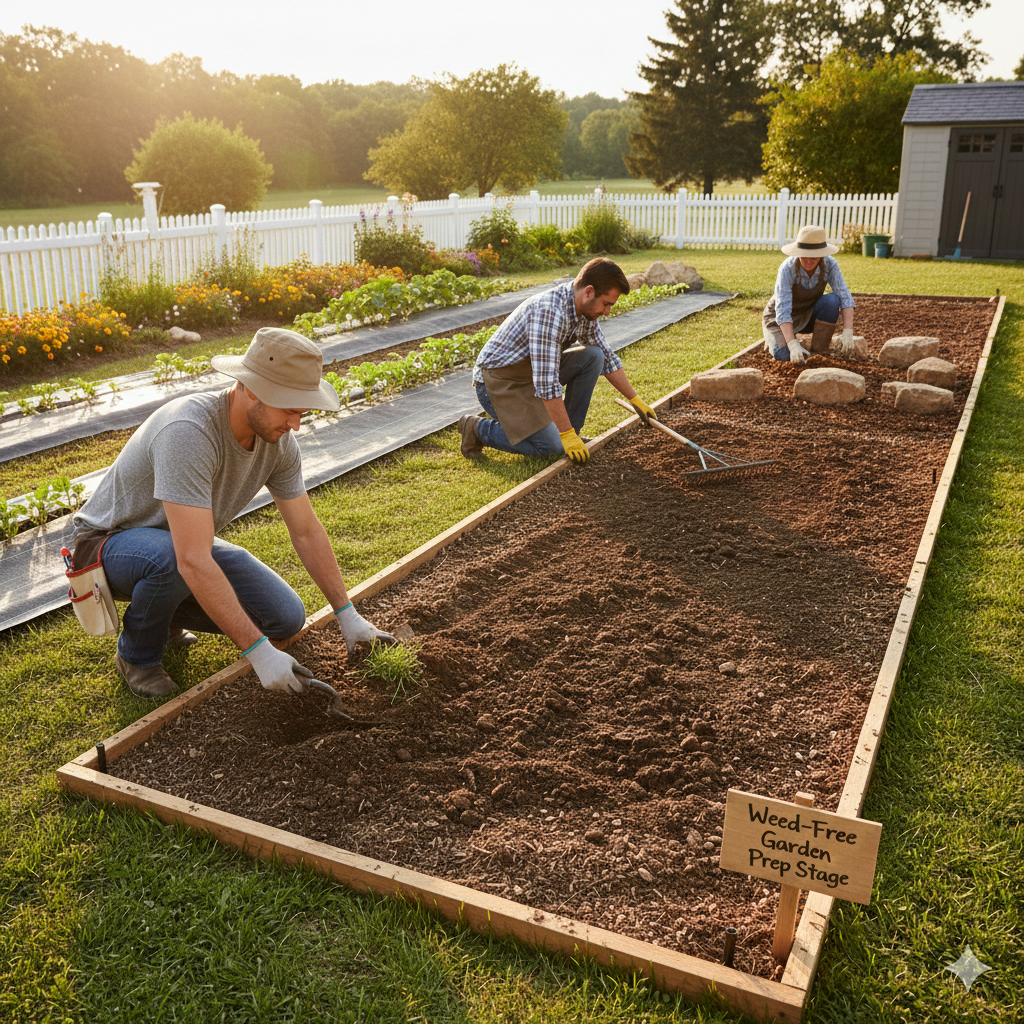
Start by preparing the area where you intend to install the landscape fabric. This includes removing any existing weeds, grass, or debris. You can use a shovel or hoe to dig up the weeds. It’s crucial to remove all plants that might poke through the fabric or interfere with the installation.
If you have large rocks or debris, use a rake to level the soil and make the surface smooth. This helps the fabric sit evenly on the ground, providing maximum efficiency.
Tip: If the soil is compacted, consider loosening it with a rake or garden fork to improve air and water penetration.
Measure and Cut the Fabric
Measure the area to determine how much fabric you will need. If you’re working in garden beds, plan to cover the entire area where plants are not growing, leaving space only for the plant roots.
When cutting landscape fabric, it’s essential to leave enough overlap at the edges to ensure full coverage and prevent gaps where weeds could grow.
Tip: It is better to cut the fabric a little larger than needed. You can always trim excess fabric later.
Lay Down the Landscape Fabric
Once you have your fabric cut to size, start laying it down across the prepared soil. Unroll the fabric along the longest side first, ensuring that it fits snugly into place.
For larger areas, it’s best to lay the fabric down in sections, making sure that each piece overlaps the next by at least 6 inches. This will prevent weeds from sneaking through the gaps.
Tip: Make sure that the fabric is laid smoothly with no wrinkles or air pockets. This ensures the fabric stays in place and doesn’t interfere with plant growth.
Secure the Fabric
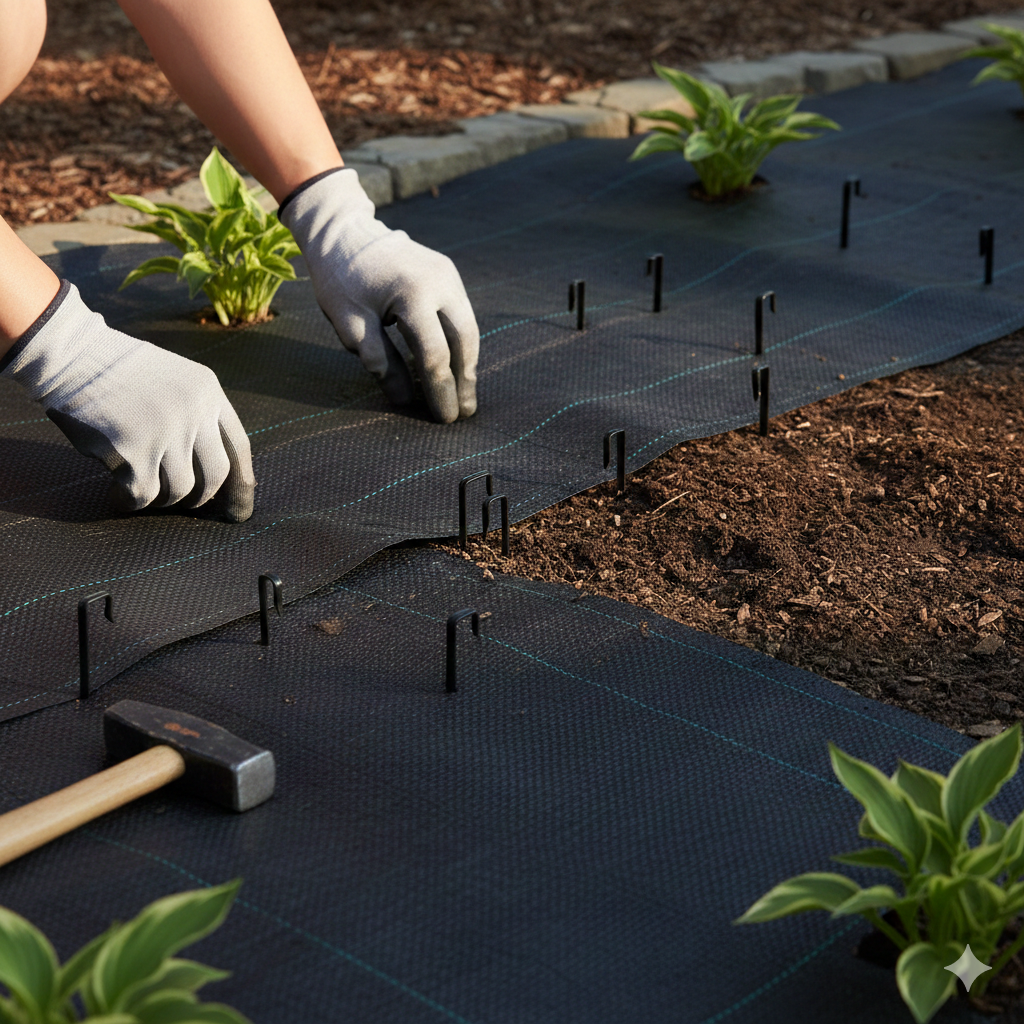
After the fabric is positioned, secure it to the ground using landscape staples or pins. Insert them along the edges and in the middle to keep the fabric tightly in place.
It’s essential to space the staples approximately 12 to 18 inches apart, depending on the size of the area you’re covering. Make sure the staples are driven deeply enough into the soil to keep the fabric from shifting.
Tip: Pay special attention to the corners and edges. These are the areas where the fabric is most likely to move, so ensure they’re well secured.
Cut Holes for Plants
For garden beds with plants or trees, you will need to cut holes in the fabric for planting. Use a utility knife or garden scissors to create small, X-shaped slits in the fabric where you want to place the plants. The cuts should be just large enough to allow the plant roots to go through while still covering most of the soil.
Tip: If you’re planting multiple rows of plants, ensure that the holes are spaced correctly to allow for proper growth and airflow.
Add Mulch or Decorative Stones

After securing the fabric and planting your plants, you can enhance the appearance and effectiveness of your landscape fabric by covering it with mulch, decorative stones, or gravel. A layer of mulch helps to keep the fabric in place, retains moisture, and adds a finished look to your garden.
You can choose organic mulch like wood chips, straw, or shredded leaves, or go for decorative rocks like gravel or pebbles, depending on your garden’s style. Make sure the mulch is spread evenly, about 2 to 3 inches thick, to provide sufficient coverage.
Tip: Organic mulch decomposes over time, so plan to refresh it annually to maintain its appearance and effectiveness.
Regular Maintenance
Landscape fabric requires very little maintenance once it’s installed, but it’s essential to check periodically for any weeds or debris that might have worked their way through the fabric. If you notice any areas where weeds are emerging, take care to pull them out immediately.
If you’re using organic mulch, you may need to refresh the layer each year to maintain its effectiveness.
Common Mistakes to Avoid
- Not Removing All Weeds: Make sure to remove all existing weeds before installing the fabric. Any remaining plants may grow through the fabric and negate its purpose.
- Improper Overlap: If the fabric isn’t overlapped enough, weeds can grow between the seams. Ensure that the edges overlap by at least 6 inches for maximum weed prevention.
- Incorrect Stapling: Use too few staples, and the fabric may shift over time, allowing weeds to penetrate. Ensure proper spacing and secure each area effectively.
- Using Too Much Fabric: Excess fabric can be unsightly and difficult to work with. Measure carefully to avoid wasting material and to maintain an even, neat appearance.
Conclusion
Installing landscape fabric is a smart choice for anyone looking to maintain a healthy and beautiful garden with minimal effort.
By following the steps outlined in this guide, you can ensure that your landscape fabric will effectively control weeds, improve soil health, and reduce the need for regular maintenance.
Whether you’re covering large areas or focusing on smaller garden beds, landscape fabric is an affordable and long-lasting solution for achieving a low-maintenance garden.
Read the original article in Crafting Your Home.