


A hospital is supposed to be the place where fear ends. It is where parents rush when a child cannot breathe. Where nurses move quickly but calmly through hallways. Where strangers trust other strangers with their pain, their bodies, and sometimes their last chance.
But on a Tuesday afternoon in Wilmington, Delaware, that promise broke.
Inside ChristianaCare’s Wilmington Hospital, a place designed for healing, a deadly workplace shooting took place. One young employee was killed. Another was wounded. Staff members hid and barricaded themselves in rooms. Patients who had arrived for care found themselves surrounded by police, lockdown orders, and the terrifying uncertainty of not knowing whether the danger had passed.
The story is disturbing because of where it happened. It is even more painful because of who was involved: young workers, still early in life, reportedly connected through a technology internship program meant to open doors.
What unfolded was not just another entry in America’s long record of gun violence. It was a reminder that even the places built to hold society together can become vulnerable when conflict, access, and firearms collide.
The place people run to became the place people ran from
The shooting was reported around 3:30 p.m. on June 16 at Wilmington Hospital, a major health care facility in Delaware’s largest city. Police said two people were shot inside the building. One later died, and the other survived with serious injuries.
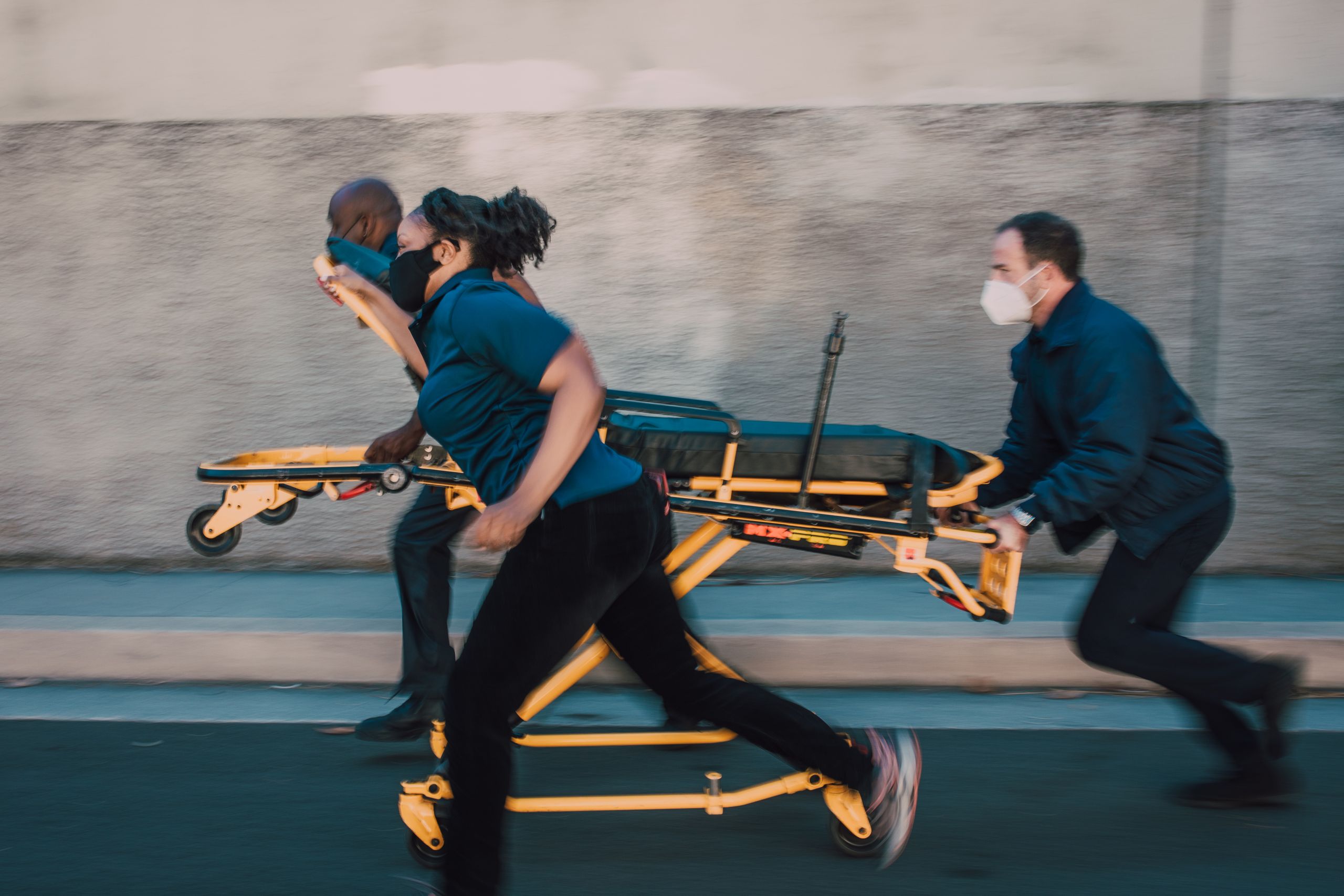
The hospital was placed on lockdown as officers moved through the building. Some employees hid behind closed doors. Others waited for instructions as emergency routines became survival routines. Outside, law enforcement vehicles surrounded the campus, and the hospital temporarily diverted emergency patients.
That detail matters. Hospitals do not stop being hospitals during a crisis. Even as police searched the building, patients still needed care. Monitors still beeped. Families still waited for updates. Doctors and nurses still had to balance fear with duty.
That is what makes violence inside a hospital so unsettling. It does not interrupt only one workplace. It interrupts an entire system of trust.
A hospital is not like a private office, where the workday can simply pause. It is a public refuge. Its doors are open by design. That openness is part of its purpose, but it can also become part of its risk.
A workplace dispute with devastating consequences
Authorities later identified the accused shooter as 23-year-old John Wallace-Bey of New Castle, Delaware. Prosecutors said he had been part of an IT internship program connected to the hospital.
The two victims were identified in later updates as 19-year-old Ethan Hillman and 19-year-old Jayden Ellis. Hillman died from his injuries. Ellis survived and was reported to be recovering.
Prosecutors said Wallace-Bey had an argument with the two young men earlier that day. He left work, then allegedly returned to the hospital armed. Officials said he entered through an employee entrance using his access badge before confronting the victims.
That timeline gives the case a deeply troubling shape. It raises questions that go beyond one suspect and one building. How should workplaces respond after conflict? When should a disagreement become a warning sign? How can employers protect staff without turning every workplace into a fortress?
Those questions are especially difficult in health care, where thousands of people move through buildings every day. Employees, patients, contractors, visitors, interns, vendors, and first responders may all share the same space. Security has to be strong enough to protect people, but flexible enough to keep care moving.
In this case, prosecutors said the shooting appeared targeted and that the accused acted alone. That may ease fears of a broader threat, but it does not soften the damage. For the families of the victims, for hospital employees, and for patients who lived through the lockdown, “isolated” does not mean small.
Young lives, early careers, and a shattered sense of safety

One of the hardest parts of this story is the age of the victims.
At 19, many people are just beginning to imagine who they might become. An internship can feel like the first real step into adulthood. It can mean a badge, a schedule, a mentor, a chance to prove yourself, and a glimpse of a future that finally feels reachable.
That is what makes this case cut deeper than a typical workplace crime report. These were not longtime rivals in some distant corporate battle. These were young workers tied to a program meant to build skills and opportunity.
Hospitals often depend on people at every level: surgeons and nurses, technicians and transport workers, receptionists and cleaners, IT staff and interns. The public may notice the doctors first, but modern health care runs on a hidden network of workers who keep systems alive.
When violence reaches those workers, it sends a message beyond the walls of one hospital. It tells people entering the workforce that even a promising opportunity can carry risks they never imagined.
That is a heavy thing for any community to absorb.
The courage people rarely see
In the hours after the shooting, attention naturally turned to the suspect, the charges, and the police response. But another part of the story deserves equal weight: what hospital workers did while afraid.
During emergencies, health care workers often become both potential victims and first responders. They may not wear police uniforms, but they are trained to keep people alive under pressure. On June 16, that pressure became personal.
Staff members had to protect themselves, follow lockdown procedures, care for patients, and make decisions in a building where danger was still unfolding. Some patients were already vulnerable before the first shot was fired. They could not simply run outside. They depended on the people around them to stay steady.
That kind of courage is easy to overlook because it does not always look dramatic. Sometimes it looks like closing a door quietly. Moving a patient away from a hallway. Keeping a voice calm when your own hands are shaking. Continuing to do your job while your workplace becomes a crime scene.
The public often calls health care workers heroes during national crises, then forgets how much we ask of them in ordinary times. This shooting is a brutal reminder that their ordinary times are not always safe.
A national problem hiding in plain sight
Violence against health care workers has been a growing concern across the United States. It includes physical attacks, threats, harassment, and intimidation. Much of it never becomes national news because it does not end in gunfire.
Still, the pattern is hard to ignore. Emergency rooms, psychiatric units, long-term care facilities, and hospital campuses have all faced rising concerns over workplace safety. Staff shortages, long wait times, emotional stress, untreated mental health crises, and easy access to weapons can all intensify the risk.
The Wilmington shooting stands apart because it involved an alleged workplace dispute and a firearm. But it belongs to a broader conversation about safety in places that cannot simply lock the world out.
Hospitals are asked to be open, compassionate, fast, and secure all at once. That is a difficult balance. Add fear, anger, and weapons into that mix, and the consequences can become catastrophic within seconds.
The answer is not simple. Metal detectors may help in some buildings, but they may be difficult to install across sprawling campuses with many entrances. Badge access can limit movement, but may not stop someone who already has credentials. Training can prepare staff, but it cannot remove every threat.
Still, after a tragedy like this, communities are right to ask what can change.
The question Wilmington now has to face
After the shooting, Delaware prosecutors moved quickly. Wallace-Bey was indicted on multiple felony charges, including first-degree murder and attempted murder. He remains accused, and the legal process will determine guilt or innocence.
But the community does not have to wait for a trial to understand the emotional damage.
For Wilmington Hospital workers, the building will not feel the same for a while. A hallway may hold a memory. A badge scanner may feel different. A sudden noise may cause someone to freeze. People who spent years helping others feel safe may now need help feeling safe themselves.
For the families of Ethan Hillman and Jayden Ellis, the story is not about security policy or public debate. It is about a son, a friend, a future, and a day that cannot be undone.
For the rest of the country, the story should force a harder question: What does safety mean in a society where even hospitals must prepare for gunfire?
A hospital should be a sanctuary. It should be one of the few places where the wounded can arrive without fear of further harm. When violence enters that space, it wounds more than the people directly shot. It wounds the trust that allows a community to believe help will be there when it is needed most.
That trust can be repaired, but only if the shock turns into action.
Wilmington now carries the grief of one young life lost and another forever changed. The nation should carry the lesson.


