

This article was originally published on Crafting Your Home. A human contributor also wrote and edited the post.
The hottest thing in some carefully styled homes this year may be something deliberately imperfect, slow to make and impossible to mass-produce the same way twice.
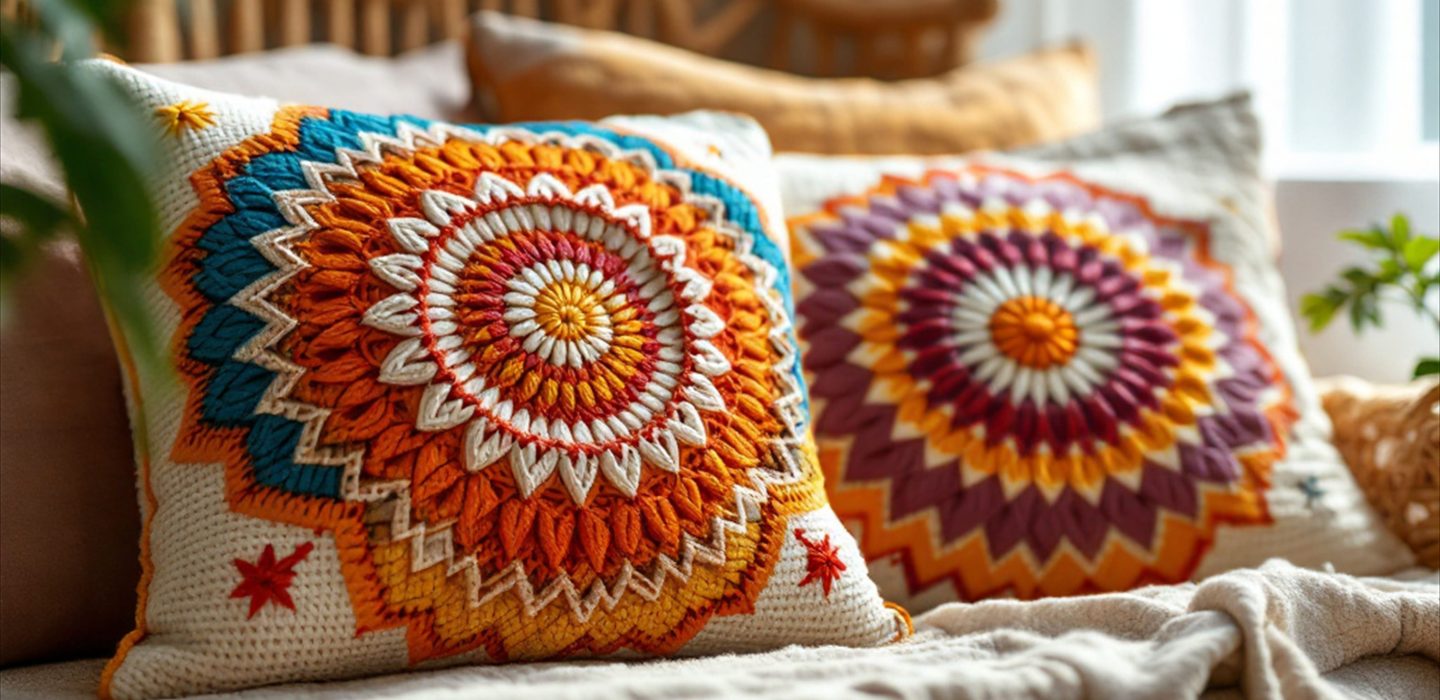
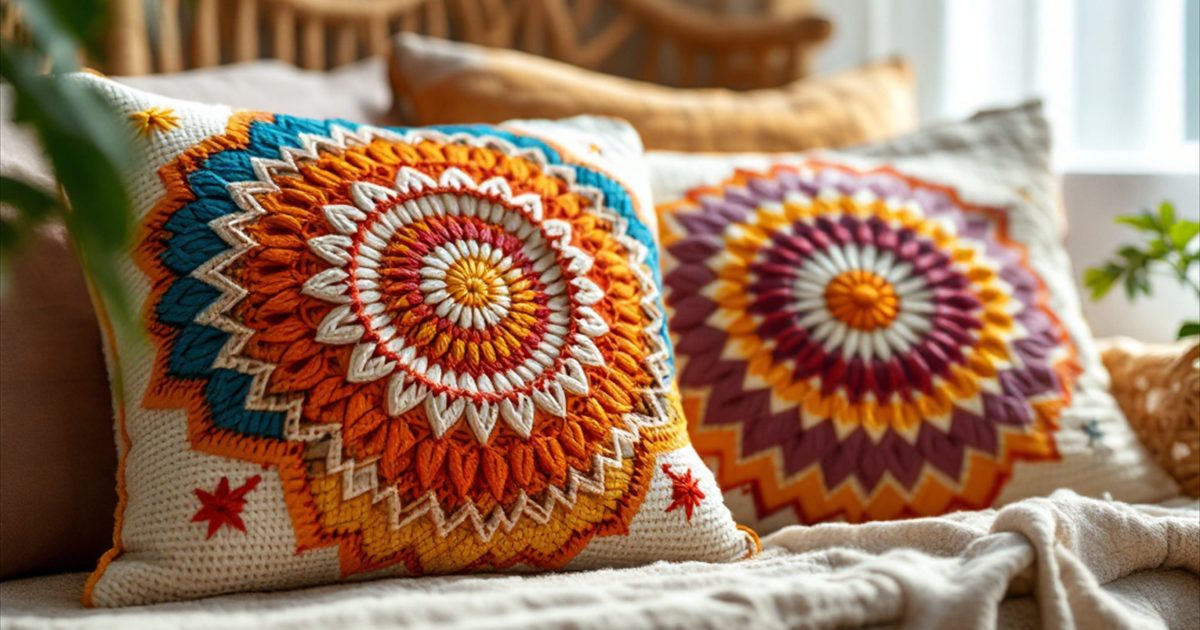
Home décor in 2026 is getting softer. Crocheted cushions, handmade throws, yarn baskets, wall hangings, and textured accessories are now common where smooth ceramics and factory finishes once ruled.
Crochet has not suddenly replaced every other decorating trend. But it is benefiting from a much bigger shift in how people want their homes to feel.
After years of screen-perfect interiors, shoppers now want homes that feel lived-in and authentic.
Etsy has even given the movement a name: the “Soft Stitch Era.”
Handmade is becoming a reaction to digital sameness.

Etsy’s 2026 trend report says crochet and stitched textures are trending as shoppers seek handmade, personal items over “AI sameness.”
That may explain why crochet suddenly feels right at home in contemporary interiors.
For years, digital design rewarded perfection. Rooms became cleaner, straighter, and easier to reproduce. The same white walls, boucle chairs, pale wood tables, and beige accessories could appear in homes thousands of miles apart.
Crochet does almost the opposite.
A handmade pillow can contain tiny differences in tension. A blanket may reveal exactly where one ball of yarn ended, and another began. A wall hanging can have a slight irregularity that would count as a defect on an assembly line but becomes part of its appeal when someone made it by hand.
Those imperfections are increasingly the point.
Etsy’s 2026 data shows measurable interest in the wider stitched and handmade revival. Sales of crochet clothing rose 36% compared with the same period a year earlier, while the platform also reported strong growth around embroidery, needlepoint kits and other analog crafts.
The wardrobe may have helped bring crochet back into fashion.
Now the living room gets a turn.
Crochet fits the new idea of a “comfortable” home.
The timing also lines up with a broader move away from interiors that feel overly staged.
Designers call it “layered comfort,” using tactile fabrics, mixed materials, and personal objects to create rooms that feel collected, not staged.
Crochet fits that mood almost perfectly.
A crocheted throw adds softness without requiring new furniture. A handmade cushion can bring texture into a plain room. A yarn wall piece can introduce color without repainting. Small baskets can add storage while still looking decorative.
That makes crochet particularly useful for anyone who wants a room to feel different without attempting a full renovation.
It is décor that works in layers.
One piece can change the mood of a sofa. Two handmade cushions can break up a matching furniture set. A textured blanket can make an inexpensive chair feel more personal.
Perhaps most importantly, it does not require committing an entire room to what people might imagine as “crochet style.”
The craft can be an accent rather than a theme.
The granny square grew up.
Of course, crochet carries baggage.
For many people, the word still summons visions of pastel blankets, toilet-roll covers,s and delicate doilies sitting untouched on a relative’s best furniture.
The granny square remains one of crochet’s most recognizable forms, but modern versions do not have to look like heirlooms rescued from an attic.
Scale changes everything.
Limited color palettes and grounded shades make traditional crochet motifs look contemporary, working with modern furniture.
Or makers can go in the opposite direction and embrace color completely.
That fits another shift Etsy identified for 2026. Its marketplace data points toward more expressive, nostalgic, and whimsical decorating, with shoppers showing greater interest in personal collections and pieces that carry a sense of play rather than anonymous perfection. Searches for wall art décor, for example, rose 110% in the company’s report.
In that environment, the granny square no longer has to apologize for being loud.
Texture may matter more than the pattern.
One reason crochet translates so easily to home décor is that yarn does something photographs cannot fully capture.
It creates physical depth.
Textured stitches and chunky yarns give crochet pieces a sculptural, visually striking look.
More structured forms of crochet can also be used for household pieces that need to hold their shape.
The Craft Yarn Council has long included home décor among crochet’s practical uses, with projects ranging from pillows and baskets to screens and decorative accents. That versatility matters because the 2026 revival is not limited to blankets.
Crochet can appear around a plant pot, over a lampshade, across a table, on a wall, beneath a mug, or beside a sofa as storage.
The easiest way to modernize it may be to stop asking, “What crochet item should go here?” and instead ask what the room actually needs.
Need softness? Try a throw. Need color? Add a cushion. Need visual interest on an empty wall? A textile piece can do what another framed print might n ot. That keeps the craft from becoming costume décor.
There is also an economic reason DIY decorating makes sense.
Crochet offers something especially appealing during a period when many people are reluctant to replace an entire room just because decorating tastes change. A person can update an interior one object at a time. There is also unusual control over the result.
Buying décor usually means selecting from colors, dimensions, and materials somebody else decided to manufacture. Crocheting it means choosing the exact yarn, size, pattern, rn and shape needed for a particular corner.
That control can be especially attractive for renters and people furnishing smaller spaces.
A handmade wall hanging does not require remodeling. Neither does a blanket, basket, or cushion cover. If someone moves, the décor moves too. The process also creates a different relationship with the finished object. It is difficult to treat something as disposable when it took six evenings to make.
Scrap yarn is becoming part of the look.
Crochet also lends itself naturally to using materials that might otherwise sit forgotten in a drawer.
A leftover ball of yarn may be useless for a full sweater but perfectly adequate for a coaster, small basket or section of a multicolored blanket.
That makes scrap projects particularly compatible with the more eclectic interiors gaining attention now.
Different shades no longer have to match perfectly if intentional mismatch is part of the design.
Etsy’s wider 2026 trend reporting repeatedly points toward personalization, visible craftsmanship, meaningful keepsakes, and objects that feel distinct from mass-produced goods.
A patchwork blanket made from leftover yarn takes that idea to its logical conclusion.
Its value comes partly from the fact that nobody else’s will look the same.
Crochet is also becoming décor you can talk about
There is another reason handmade interiors feel different. They come with stories. Ask someone where a mass-produced cushion came from, and the answer may be the name of a retailer.
Ask about a crocheted cushion and the answer could involve a grandmother who taught the stitch, a YouTube tutorial attempted three times, yarn bought during a vacation, or the first project somebody managed to finish without unraveling.
That history becomes part of the object.
It is one reason vintage needlepoint, handmade textiles, and older decorative pieces are also finding renewed attention in interiors. Designers are increasingly using them for the character and individuality they bring to rooms rather than treating them simply as old-fashioned decoration.
Home décor has always communicated something about the person who lives there. Handmade décor makes the message harder to copy.
The best crochet rooms don’t look like crochet rooms.
There is, however, a limit. Cover every lamp, plant pot, table, and chair in yarn and a charming detail can quickly become a theme park. The most convincing version of the trend treats crochet like seasoning.
A chunky blanket against smooth leather works because the materials contrast. A delicate crocheted curtain can soften a hard window frame. A colorful cushion becomes more noticeable when the rest of the furniture gives it breathing room.
Crochet looks freshest when it is allowed to be one texture among several. That may ultimately explain why the trend has more potential than the usual viral craft craze. It does not require people to throw away what they already own.
It asks them to add something made slowly.
And in a decorating culture increasingly surrounded by algorithms, generated images, and products optimized to resemble everything else, an object with a visible human fingerprint suddenly feels surprisingly luxurious.
The crochet hook did not reinvent itself.
Our idea of what makes a home feel special did
This version has a stronger evidence base because Etsy’s own 2026 marketplace report directly supports the handmade and “Soft Stitch Era” angle, rather than relying mainly on crochet blogs predicting their own industry’s popularity.
If you like what you just read, then subscribe to our newsletter and follow us on social media.


