


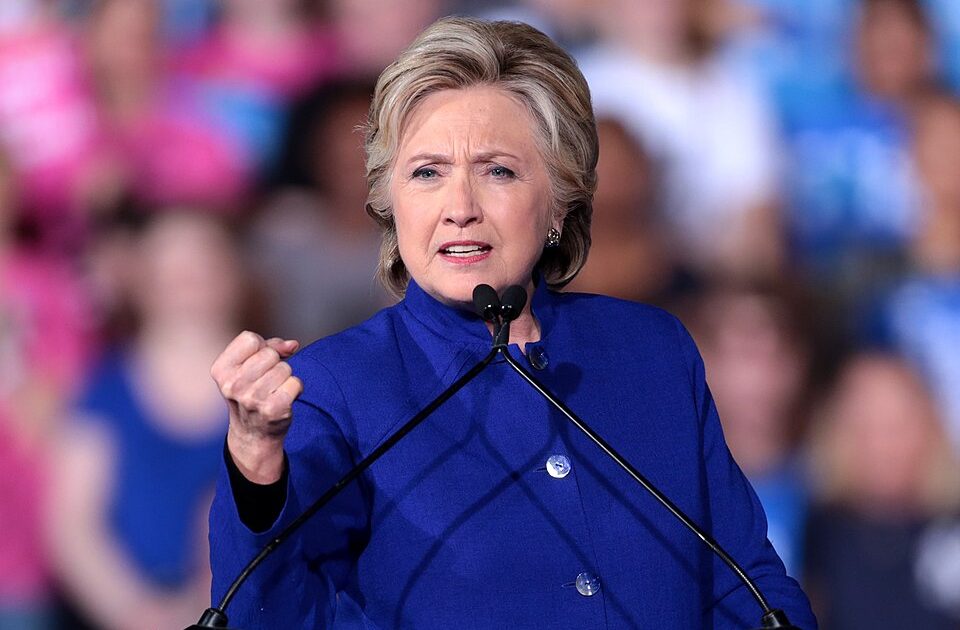
Hillary Clinton’s latest swipe at President Donald Trump landed because it turned a messy Washington story into one sharp political question: why can’t Trump clean a pool or organize a “real 250th party”? In her post on X, Clinton argued that the trouble surrounding the Lincoln Memorial Reflecting Pool and America’s 250th anniversary celebrations was “not just incompetence” but also “corruption.”
We should treat that line as more than a partisan insult. It captures two controversies now moving together: a multimillion-dollar renovation of one of America’s most photographed landmarks and a taxpayer-backed birthday celebration that critics say has been steered toward Trump allies, Trump imagery, and politically connected contractors.
The Lincoln Memorial Reflecting Pool Became a Symbol of a Larger Trump Controversy
The Reflecting Pool was supposed to be a clean visual centerpiece for America’s 250th birthday. Instead, it became a green, peeling, and politically explosive reminder of how quickly a patriotic showcase can turn into a government accountability fight.
ABC News reported that the cost of repainting the pool rose to more than $14.65 million, exceeding the original no-bid contract estimate by more than $4 million. The same report said the National Park Service also paid $1.74 million to Green Water Solutions for a nanobubble algae treatment system, bringing the project cost above $16 million across the two contracts.
The project drew public attention because the pool developed algae and peeling after the work was completed. Business Insider reported that the pool turned green again within days of the renovation, despite the new “American Flag blue” surface meant to beautify the landmark and address maintenance problems.
That visual mattered. The Reflecting Pool is not an ordinary municipal repair site. It sits between the Lincoln Memorial and the Washington Monument, anchoring one of the most symbolic spaces in American civic life. When algae blooms and peeling liner appeared shortly after a high-profile renovation, critics saw a ready-made metaphor: expensive promises, rushed execution, and a public landmark left looking worse than expected.
Trump Blamed Vandalism, but the Explanation Raised New Questions

Trump and his administration repeatedly blamed vandals for some of the pool’s problems after the renovation. Reuters reported that Trump cited vandalism, including algae blooms and a detached liner, after the $14.7 million renovation. Reuters also reported that the president claimed vandals made cuts between 250 and 350 feet long, but he did not provide evidence to support those claims.
The controversy escalated when former U.S. Olympic canoeist David Hearn was indicted on a felony charge of destruction of property. Court records accused Hearn of damaging lining material on June 19 and causing more than $1,000 in damage. His lawyers said he was innocent and accused the administration of using the case to shift attention away from the renovation’s failures.
That indictment gives the story a new public safety and legal angle. It also keeps the core question alive. If the pool’s condition resulted from vandalism, the public deserves clear evidence. If it resulted from rushed contracting, weak oversight, or poor technical choices, taxpayers deserve answers about why so much money moved so fast.
Why the No-Bid Contract Issue Is Driving the Corruption Argument
The strongest political charge is not simply that algae appeared. Algae have plagued the Reflecting Pool before, and the pool’s design has long made it vulnerable to maintenance problems. The deeper issue is process.
The renovation drew criticism because officials used expedited no-bid contracting to complete the work before the July 4, 2026, semiquincentennial celebrations. Business Insider reported that the administration argued that a full procurement process would prevent the National Park Service from reopening the pool in time, while federal records later showed contracts totaling about $14.8 million, up from an initial estimate of $1.8 million.
Sen. Richard Blumenthal pressed Interior Secretary Doug Burgum and acting National Park Service Director Jessica Bowron for answers, saying National Park Service projects done at Trump’s direction in Washington had been marked by “blatant corruption,” lack of transparency, disregard for legal requirements and incompetence.
Blumenthal also demanded answers from Greenwater Services, saying the company received a no-bid contract to install the pool’s purification system and that its owner, John J. Cafaro, was a Trump donor.
This is why Clinton’s post gained traction. “Clean a pool” sounds small. But in Washington, a pool can become a case study in who gets government work, how contracts are awarded, what the public pays, and whether political relationships matter more than performance.
America’s 250th Birthday Has Become a Fight Over Freedom 250
The second half of Clinton’s attack focused on the 250th anniversary celebration. On paper, July 4, 2026, should be a unifying national milestone. America250 describes itself as the national, nonpartisan organization charged by Congress with engaging Americans in commemorating the 250th anniversary of the Declaration of Independence.
But watchdog groups say the Trump administration shifted the center of gravity toward Freedom 250, a Trump-aligned vehicle connected to the administration’s preferred version of the celebration. Public Citizen and the Revolving Door Project reported that nearly $103 million in federal contracts and grants for the 250th anniversary went to a network of politicized entities controlled or influenced by Trump administration officials and political allies. The groups said that they represented more than 80 percent of the $126 million in awards they reviewed.
Those figures are the heart of the corruption allegation. The debate is no longer about whether America should celebrate 250 years of independence. It is about who controls the celebration, who gets paid from the celebration, and whether a national civic moment is being turned into a partisan branding operation.
The Watchdog Report Sharpened the Political Stakes
Public Citizen said recipients of the federal awards included entities controlled or influenced by Interior Secretary Doug Burgum, Trump’s former campaign manager Chris LaCivita and Meredith O’Rourke, Trump’s former presidential campaign finance director. The group also said Freedom 250 received at least $79 million in federal funds, including money tied to “Freedom Trucks” and anniversary events.
The Revolving Door Project published similar findings, saying Freedom 250 displaced America250 as the Trump administration’s preferred partner after an unsuccessful effort to take over the congressionally authorized America250 nonprofit.
That structure gives Clinton and other Democrats a simple argument: the country’s 250th birthday should not become a loyalty program for political insiders. It should not be used to reward connected vendors, reshape historical programming, or blur the line between government celebration and campaign-style spectacle.
The Reflecting Pool and Freedom 250 Stories Now Reinforce Each Other

The pool and the 250th anniversary celebration may look like separate stories. One involves water, algae, liner damage, and no-bid contracts. The other involves grants, nonprofit structures, federal awards, and patriotic programming. But politically, they now tell the same story.
Both involve public money. Both involve national symbols. Both involve compressed timelines tied to July 4, 2026. Both involve claims that Trump allies or politically connected entities gained special access. Both involve a White House eager to present a grand visual image before the country’s birthday.
That is why Clinton’s phrase worked so well online. It condensed two complex government stories into one easy frame: if the administration cannot manage a pool without scandal, why should Americans trust it to manage the meaning of the nation’s 250th birthday?
Why This Story Matters Beyond Trump and Clinton
We should not reduce this controversy to another Clinton-versus-Trump social media exchange. The bigger issue is whether national memory can be managed with public confidence when political branding, donor access, and emergency-style contracting sit at the center of the process.
America’s 250th anniversary should be bigger than one administration. It should include state and local history, military service, civic sacrifice, Indigenous history, slavery, immigration, innovation, constitutional struggle, and the unfinished work of American democracy. A credible celebration must feel broad enough for the whole country to see itself in it.
The risk for Trump is that the more the celebration appears built around his image, his allies, and his preferred contractors, the less it feels like a national commemoration. The risk for the public is even greater. Once civic rituals become vehicles for insider spending, Americans lose another piece of trust in institutions that already struggle to command belief.
The Clean Pool Question Is Really a Clean Government Question

The Reflecting Pool controversy is powerful because it is visible. Americans do not need a procurement degree to understand a green pool after a multimillion-dollar renovation. They can see the algae. They can understand peeling liner. They can ask why no-bid contracts were used, why costs increased, and why officials blamed vandalism before fully explaining the project’s failures.
The 250th anniversary controversy is less visible but arguably more important. It asks whether public celebrations can be quietly redirected through politically friendly networks while still carrying the language of national unity.
That is the real force behind Clinton’s attack. She is not only mocking Trump over a pool. She is arguing that the pool and the party reveal a governing style: grand promises, loyal vendors, blurred public and political interests, and then aggressive blame when the results disappoint.
Read the original story on Crafting Your Home


