

The post Emily the Recruiter Says Employees Who Believe “No” Is a Complete Sentence at Work and Refuse to Explain Themselves to Their Boss Are Likely to Get Fired first appeared on Crafting Your Home.
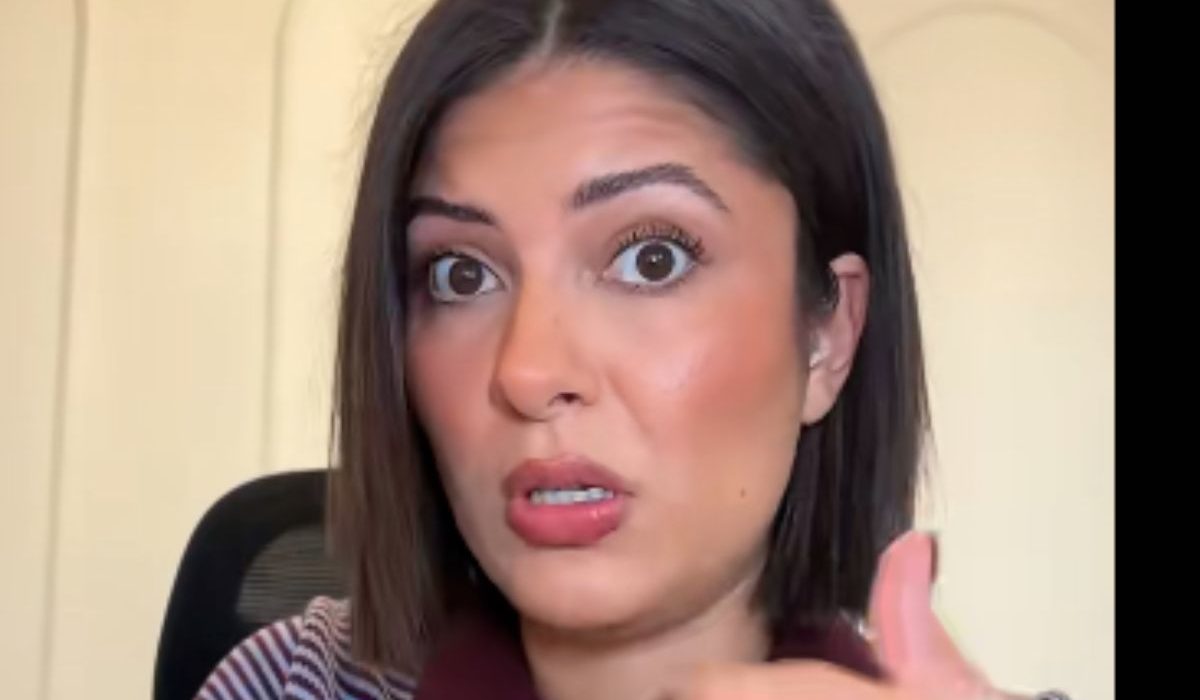
Emily the Recruiter spends part of her TikTok feed reacting to career advice she says would land a worker in the HR office. She says she knows because she worked in one, a real one. One tip in particular set her off: the idea that nobody at work, a boss included, is owed an explanation.
Her verdict is short. If you hear any of it, keep scrolling.
A boss who never hears your reasoning still writes your review

Emily’s case starts with who holds the pen. Sometimes, she says, a worker has to ‘kiss a little ass’, and she adds that nobody has to go further than that. Employees who treat every question as an intrusion give the person deciding their next raise no reason to root for them.
Gallup’s data suggests she is not exaggerating how much the boss relationship matters. Chief Scientist Jim Harter has written that managers account for at least 70% of variance in employee engagement scores. In a Gallup study of 7,272 U.S. adults, one in two had left a job to get away from a manager at some point in their career.
Contact matters too. A separate Gallup survey of 7,712 U.S. adults found that employees whose managers hold regular meetings with them are almost three times as likely to be engaged. A worker who answers every request for context with a flat refusal opts out of that loop on purpose.
Looking busy gets you noticed less than being known
Emily goes after the tip to mind your business, look swamped and engage with no one. In her HR experience, the people who got promoted did their jobs but also knew which colleagues to team up with. Everyone at the company knew their names, which is why she calls them office celebrities.
Academic work backs the visibility half of her claim, with a caveat. Professor Emerita Kimberly Elsbach at UC Davis found two kinds of face time, expected (being seen during normal hours) and extracurricular (being seen late at night or on weekends). Observers formed unconscious judgments from both, and the judgments fed into evaluations, promotions and raises, according to Kimberly Elsbach’s research.
Elsbach treats that as a bias to correct. She suggests employers lean on objective measures, such as satisfactory work turned in on time, instead of supervisor ratings of leadership potential. Visibility pays off in the real world, and some researchers think it shouldn’t.
Brownnosing has data behind it, and the data is uncomfortable
Researchers from Youngstown University, Niagara University and the University of Buffalo surveyed 136 employees and their supervisors at a national retail chain. Employees completed questionnaires measuring ingratiation, assertiveness and political skill. Bosses then rated how likeable each worker was and how likely that worker was to be promoted.
Women who used more ingratiating behaviors were liked more and judged highly promotable. Assertiveness had no effect on a woman’s likeability or her promotability. CBS News also pointed to a 2006 Arizona State study in which likeable men earned higher reviews and bigger bonuses than equally competent men seen as boastful or self-centered.
Emily’s advice reads as gender neutral on camera. The retail data shows the payoff for staying agreeable was measured among women, and it came at the expense of speaking up.
Related Post: Why Some Gen Z Employees Are Struggling to Stay in New Roles
Matching a rude coworker’s energy gets two people fired
Her rule for conflict is blunt. If a coworker is rude and you are rude back, or nasty and you are nasty back, both of you can be fired, and then both of you are jobless. People who get ahead rise above, she says, and she describes the winning move as killing them with kindness and documentation, then taking them down.
That is revenge with paperwork, and she says it plainly. Likeability is also a hiring variable before anyone has a desk. Northwestern’s Lauren Rivera found that when candidates’ backgrounds and skills are similar, the more likeable one gets hired almost 90% of the time, according to The Globe and Mail.
The same coverage cites Wharton’s Adam Grant, whose research shows that asking someone for help makes that person like you more. Explaining yourself, in other words, can be the cheapest relationship tool a worker owns.
Likeability costs women more, and Emily’s advice never says so
More than half of women have avoided sharing an opinion at work to keep from being branded difficult. The figure comes from a report covered by Stylist on what it calls likeability labour. Women were also twice as likely as men to change how they act or speak to be liked.
Pressure ran uneven too. Of women surveyed, 56% felt pressure to be likeable all or some of the time, against 36% of men.
Emily’s video never addresses gender. For a reader who recognizes herself in those numbers, kiss a little and keep scrolling is incomplete advice, because the performance of being agreeable already eats more of her day than it does her male colleague’s.
Related Post: The American Worker Is Tired: Why Many Employees Feel Burned Out
The firing claim rests on Emily’s experience, not a firing study
None of the research above measures how many workers lose jobs for refusing to explain themselves. This comes from Emily’s time in HR, and she offers it as experience rather than a dataset.
What the evidence does support is narrower and still useful. Bosses shape engagement, visibility feeds evaluations, and likeability influences who gets promoted, with the burden falling unevenly.