Dishes That Aren’t From the Place They’re Named After

Image Credit: gmm2000 via 123RF
The DNA of certain foods often reveals much about their place of origin. Some dishes, like pasta and tacos, are easily tied to their culinary roots, with ingredients that are staples in their native cuisines. However, others, such as the famous Italian beef sandwich and French toast, have surprising origins in places you might not expect. Several factors contribute to this phenomenon.
Immigration plays a key role, as people navigate the balance between preserving their traditions and adapting to new environments with different tastes. Marketing also plays a part—after all, standing out in the crowded food world is essential. And sometimes, as with baked Alaska, the name reflects the dish’s appearance.
Many of your favorite foods might fall into this category. But what’s truly fascinating are the stories behind their creation, offering a glimpse into how cultures have spread across the globe. Here are some foods named after places they didn’t originate from.
French Fries
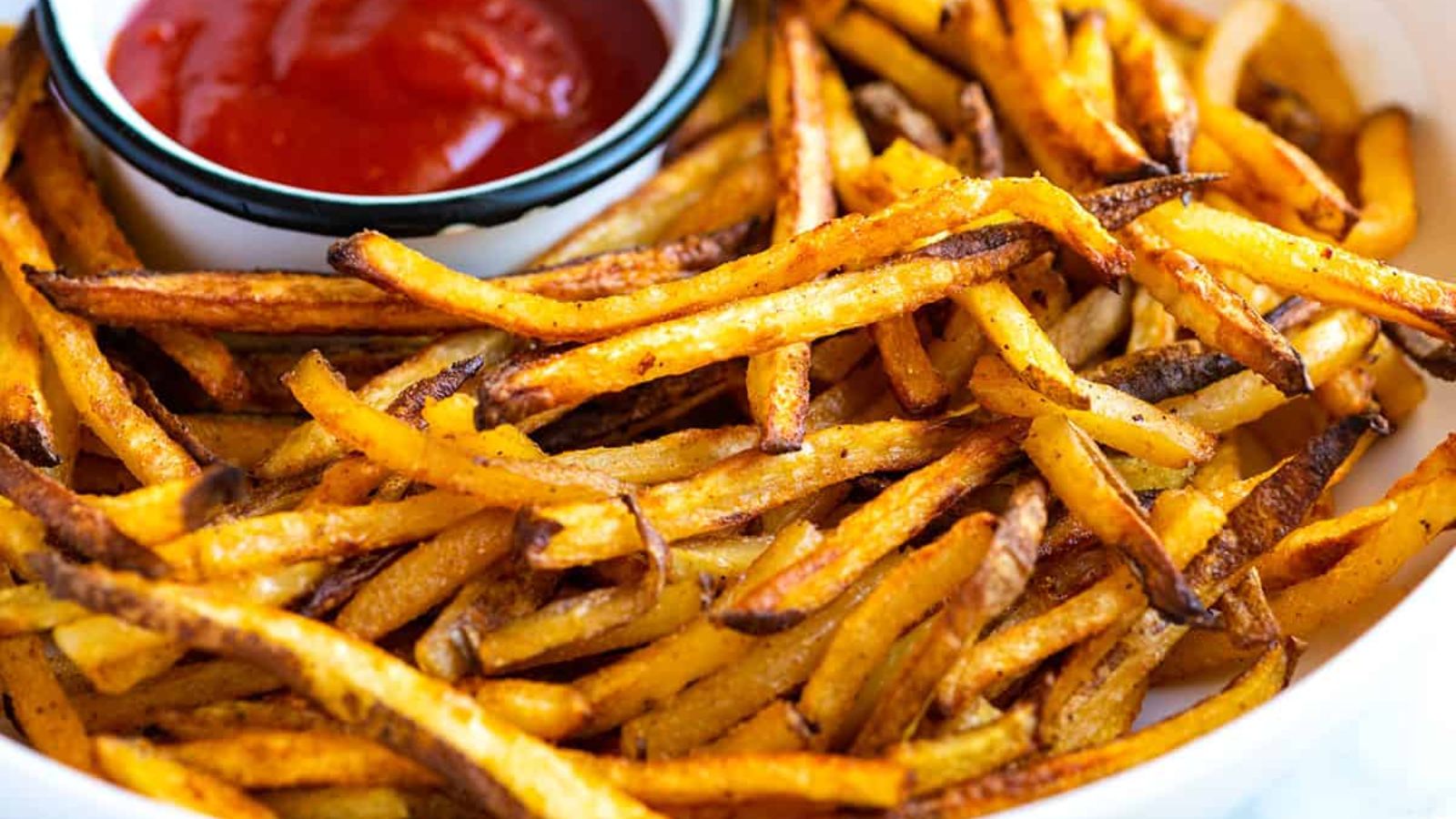
French fries, the crispy golden delights we know and love, have a surprisingly disputed origin. While they’re called “French fries” in the United States, both Belgium and France claim to have invented them. The most popular theory is that fries originated in Belgium, where villagers along the Meuse River used to fry fish in the winter when the river froze.
The story goes that when the fish were scarce, they turned to potatoes, and thus, the modern-day French fry was born. American soldiers stationed in Belgium during World War II are said to have named them “French fries” because French was spoken in the southern region of Belgium. Despite their name, most of Europe continues to call them “frites.”
Salisbury Steak

Salisbury steak, often associated with cheap, comforting school lunches, is named after James Salisbury, an American physician. Salisbury advocated for a diet centered around ground meat to help soldiers during the Civil War who suffered from digestive problems.
Despite sharing a name with the British town of Salisbury, the dish itself is purely American. Salisbury’s steak was never intended to be a traditional British dish but instead served as a cheap, easy-to-digest meal for people in need.
Hawaiian Pizza
We’ve all heard the debate about pineapple on pizza, but the truth is, Hawaiian pizza isn’t from Hawaii at all. Instead, it was created in Ontario, Canada, in 1962 by Sam Panopoulos, a Greek immigrant. Panopoulos, who owned a small pizza joint, decided to experiment by adding pineapple to a traditional pizza.
At the time, Hawaii had just become a U.S. state, and pineapples were a significant export from the region. The pizza was named “Hawaiian” after the brand of canned pineapple that Panopoulos used. So, despite its tropical name, this beloved pizza was born in a small Canadian restaurant.
The Curious Case of Turkey
The name “turkey” for the large bird we know today is a result of a historical misunderstanding. When European traders first encountered the bird in North America in the 15th century, they mistakenly believed it came from Turkey (the country).
At the time, the Ottoman Empire controlled much of Europe’s trade routes, including the import of exotic goods from the East, leading to the confusion. The name stuck, and even though turkeys are native to North America, they’ve been called “turkeys” ever since.
Singapore Noodles

Despite the name, Singapore noodles aren’t actually from Singapore. The dish, which features stir-fried noodles with curry powder, vegetables, and meats, was created in Hong Kong during the 1950s, when Chinese restaurants began combining Indian spices with traditional Chinese cooking methods.
The dish became popular in the West, and its name was chosen to give it an exotic flair, evoking the flavors of Southeast Asia. However, native Singaporeans don’t regularly consume this dish, as it’s far too spicy and curry-heavy for traditional Singaporean cuisine.
Russian Dressing
While it might sound like a dish born from the heart of Russia, Russian dressing is actually an American creation. This tangy, mayonnaise-based condiment is believed to have been invented by James E. Colburn in the early 20th century. Colburn, from New Hampshire, started selling his version of a salad dressing made with mayo, chili peppers, and horseradish, and labeled it as “Russian” because it originally contained caviar, a well-known Russian delicacy.
Over time, the name stuck, even though the dish itself has nothing to do with Russian cuisine. In Germany, it’s known as “American dressing,” a reflection of its true origins.
London Broil

When you hear the name “London Broil,” you might assume it’s a traditional British dish. But in reality, European traders is a term that was coined in the United States in the 1930s. It refers to a cooking method of marinating and broiling a tough cut of beef.
The dish itself doesn’t have any direct connection to London or even to British culinary practices. Instead, the term was likely used to give the dish an exotic flair, making it seem more sophisticated. Ironically, this “London” dish doesn’t even use the traditional British method of cooking, and its origins are firmly rooted in American soil.
Key Take Aways
The origins of foods named after places often defy expectations. Dishes like the French dip sandwich and French fries are rooted in Los Angeles and Belgium, respectively, while Baked Alaska and German chocolate cake reflect historical events.
Hawaiian pizza, created in Ontario, Canada, shows how marketing can influence food identity. These misnamed foods, like French fries and French toast, remind us that the true stories behind them are shaped by cultural exchange, history, and innovation.