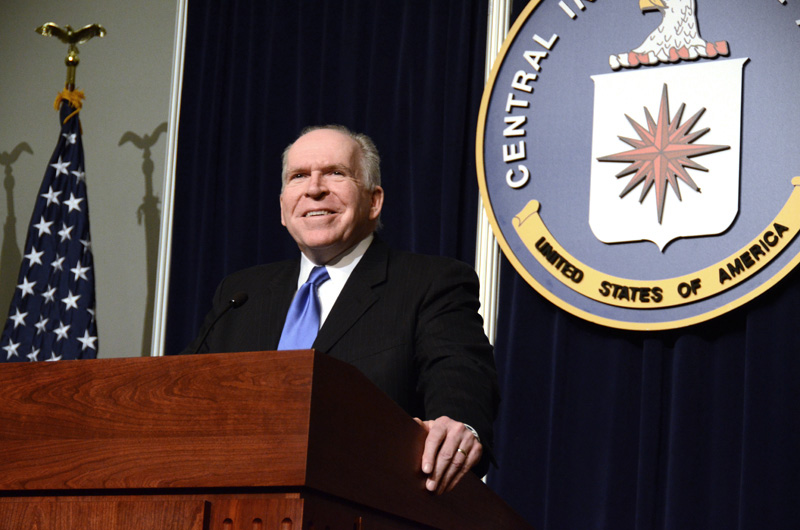
Former CIA Director John Brennan has taken an unusual and aggressive legal step against the U.S. Justice Department, filing a federal lawsuit seeking to compel the preservation of records tied to ongoing criminal investigations involving him. The move places the longtime intelligence official at the center of a widening political and legal confrontation that could shape how future cases of alleged “vindictive prosecution” are argued in American courts.
The lawsuit, filed in Washington, D.C., on Wednesday, does not challenge any formal charges, because none have been brought. Instead, it seeks to secure what Brennan’s legal team describes as critical internal communications, emails, texts, and investigative documents before they can be altered, deleted, or lost.
At the heart of Brennan’s argument is a simple but high-stakes concern: if he is eventually indicted, he wants the ability to fully challenge the motivations behind the prosecution. His lawyers argue that without preserved records, it would be impossible to prove whether any case was driven by legitimate law enforcement concerns or by political retaliation linked to former President Donald Trump.
A pre-emptive legal strike before charges are filed
Brennan’s lawsuit represents a rare legal strategy in federal criminal matters. Rather than waiting for an indictment and then requesting discovery, he is asking a judge to intervene early and compel the government to preserve records now.
The filing focuses on two separate federal investigations reportedly taking place within the Justice Department. One probe examines whether Brennan may have made false statements to Congress in relation to the 2016 intelligence assessment that concluded Russia interfered in the presidential election. That assessment, developed during Brennan’s tenure as CIA director, has long been a political flashpoint.
A second investigation reportedly explores whether former intelligence and law enforcement officials engaged in a broader effort to undermine Donald Trump during and after the Russia inquiry. Both cases remain active, but no charges have been filed.
Brennan’s legal team argues that the unusual timing of his lawsuit reflects growing concern that evidence relevant to his defense could disappear before he is ever formally charged.
Claims of political motivation and “phantom criminal conduct”
In court filings, Brennan’s attorneys describe the investigations as rooted in what they call “phantom criminal conduct,” arguing that the inquiries are politically motivated rather than based on clear evidence of wrongdoing. They point to what they describe as a sustained campaign of hostility from Donald Trump, noting that the former president has repeatedly criticized Brennan publicly over many years.
According to the complaint, more than 100 statements by Trump since 2017 have targeted Brennan, framing him as part of what Trump has frequently called a “deep state” effort to undermine his presidency. The lawsuit argues that this public rhetoric matters because it could demonstrate bias or improper motivation if prosecutors eventually bring charges.
Brennan’s lawyers also claim that senior officials within the Justice Department have made public statements portraying him as guilty before any indictment or trial. They argue that such messaging risks undermining the integrity of the investigative process and could influence internal decision-making.
The preservation demand: emails, texts, and internal memos
At the center of the case is a sweeping demand: that the Justice Department preserve a wide range of internal materials related to the investigations. This includes emails between prosecutors, internal Justice Department memoranda, FBI communications, and potentially even messages exchanged through encrypted or ephemeral platforms.
Brennan’s lawyers specifically raise concerns that modern communication tools, some of which automatically delete messages, could result in key evidence being lost. They also argue that past practices involving messaging apps and informal communication channels heighten the risk that important records may not be properly archived under federal law.
A politically charged backdrop
The lawsuit arrives in an already tense political environment where investigations involving former officials from both Republican and Democratic administrations have become increasingly common and increasingly contested. Brennan, who served as CIA director from 2013 to 2017 under President Barack Obama, has long been a vocal critic of Donald Trump.
He played a central role in overseeing the U.S. intelligence community’s 2016 assessment that Russia interfered in the presidential election to benefit Trump’s campaign. That assessment remains one of the most controversial intelligence findings in modern U.S. politics and continues to fuel debate years later.
Trump, meanwhile, has consistently rejected conclusions about Russian interference and has publicly accused intelligence officials like Brennan of political bias and misconduct. This long-running conflict now forms the backdrop to the current legal battle, in which past political disputes collide with present-day prosecutorial decisions.
DOJ investigation remains undisclosed but active
The Justice Department has not publicly confirmed details of the investigations referenced in Brennan’s lawsuit. Officials have also declined to comment on whether charges are being considered. However, reports indicate that federal prosecutors in Florida are involved in at least some of the inquiries connected to Brennan.
The scope reportedly includes both alleged false statements to Congress and broader questions about conduct by intelligence officials during the Russia investigation era. Despite the seriousness of the allegations described in court filings, no formal indictment has been issued, and Brennan has not been charged with any crime.
A growing legal strategy: pre-trial preservation battles
Legal experts note that Brennan’s lawsuit reflects a broader trend in politically sensitive cases: increasing use of pre-emptive court actions to secure evidence before charges are filed. By seeking a preservation order now, Brennan is effectively attempting to lock in the government’s records before any formal courtroom battle begins.
This strategy is typically used in civil litigation or major corporate disputes, but it is far less common in criminal investigations. His legal team argues that courts have become more willing to intervene early in cases where there is concern about evidence destruction or improper conduct during investigations.
The lawsuit also highlights an emerging tension in modern federal investigations: the balance between rapid digital communication inside government agencies and strict federal recordkeeping requirements.
What Brennan is asking the court to do
Brennan’s request to the court is direct. He is asking for an order requiring the Justice Department, the FBI, and other agencies involved to preserve all records related to the investigations into him. This includes not only formal investigative files but also informal communications between officials that could shed light on decision-making processes.
A legal battle with wider implications

Although Brennan’s case is focused on his own legal exposure, the implications extend far beyond one former intelligence official. If courts grant his request, it could set a precedent for the early use of preservation orders in politically sensitive investigations. It could also influence how federal agencies manage communications, especially in cases involving high-profile political figures.
For now, the lawsuit marks the beginning of what could become a prolonged legal confrontation between one of America’s most prominent former intelligence officials and the federal government investigating him.
No matter how the case unfolds, it underscores a defining feature of modern Washington: legal battles are no longer just fought in courtrooms after charges are filed; they are increasingly fought in advance, over what evidence will even exist by the time the trial begins.