
This article was originally published on Crafting Your Home. A human contributor also wrote and edited the post.
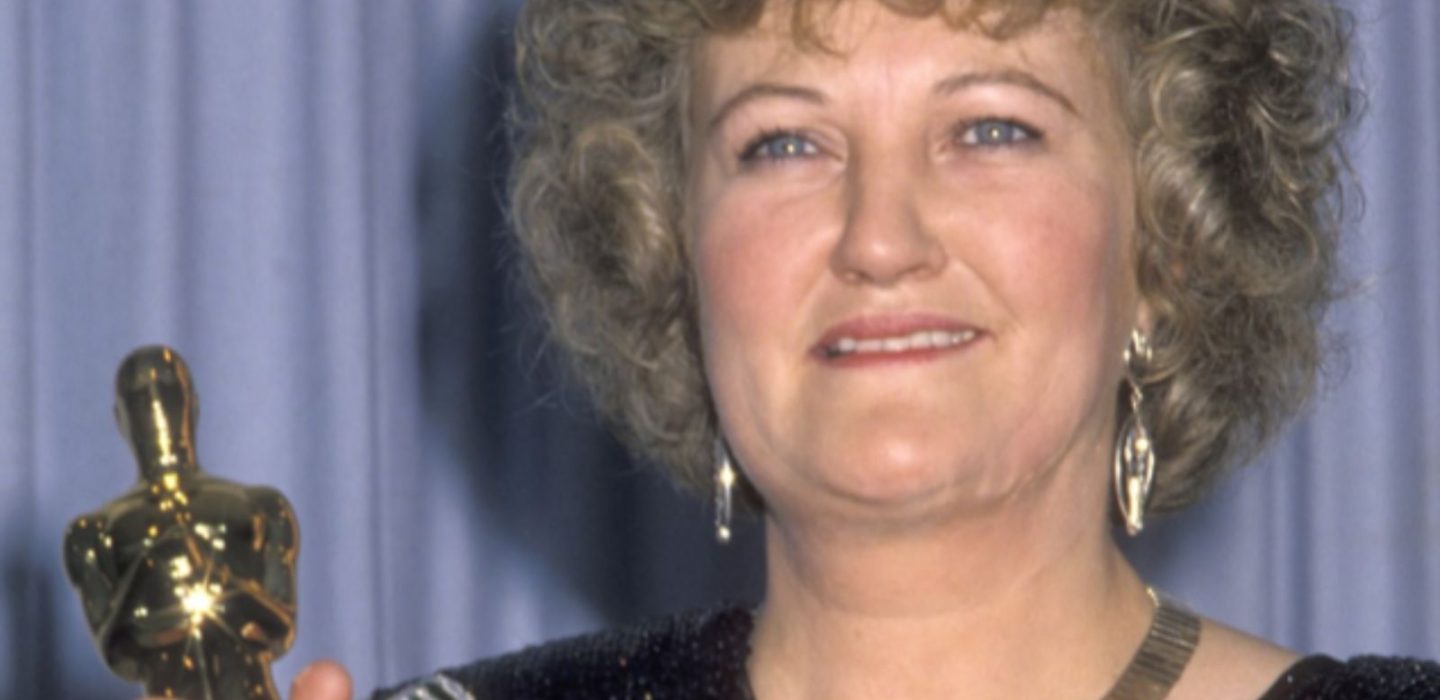
Brenda Fricker, the trailblazing Irish actress who became a household name through two very different roles nearly the industry could put together, an Oscar-winning dramatic mother and a gentle homeless woman feeding pigeons in Central Park, has died at the age of 81.
Her agent confirmed to ABC News that she passed away peacefully in Dublin on Thursday night, after a period of ill health.
The news has moved fans across generations, many of whom grew up watching her on screen without ever fully realizing the scope of the career behind that familiar face.
Fricker died in Dublin, and her agent, Phil Belfield, shared the news in a statement. Belfield said, “We will never see her like again and the world is lesser for the lack of her.”
He continued, expressing that he was honored to know, love, and work with her, and that she would always hold a place in his heart and in the hearts of so many film and TV fans around the world.
It is the kind of tribute that captures how deeply Fricker was woven into the emotional fabric of the entertainment world, not just as a performer but as a presence people felt they knew personally.
A career that made history
Long before she was recognized by name, Fricker was already a fixture of British and Irish television.
Born in Dublin on February 17, 1945, she began her acting career in television roles and became well known to UK audiences through her long-running role as nurse Megan Roach on the BBC’s Casualty in the 1980s and 90s, a role she would later reprise in 2007 and 2010.
That steady, unglamorous television work built the foundation for a performer who would eventually make history on one of the biggest stages in entertainment.
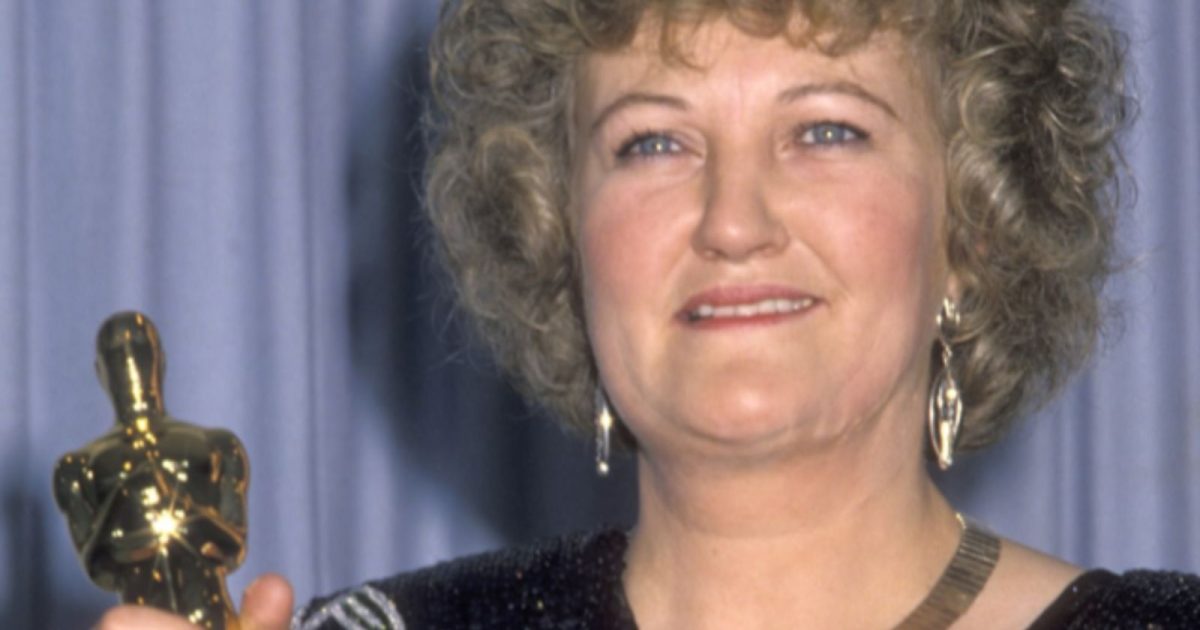
That history-making moment arrived in 1990. Fricker won Best Supporting Actress for playing the mother of Irish writer and painter Christy Brown in the biographical drama My Left Foot, a film for which her co-star Daniel Day-Lewis won Best Actor.
The film told the story of Christy Brown, an Irish writer and painter born with cerebral palsy who could control only his left foot. Her win was historic in its own right, as the BBC noted she became the first Irish actress ever to win an Oscar, beating out major Hollywood stars including Julia Roberts and Anjelica Huston in the process.
For a country that has produced countless celebrated actors, it was a singular milestone, and one that would open doors for Irish talent on the global stage for decades afterward.
Fricker did not stop there. Over a career spanning six decades, she went on to star in a wide range of films, including So I Married An Axe Murderer in 1993, A Time To Kill in 1996, Veronica Guerin in 2003, and Albert Nobbs in 2011. She also appeared in more than 30 film and television productions across her lifetime, according to her agent.
Her range was part of what made her so respected within the industry, moving comfortably between heavy dramatic material and warmer, more accessible family entertainment without ever losing the authenticity audiences responded to.
The role that made her a holiday fixture
While Academy voters remember Fricker for My Left Foot, an entirely different generation of fans knows her best for a much smaller, quieter role.
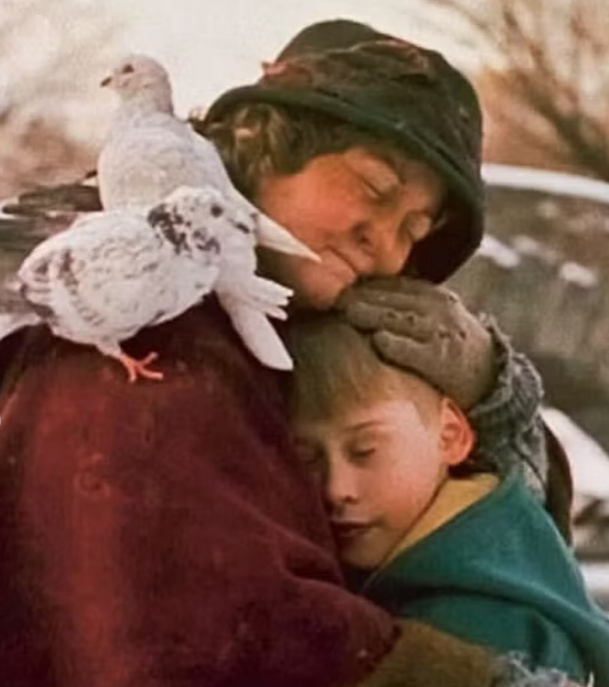
She is fondly remembered by many as the Central Park “pigeon lady” who befriends Macaulay Culkin’s character Kevin in Home Alone 2: Lost in New York, released in 1992.
Though her screen time in the film is limited, the character became one of the most emotionally memorable parts of the entire Home Alone franchise: a homeless woman whose loneliness and eventual kindness toward a lost child struck a chord that has endured for more than three decades.
That connection between Fricker and her character became especially poignant in the years before her death. Speaking to Ireland’s Ray D’Arcy Show in an interview that later resurfaced widely, Fricker opened up about spending the holidays on her own.
She admitted, “I’m old and I live alone. It can be very dark,” describing how she would turn her phone off and put the blinds down to get through the day.
When the host remarked on the irony that so many families gathered to watch Home Alone 2 during the very season she found difficult, Fricker responded simply, “Well, the pigeon lady was very much on her own.”
She did not stop at Christmas Day either. Fricker said Christmas itself was manageable, but New Year’s Eve was much harder, explaining that there was “no one to turn around to hug or smile at” when the church bells rang at midnight.
It is a detail that fans have returned to again and again since news of her death broke, a reminder that the woman who played one of cinema’s most tender depictions of loneliness understood that feeling far too well in her own life.
That honesty, delivered without self-pity, is part of why so many are mourning her not just as an actress but as a person who gave audiences something real.
Fricker’s life beyond the screen was similarly candid. She was married to director Barry Davies from 1979 until their divorce in 1988, and she experienced a number of miscarriages, which she said left her with severe depression for a large part of her life.
In recent years, she released a memoir titled She Died Young, which detailed her childhood in Dublin alongside her sister, Grania, and also revealed her experiences with sexual violence and mental health struggles that led to multiple institutionalizations.
The book went on to appear on the Irish Sunday Times bestseller list. According to The Guardian, Fricker had written the memoir partly for financial reasons after struggling with debt, a fact she never hid from the public.
Ireland mourns one of its own
Tributes poured in quickly from her home country. Ireland’s deputy prime minister, Simon Harris, led tributes following news of her death, remembering the actress as one of the country’s defining cultural figures.
Harris said, “She truly was among the greatest exports this country has ever produced and an ambassador for Irish talent on the world stage.” He added, “Quite simply, we will never see the like of her ever again.”
Coming from the country’s second-highest political office, the statement reflected just how significant Fricker’s cultural footprint had become over the decades, stretching well beyond entertainment circles into the broader story Ireland tells about itself on the world stage.
In addition to her literary success, Fricker was recently granted the honor of the Freedom of the City of Dublin, an honor her agent said she was particularly thrilled and proud of.
It was a fitting distinction for a woman born and raised in the city, one whose career had carried the name of Dublin to red carpets and film sets around the world while she quietly continued to call it home.
Fricker was born in 1945 and grew up in the south Dublin suburb of Dundrum, the daughter of Desmond Fricker, a journalist with the Irish Times and RTÉ, and Bina, a schoolteacher.
That grounding in Dublin life, and in a household built around storytelling and education, appears to have shaped the honesty and warmth that came through in nearly every role she took on.
Fricker’s passing closes the chapter on one of Irish cinema’s most decorated careers, but it does not erase the impact of the work she leaves behind.
For anyone who has ever curled up to watch Home Alone 2 during the holidays, or who sat in stunned admiration during My Left Foot, her performances will remain part of how audiences experience those stories for years to come.
She may have described her own holidays as quiet and difficult, but the world she left behind through her work was anything but lonely, filled instead with millions of people who felt, even briefly, that they knew her.
If you like what you just read, then subscribe to our newsletter and follow us on social media.