
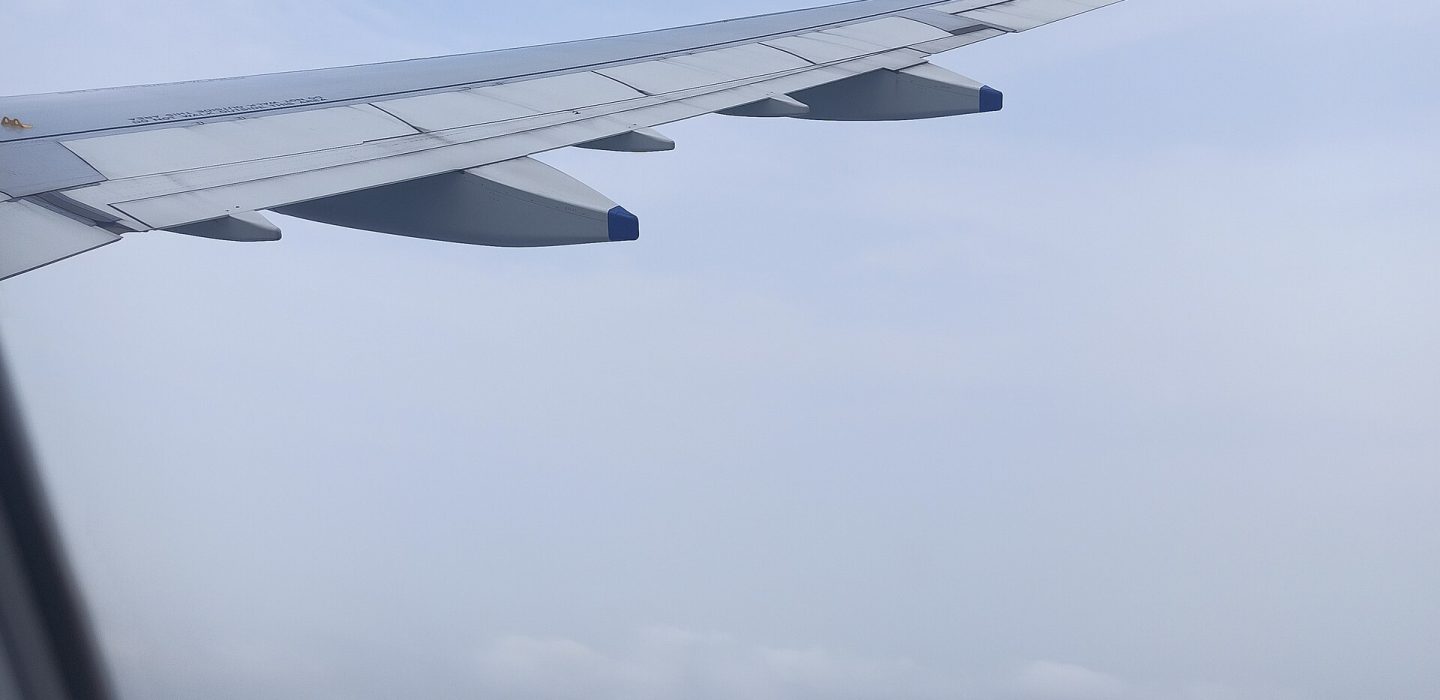

Look closely at an airplane window and a pinprick appears near the bottom edge of the glass. Passengers often wonder whether it is a flaw, a vent or a leftover from manufacturing.
It is none of those. The tiny opening is a deliberate design feature, and it has two jobs: balancing pressure between the layers of the window and keeping the panes from fogging.
What the Tiny Hole Actually Is

Aviation writers call it a bleed hole or breather hole. AFAR reports that the hole cuts through the central pane of a three-layer window, and that it is intentional.
The detail catches the eye on long trips, and travelers who like to prepare for flights may enjoy a list of 11 things never to do on an airplane. A set of 3 piece luggage sets for holiday trips is another useful companion to those plans.
The hole is small on purpose. AFAR says it allows pressure equalization between the space between the panes and the cabin interior, which is the first of its two jobs.
Travelers who plan around holiday flights may want to check which Thanksgiving foods have to ride in checked bags before packing, and carry-on suitcases worth packing can help avoid fees.
Those who like airline trivia may also enjoy a rundown of airline fees that are not always owed, plus a look at the cheapest airlines to fly.
The Three Panes Behind the Glass
An airplane window is not a single sheet. AFAR describes three layers: an outer pane that handles pressure changes during climbs, a middle pane that adds protection in emergencies, and an inner pane that guards against scratches.
Mental Floss adds that the outer pane is built to withstand cabin pressure and the cold at cruising altitude. The middle pane is weaker and serves as a backup, and the inner pane is the scratch pane that passengers can touch.
The bleed hole sits in the middle layer. That position matters, because it links the sealed gap behind the inner pane to the cabin air.
A trip also depends on what happens at home, which is why a checklist of things to do before leaving the house empty for Thanksgiving travel pairs well, and travel blunders that turn a vacation into a stress fest covers the human side.
How the Hole Balances Pressure
The cabin of a jet is pressurized, which means it holds a higher pressure than the thin air outside. According to Wikipedia’s entry on cabin pressurization, commercial aircraft must keep the cabin altitude at 8,000 feet or lower, and newer designs such as the Boeing 787 and Airbus A350 aim for around 6,000 feet for comfort.
That difference puts the force on the windows. Wikipedia lists typical pressure differential limits of 540 to 650 hectopascals, depending on the aircraft type.
AFAR quotes Captain Joe, a Munich-based pilot-turned-content creator, who said the hole allows for pressure equalization between the space between the panes and the cabin interior. Without it, the pressure difference could stress the window.
Mental Floss explains the effect: air flowing through the hole means the outer pane bears most of the force from the pressure difference. Without the opening, trapped air could expand and compress during climbs and descents, straining the inner layers.
Why It Keeps the Panes From Fogging
The second job is easy to see. Moisture trapped between panes could otherwise condense and leave a hazy sheet in the middle of the view.
AFAR says the hole helps stop condensation or fog from forming between the panes, which could obstruct passengers’ views. Mental Floss says air circulation through the hole helps keep moisture from condensing there.
The opening matters in unusual conditions too. According to Captain Joe, quoted by AFAR, during rapid descents or sudden cabin pressure changes the hole helps prevent cracks or shattering. Mental Floss says that in rare situations, such as a sudden descent, it gives pressure a path to equalize and reduces stress on the window assembly.
Why the Windows Look the Way They Do
The window is only one part of the pressurized shell. Wikipedia’s entry on aircraft cabins says pressurization pumps compressed air into the cabin to keep occupants safe and comfortable, because the outside air at cruising altitude is too thin to breathe.
On most passenger aircraft, oxygen masks deploy automatically when cabin pressure drops to the equivalent of 14,000 feet, according to the same entry, and a pressurization failure above 10,000 feet is considered an emergency requiring a descent.
AFAR notes that early jets had square windows, whose corners absorbed much of the pressure stress, and that designers later switched to rounded oval shapes. Wikipedia’s cabin pressurization entry adds that Concorde had smaller windows to slow decompression if a window seal failed.
Together, the shape, the three layers and the bleed hole form a small system. Each piece shares the load, and the outer pane handles most of the force.
The next time a window seat comes up, the pinprick is worth a second look. It is a small, deliberate piece of engineering that keeps the view clear and the glass stable for the whole flight.
Get stories like this by email. Sign up for Crafting Your Home.
This article was produced with AI assistance and edited for accuracy against the sources linked above.
Image: Manishontop02 – CC BY-SA 4.0/Wikimedia Commons