
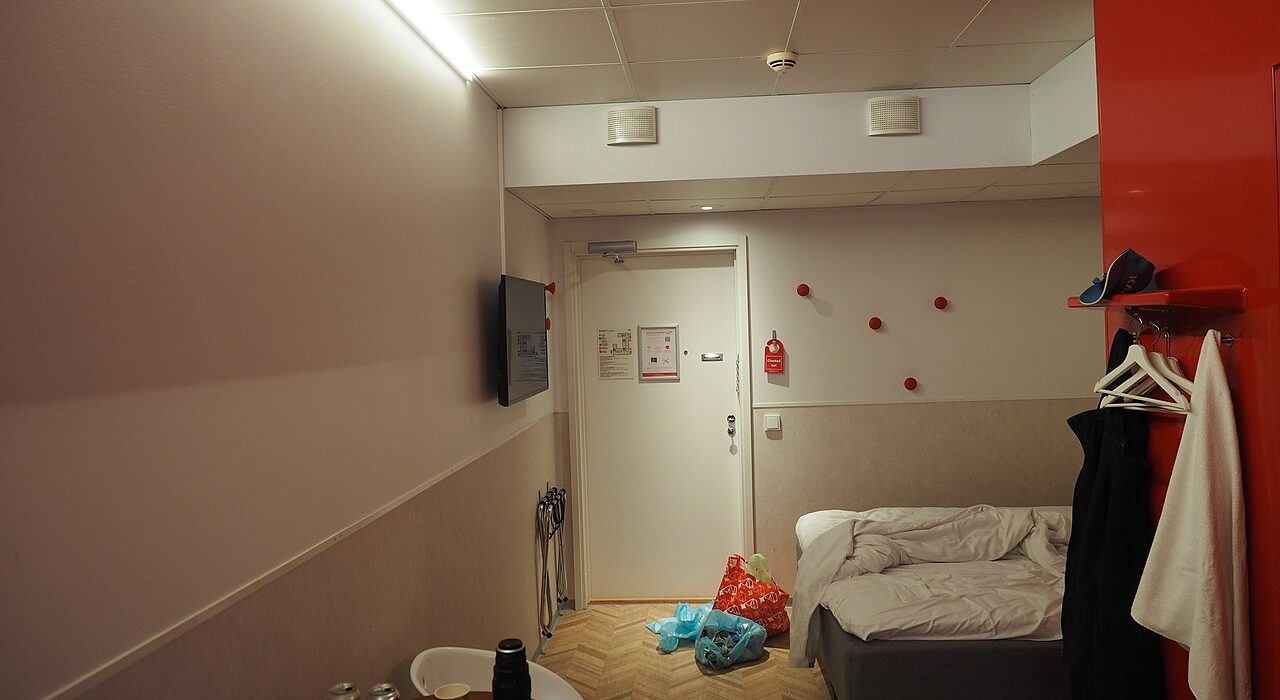


A hotel room is rented, not owned, and the rules of good guest behavior start there. Etiquette expert Diane Gottsman of The Protocol School of Texas has a short list of habits that irritate staff and fellow guests alike, and other travel sources echo most of it. Six of them stand out, from the breakfast dress code to the housekeeping cart.
None of these is about luxury-hotel stuffiness. They come down to sharing a building with strangers and leaving a room the way a housekeeper can actually clean it.
1. Leaving Trash on the Floor and Wet Towels on the Bed

In her summer travel etiquette guide, Gottsman says trash belongs in the receptacle, not on the floor, and wet towels do not belong on the bed. Some hotels ask for dirty towels to go in a specific spot, so following the hotel’s instructions makes the job easier.
Housekeepers see the other side of this daily. A Cheapism roundup of housekeepers’ complaints describes food containers and wrappers scattered across tables and floors while the garbage can sits nearly empty, which slows cleaning and adds work. A longer list of things never to do in a hotel room covers more room-level habits, and a guide to travel blunders that turn a vacation into a stress fest adds trip-level ones.
2. Wearing Pajamas to Breakfast
Gottsman advises against pajamas at breakfast and in other shared areas, even on a concierge floor. Her rule of thumb is to dress as if others will see the guest, because they will. Shoes belong on in the hotel, and at minimum, pool shoes in the lobby.
Sherman’s Travel agrees on cover-ups and shoes outside the pool or beach area and adds that walking through the lobby in a bathrobe is a miss. A CNBC report carried by NBC 6 South Florida cites an Expedia and Hotels.com survey in which 94% of respondents called walking barefoot inappropriate and 92% said the same about hotel robes in the lobby. Some luxury properties say they welcome pajamas at breakfast anyway, so a hotel’s own tone counts. Changing norms are also the subject of a list of etiquette rules Gen Z has stopped following, and seasoned travelers share their best travel recommendations in another roundup.
3. Talking Loudly in the Hallways
Hotel walls are thin and room doors are flimsy, Gottsman notes, so voices should drop in corridors. She also says children should not run or play in the hallway, and that volume deserves attention late at night.
Sherman’s Travel puts quiet hours at roughly 10 p.m. to 8 a.m. and recommends closing the heavy room door gently and keeping late-night television low. It also suggests packing earplugs, since soundproofing varies from hotel to hotel. Anyone planning a holiday trip may also like the carry-on suitcases for Thanksgiving travel and the rundown of the $45 TSA fee for travelers without REAL ID.
4. Raiding the Housekeeping Cart
The cart is not a supply closet. Gottsman says complimentary toiletries are meant for normal use, not stockpiling, and that extra towels or washcloths should not be taken just in case. Cheapism’s housekeepers describe guests helping themselves to toilet paper, towels and even cleaning tools from carts without asking, with one saying a broom vanished mid-shift. Another take on guest behavior appears in a piece on hotel guest no-nos, while a roundup of places travelers vowed never to revisit shows where bad stays can end up.
The better move is to ask the front desk or the housekeeper directly. Gottsman also recommends leaving $3 to $5 per night for housekeeping, in a note marked for the housekeeper, since loose cash on a nightstand can be mistaken for a leftover. Sherman’s Travel puts the range at $3 to $6 per cleaning.
5. Touching the Buffet With Bare Hands
At a breakfast buffet, Gottsman says the provided utensils are for serving, and that children should not handle food with their hands. Instead, an adult can serve food onto a child’s plate.
Sherman’s Travel adds a related rule: extra breakfast buffet food should not be carried back to the room. A guest who wants outside food can bring it discreetly and store it in the room refrigerator or ice bucket rather than a cooler.
6. Sitting on a Problem Instead of Telling the Front Desk
If the room is not what was requested, Gottsman says to tell the front desk team right away, so the issue can be fixed during the stay. Sherman’s Travel makes a similar point: check that the room is satisfactory before unpacking, instead of asking to move later.
Speaking up early is polite to staff too, since it gives them a chance to solve the problem while the guest is still in the building.
Get stories like this by email. Sign up for Crafting Your Home.
This article was produced with AI assistance and edited for accuracy against the sources linked above.
Image: JIP – CC BY-SA 4.0/Wikimedia Commons
