
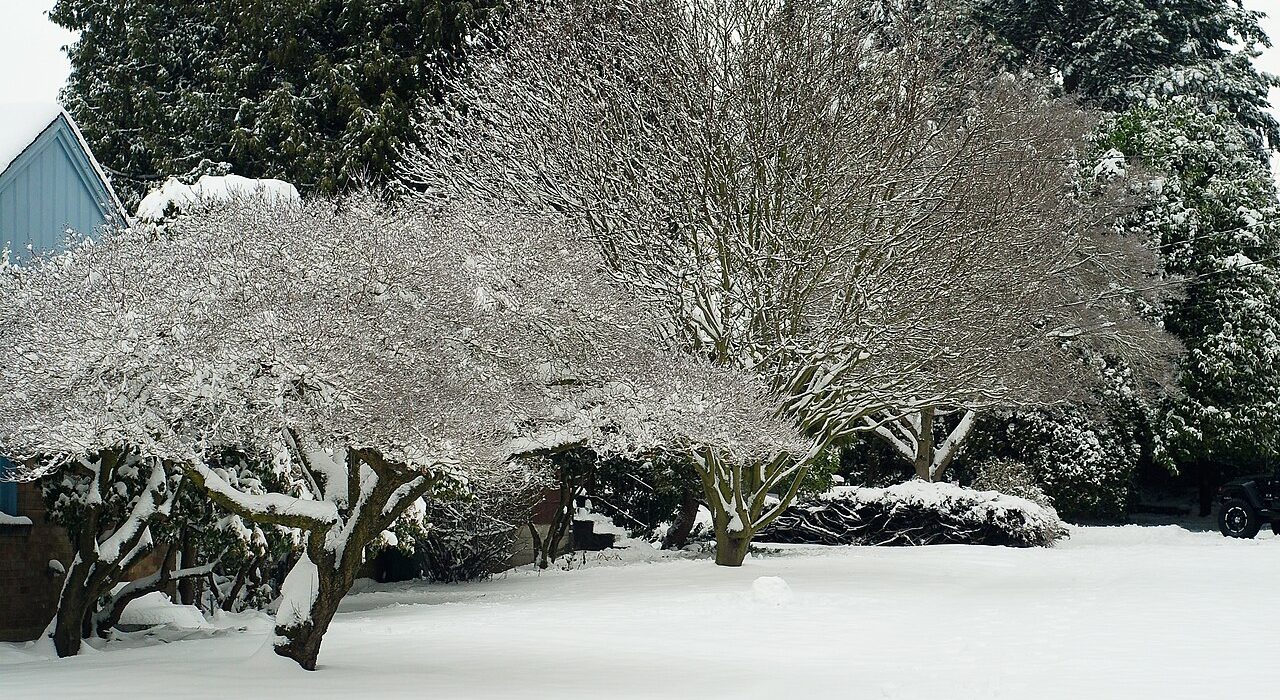

Two almanacs have looked at the same Pacific Northwest winter and come back with different pictures. The Old Farmer’s Almanac lists above-normal temperature, precipitation and snowfall for the region, while the Farmers’ Almanac describes a more changeable and somewhat less dependable snow season.
Both forecasts were published months ahead of the season, and both describe broad patterns rather than individual storms. Side by side, they show where the two agree on a mild, wet backdrop and where they split on snow.
What the Old Farmer’s Almanac Expects

According to the Old Farmer’s Almanac regional table, the Pacific Northwest is listed as above normal for temperature, precipitation and snowfall. The coldest periods are late December, early January and early February. The Almanac’s winter overview adds that the snowiest stretches fall in late December, mid-January and mid-February, and it calls the season mostly mild across the country.
That mix of mild air and extra moisture is the key detail. Powder reports that the Almanac calls mild conditions the dominant theme but still forecasts above-normal precipitation and snow along the West Coast, reaching into northern California. The same piece notes that the outlook could mean fewer rain events at around 6,000 feet, a welcome change after a winter in the region that swung between very wet and very dry.
Readers tracking the mountain side of the story can compare it with the earlier report that the Pacific Northwest and Intermountain West face a snowier winter, and anyone planning cozy nights in may enjoy a list of little rituals from the ’80s and ’90s that disappeared for a bit of nostalgia. The broader national picture appears in the earlier piece on how the Old Farmer’s Almanac calls winter mostly mild, and a list of documentaries that took a hard left turn suits a stormy evening.
How the Farmers’ Almanac Differs
The Farmers’ Almanac takes a more cautious line. In its 2026-2027 winter forecast, it says the Pacific Northwest may experience a more changeable and somewhat less dependable snow season. Temperatures across much of the West are expected to average near normal overall, though the Almanac cautions that this does not mean the winter will be consistently mild.
The Almanac’s regional outlook fills in the local picture. It describes valley precipitation often falling as rain and Cascade snowpack that may be less dependable than usual, with mild, damp stretches in Seattle and Portland between colder spells. TownLift, summarizing the same outlook, adds that sudden cold snaps and short snowy periods are expected across the West, with frequent milder stretches in between.
Neither almanac gives a single date for a big storm, so the longer-range picture is the useful part. The federal view is also worth a look in the report on NOAA’s official winter outlook, and the coverage of when the Old Farmer’s Almanac expects the coldest periods lists the cold windows for every region. For a lighter read on the season’s shared experiences, a roundup of social norms that should be abandoned and one on unconventional delicacies in the U.S. keep the conversation going.
The Farmers’ Almanac groups the Pacific Northwest into a zone covering Washington, Oregon and Idaho, so its wording applies to a wide stretch of coast, valley and mountain terrain. That breadth matters, because a forecast of less dependable snow can mean rain in the valleys, a thinner Cascade snowpack, or both. The Old Farmer’s Almanac works with a similar regional frame, though its table spells out the direction of temperature, precipitation and snowfall separately.
Where the Two Forecasts Agree and Split
On temperature, the gap is small. The Old Farmer’s Almanac says above normal, and the Farmers’ Almanac says near normal across much of the West, so neither forecast calls for a colder-than-normal winter in the region. Moisture is where the words differ more: one lists above-normal precipitation, the other emphasizes changeable conditions with rain in the valleys.
Snow is the real split. The Old Farmer’s Almanac lists above-normal snowfall and names specific snowy windows, while the Farmers’ Almanac calls snow less dependable. A winter that delivers both, with two or three strong snowy stretches separated by mild, wet ones, would fit the two outlooks at once.
What the Winter Dates Mean
The timing of the forecasts also matters. The Old Farmer’s Almanac regional table carries an Oct. 8, 2026 byline, Powder’s report on it ran Aug. 28, and TownLift’s summary of the Farmers’ Almanac outlook was updated Aug. 13. Both almanacs, in other words, set their numbers well before the first storms of the season, which is why they read best as a general lean rather than a promise.
The Old Farmer’s Almanac pairs its cold windows of late December, early January and early February with snowy windows of late December, mid-January and mid-February, and the winter solstice arrives on Dec. 21. Almanac forecasts are long-range outlooks rather than official weather forecasts, so local National Weather Service forecasts remain the tool for timing real storms and mountain pass conditions.
Get stories like this by email. Sign up for Crafting Your Home.
This article was produced with AI assistance and edited for accuracy against the sources linked above.
Image: stevevoght – CC BY-SA 2.0/Wikimedia Commons
