


The post “Why Dogs Love Squeaky Toys So Much, According to Research” first appeared on Crafting Your Home.
For some dogs, the sound of a squeaky toy is almost impossible to ignore. One squeeze can send a dog racing across the room. Within seconds, the toy may be pinned between two paws, bitten repeatedly, shaken from side to side, and subjected to what looks like a determined search for the little plastic squeaker hidden inside.
It is tempting to explain the behavior with one simple answer: The squeak sounds like prey. Research suggests the real explanation is more complicated. Studies support the idea that many dogs are attracted to toys that are easy to manipulate, chew, and make noise.
Dogs also appear sensitive to connections between sound and object size, and their interest in toys can change with novelty, breed-related play tendencies, and individual preferences. But scientists have not established that dogs hear a commercial squeaker and literally interpret it as an injured mouse or other animal.
Instead, the appeal may come from several things happening at once: biting, movement, sound, novelty, and the satisfying experience of making a toy react immediately.
The Squeak Gives Dogs Something Their Actions Can Control
One of the simplest explanations for squeaky-toy obsession is also one of the strongest: The toy responds. A dog bites down, and something happens immediately. That makes a squeaky toy different from an object that simply sits on the floor.
A ball rolls or bounces. A tug toy provides resistance. A food puzzle releases treats. A squeaky toy makes a sound almost exactly when the dog squeezes it.
In other words, the toy “answers back.” Research involving kennel-housed dogs found greater interaction with toys that were less robust and easier to manipulate, including plush and squeaky toys. The researchers suggested that interest may increase when an object can be chewed easily or produces noise.
That does not prove the squeak alone causes the attraction. Softness, texture, shape, and destructibility may all contribute. A 2025 study involving 29 puppies adds another interesting clue. The puppies spent an average of 122.2 seconds with a peanut-butter-scented squeaker toy compared with 95.8 seconds with a non-scented comparison toy.
However, the researchers could not separate the effects of scent from those of the squeaker because the toys differed in both respects. Only one puppy actually activated the squeaker during the observed sessions. That result reminds us that dogs may enjoy the entire sensory package rather than one magical feature.
Behavioral reinforcement may also help explain repeated biting. If biting produces an immediate, stimulating consequence, a dog that enjoys that response has a reason to bite again. The result can be a loop familiar to dog owners: bite, squeak, bite again.
Does a Squeaky Toy Really Trigger a Dog’s Prey Drive?
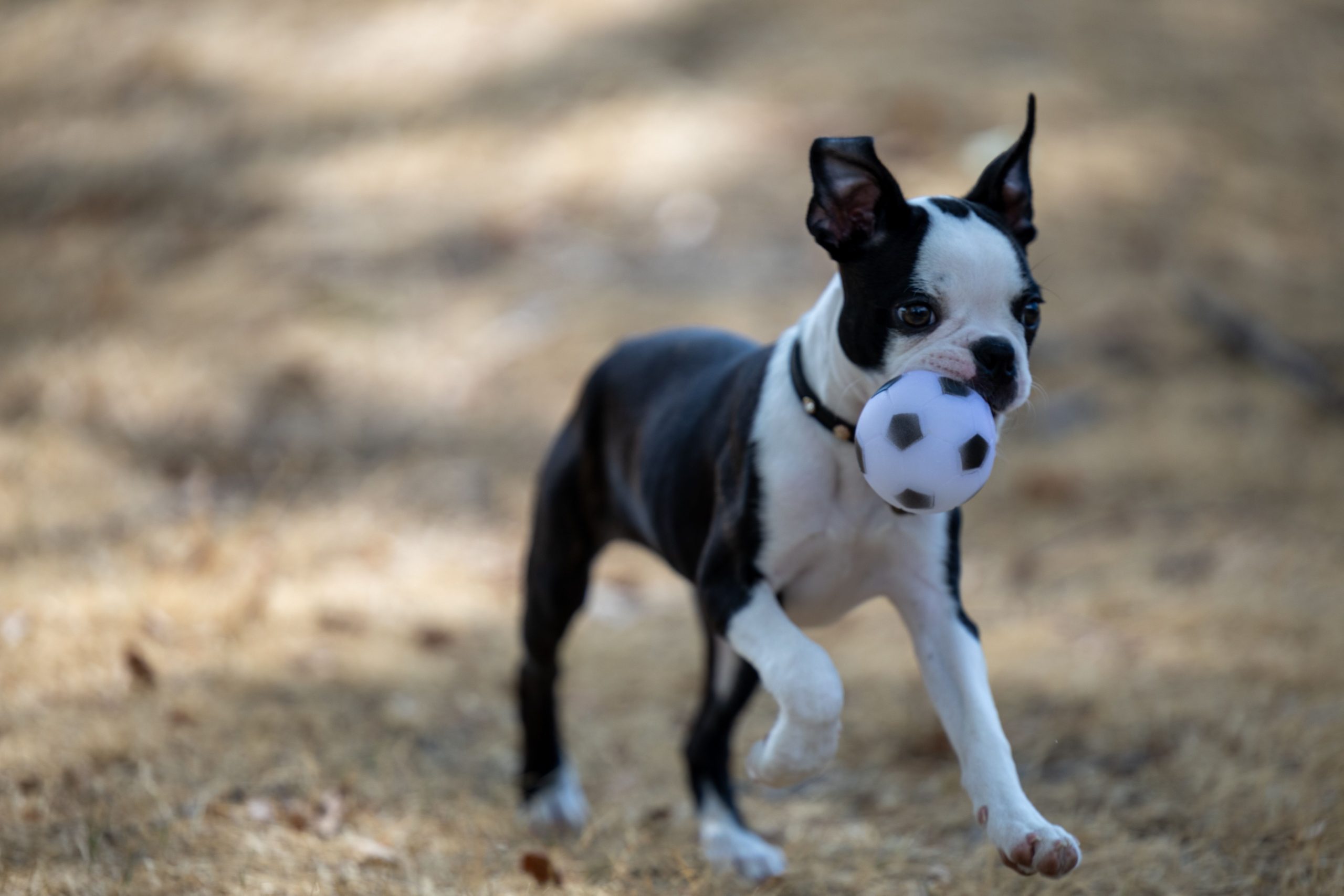
The prey-drive theory is not baseless. It just needs to be stated carefully. Dog play can include actions that resemble components of predatory behavior, including orienting, chasing, grabbing, carrying, biting, shaking, and tearing apart objects.
Research reviews have suggested that solitary object play in adult dogs may have roots in predatory behavior. That makes a soft squeaking toy an interesting combination. It can be grabbed easily.
It can be carried. It can be shaken. It may be torn apart. And when compressed, it makes a high-pitched noise.
Researchers have also found that dogs can connect pitch with apparent object size. In one controlled study, dogs responded more quickly when a high-pitched tone came from a small object or a low-pitched tone came from a larger one. On trials where sound and size matched, dogs identified the sound-producing object at above-chance levels.
That finding makes it biologically plausible that a high squeak paired with a small toy could be especially attention-grabbing. But it does not prove that the dog thinks, “This is injured prey.” Researchers have not demonstrated that commercial toy squeaks are universally interpreted as the distress calls of rodents, rabbits, or other animals.
The claim that a squeak automatically activates an ancient “kill switch” goes beyond what the research currently shows. Breed history may also influence play style. In research comparing herding dogs, retrievers, and livestock-guarding dogs, toys produced the highest levels of solitary play across the groups, while retrievers showed significantly more solitary play than livestock-guarding dogs.
That still does not mean breed determines whether an individual dog will love squeakers. Age, experience, temperament, learning history, and preferred play style can all matter.
Why Dogs Rip Out the Squeaker—and Why Some Dogs Hate It
The most dramatic squeaky-toy behavior may be the apparent mission to remove the squeaker entirely. A dog bites the toy repeatedly, tears open a seam, pulls out stuffing, and eventually extracts the small plastic noisemaker. It certainly looks like predatory dissection.
Research supports part of that interpretation: Dogs often enjoy soft, chewable, and destructible toys, and object play can contain predatory-style behaviors such as grabbing, shaking, and tearing. Researchers cannot say with confidence why the dog specifically targets the squeaker.
The dog may be searching for the most stimulating part of the toy. Tearing through fabric may be rewarding in itself. Reaching an object hidden inside may create an additional challenge. For some dogs, the sequence may overlap with predatory-style play.
What remains unclear is the popular claim that dogs deliberately try to “silence” prey. Dogs can also lose interest once a toy becomes familiar. In a study of 16 Labrador retrievers, interest declined after repeated exposure to the same manipulable toy. When researchers introduced a different toy, interest increased again, suggesting the dogs had habituated to the original object’s characteristics.
That could help explain why a formerly beloved toy becomes less exciting after its squeaker stops working. The sound has disappeared, but the dog may also have become accustomed to the toy’s smell, texture, and shape. And not every dog enjoys the noise in the first place.
Research on household sounds found that some dogs reacted strongly to high-frequency, intermittent noises such as beeps and alarms. In a study involving 386 dog owners, 34 reported extreme reactions to beeping sounds compared with 12 who reported extreme reactions to lower-frequency appliance noises.
Squeaky toys were not specifically tested, so those results should not be applied too broadly. But they do show why assuming all dogs find high-pitched sounds exciting would be a mistake. For some dogs, a squeak may be fun. For another, it may be startling or unpleasant.
Related:why-do-dogs-tilt-their-heads-researchers-found-a-surprising-clue-2
Squeaky Toys Can Be Fun, but Safety Matters
A dog loving a toy does not automatically make that toy safe. The biggest concern comes when determined chewers begin removing pieces. Loose squeakers, stuffing, fabric, rubber, or plastic may be swallowed.
The ASPCA advises owners to choose toys appropriate for a dog’s size and chewing behavior, supervise dogs around items that can fragment, and contact a veterinarian if a dog swallows a chunk. Owners should replace a squeaky toy once seams split, stuffing becomes exposed, or the squeaker comes loose.
Powerful chewers may be better suited to sturdier toys without easily detachable internal components, especially when they play without close supervision. Toy rotation can also help keep play interesting. Research showing that dogs habituate to familiar objects supports periodically changing the toys available rather than leaving every option on the floor permanently.
The best clue, however, is the dog in front of you. A dog that stays relaxed, enjoys the game, and can disengage when asked may find a squeaky toy to be excellent enrichment. A dog that hides, freezes, or retreats from the noise may prefer quieter play. And a dog that immediately destroys toys and swallows pieces needs a safer alternative.
The science does not support one universal explanation for why dogs love squeaky toys. For many dogs, the attraction is probably a combination of sound, touch, movement, immediate feedback, novelty, and play behaviors that overlap with parts of predation. So that squeak may not be a secret window into a dog’s “wild side.”
Sometimes the simpler explanation is enough: The dog bites the toy, the toy reacts, and that makes the game worth playing again.
Other Posts You May Like
- 10 celebrities-who-adopted-their-dogs-from-shelters
- dogs-dont-actually-feel-guilty-what-that-guilty-look-really-means-according-to-research
- dogs-using-talking-buttons-are-combining-words-on-purpose-scientists-found
If you like what you just read, then subscribe to our newsletter and follow us on social media.


