
The post Super-Recognizers Never Forget a Face: What Scientists Have Learned About Them first appeared on Crafting Your Home.
London police officer Gary Collins likes to unwind on weekends with an iPad loaded with photos of criminal suspects, and Detective Chief Inspector Mick Neville says he identified three of them over Sunday roast. Neville told National Geographic that story in 2015. Collins is what scientists call a super-recognizer, a label based far more on test scores than on party-trick anecdotes.
Four volunteers who thought they were the opposite of face blind
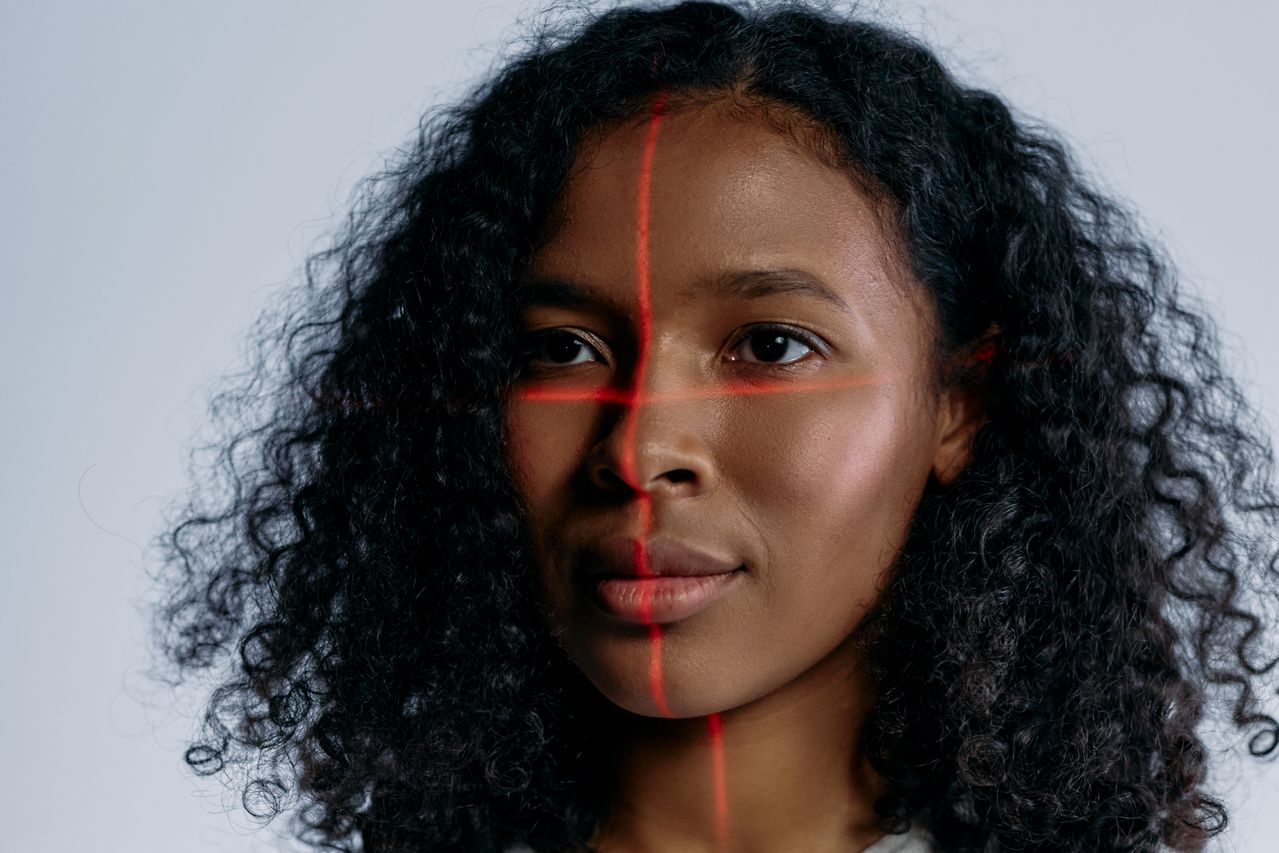
The category started with emails. After heavy news coverage of their face-blindness research, Harvard’s Ken Nakayama and Brad Duchaine of University College London heard from people who believed they had the reverse gift. With Richard Russell, they tested four of them.
The group was a 26-year-old PhD student, a 40-year-old homemaker, a 36-year-old municipal employee and a 31-year-old computer programmer. Each sat the Cambridge Face Memory Test, which shows target faces for three seconds apiece and later asks the taker to spot them under new poses and lighting. The researchers added a “Before They Were Famous” test built from 56 childhood photos of celebrities, and all four beat the range of 25 control subjects.
The 2009 paper ran in Psychonomic Bulletin & Review. Funding came from the US National Eye Institute and Britain’s Economic and Social Research Council.
609 suspects, one riot
Six hundred and nine. That is how many suspects Metropolitan Police officers identified from tens of thousands of hours of CCTV footage after the August 2011 London riots. Collins made 180 of the identifications himself, including a man who had covered his face with a bandana and pulled a beanie low over his forehead. Collins had last seen him years earlier.
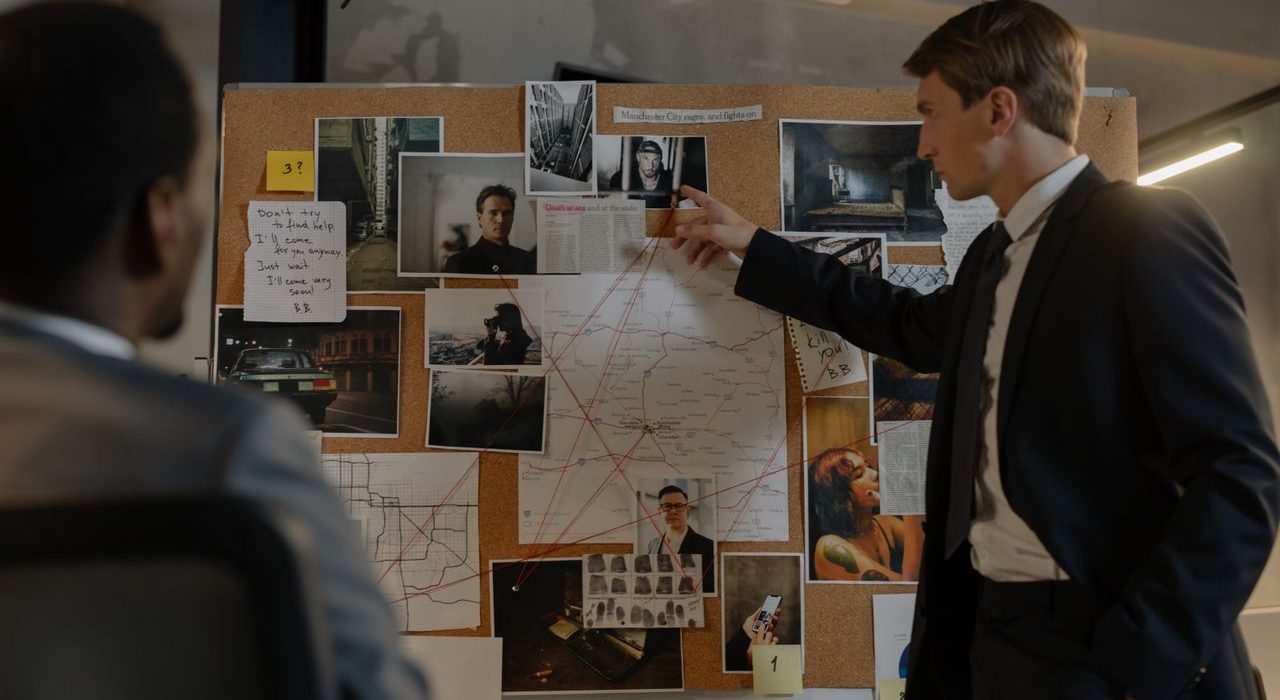
Neville had noticed the pattern before the riots. When he circulated the force’s Caught on Camera notices, some officers returned ten or fifteen names out of every hundred he sent, while most produced the occasional one-off. The riots turned a hunch about a few gifted officers into a standing unit.
The screening was brutal. By 2015 the Met’s forensic image team had tested thousands of officers and found 152 super-recognizers. A yield that small means most police departments should not assume a gifted recognizer is sitting somewhere in the ranks.
What twins say about training
Can anyone learn this? Twin data points toward inheritance. Jeremy Wilmer and colleagues gave the Cambridge Face Memory Test to 164 pairs of identical twins and 125 same-gender pairs of fraternal twins.
Scores for identical twins correlated at 0.70, against 0.29 for fraternal twins, in the 2010 PNAS paper. Wilmer said that, on average, upwards of 75% of the differences in people’s face recognition ability trace to inherited genes. A follow-up letter from the team conceded that a modest contribution from nonfamilial environment remains possible.
Face recognition also runs on its own wiring. Scores correlated weakly with visual and verbal memory tests, which points to face-specific mechanisms. Someone who aces a vocabulary-recall task has no guaranteed edge at a crowded reception.
The sample-size problem nobody puts in the headline
Read the literature closely and the evidence base looks thinner than the buzz suggests. Russell’s founding study covered four people. The 2016 University of York study of Met super-recognizers, published in PLOS ONE, tested four working officers. The largest comparison, led by the National Institute of Standards and Technology, included 13 super-recognizers among 184 participants.
Each group also arrived through a different door. Russell’s volunteers emailed researchers, and the Met officers were selected for their success at recognizing criminal offenders. No one has drawn a single clean line around who qualifies.
Small numbers do not erase the pattern. York’s officers performed well above normal at matching familiar and unfamiliar faces, including in degraded images. Still, the ceiling of the ability, and how many Americans might reach it, remain educated guesses.
Machines closed the gap while everyone was watching
The strongest result in the field belongs to a partnership. In 2018, NIST’s P. Jonathon Phillips, Alice O’Toole of the University of Texas at Dallas and colleagues published a comparison in PNAS. It pitted 57 forensic facial examiners, 30 facial reviewers, 13 super-recognizers, 53 fingerprint examiners and 31 undergraduates against one another.
Examiners, reviewers and untrained super-recognizers all beat the control groups, though individual performance varied widely. Phillips offered a blunt timeline: three years earlier, the best algorithm would have matched an average untrained student, while current ones rivaled a highly trained professional.
The winning combination surprised even the authors. A single examiner paired with a single top algorithm outperformed two human examiners working together. Humans keep an advantage today, but the trend line in that paper runs the other way steeply.
Related Post: 8 Things Highly Intelligent People Cannot Stand That Others Enjoy
Faces and the American courtroom
Any celebration of human recognition talent needs a caution label for readers in the United States. Of 375 DNA exonerations through 2020, the Innocence Project found that 69 percent involved eyewitness misidentification, and 42 percent of those cases were cross-racial.
Super-recognizers work from images and case files, and eyewitnesses work from memory of a frightening moment, so the two are far from interchangeable. Yet both lean on the same human faculty, and a specialist’s confident match can sway a jury just as a witness’s does. A tip from a super-recognizer is a lead that investigators still have to corroborate.
Neville’s own unit has acknowledged one weakness. He described a recruitment drive among ethnic minorities to offset cross-racial bias, since studies show people generally recognize faces of their own ethnicity better.
A spectrum with most of us in the middle
Russell drew the broader lesson from the original study. He said researchers had assumed face recognition was either normal or disordered, and that the data suggested a wide range of ability instead. Super-recognizers sit at one far edge of that range, and face-blind people sit at the other.
Everyone else lands somewhere between. The guest who greets you by name after a single meeting years ago probably feels uncanny for a reason.
Other Posts You May Like
- 6 Intelligence Questions That Reveal How Sharp Your Mind Really Is
- 12 Everyday Habits That May Be Holding Back Your Intelligence
If you like what you just read, then subscribe to our newsletter and follow us on social media.