

The post 8 Childhood Experiences Adults Say Today’s Kids Are Missing Out On first appeared on Crafting Your Home.
Childhood has changed in many ways, and some adults feel that certain everyday experiences that once shaped growing up are becoming less common. From exploring the neighborhood to creating games without a schedule, these simple moments often represented independence, imagination, and connection.
That does not mean every child today is missing these experiences. Family routines, neighborhoods, cultures, and personal circumstances all influence what childhood looks like. But many adults remember these activities as meaningful parts of growing up and wonder how often children still experience them today.
Roaming the neighborhood independently
Many adults remember a childhood where they could walk to a friend’s house, ride bikes around the block, or spend time outside without every activity being planned. The appeal wasn’t carelessness; it was having space to make choices, solve small problems, and create their own adventures.
Independent outdoor play can give children opportunities to practice decision-making, social skills, and self-regulation. However, access to this type of freedom depends on factors such as neighborhood safety, traffic, available spaces, and family circumstances.
Making up games with other kids
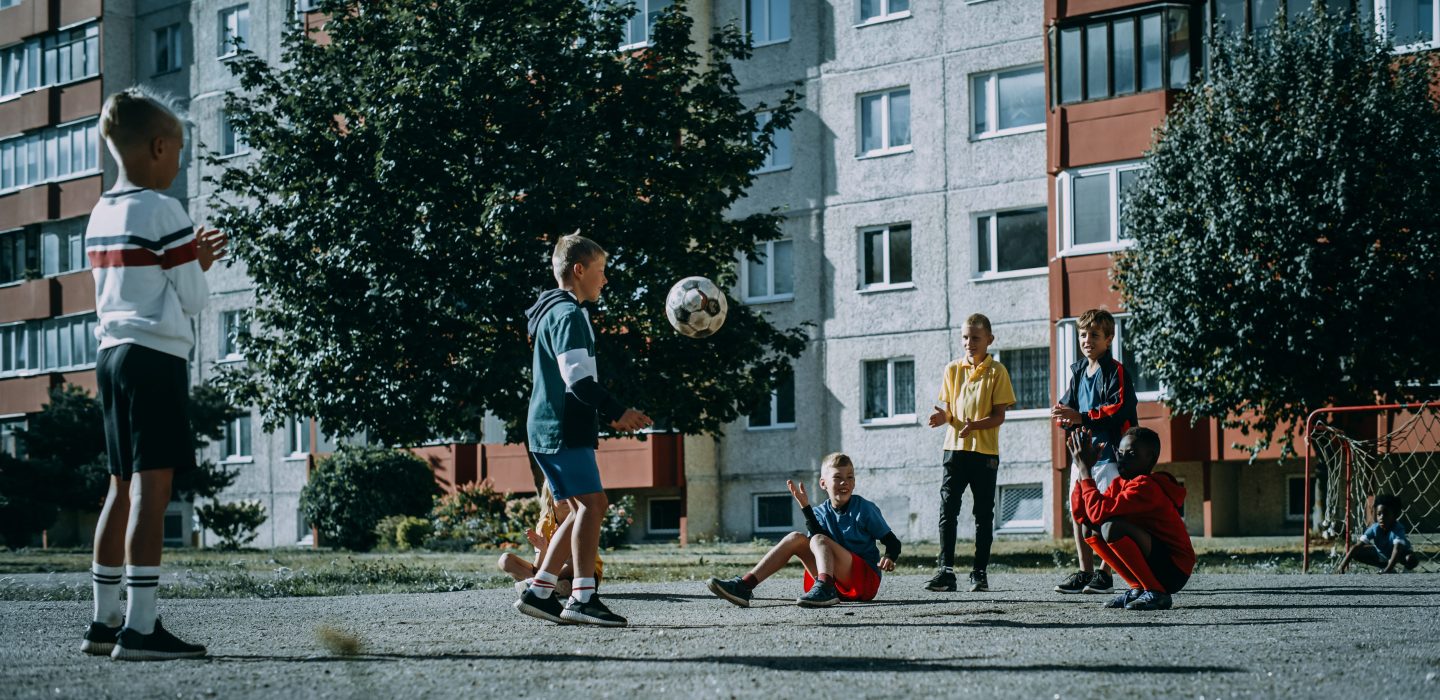
Before every activity had a schedule, many children created their own entertainment with friends. Games like hide-and-seek, tag, pretend play, and backyard challenges allowed kids to create rules, negotiate disagreements, and decide how the game should unfold.
Free play differs from organized sports or adult-led activities because children control the story and structure it themselves. Organized activities still have value, but many adults miss the creativity that came from children simply figuring things out together.
Related: 7 Best Family Board Games to Play Together
Being bored enough to invent something
For many adults, boredom once sparked a new idea. A quiet afternoon with “nothing to do” could turn into building a fort, drawing a neighborhood with sidewalk chalk, creating a pretend world, or finding a new game.
Today, digital entertainment is a regular part of many young people’s lives, with Pew Research Center reporting that 95% of U.S. teens ages 13 to 17 had access to a smartphone at home and 46% said they were online almost constantly in its 2024 survey. Still, boredom itself should not be viewed as automatically beneficial; what matters is having opportunities for self-directed activities.
Spending hours outdoors, not just passing through it

Many childhood memories involve muddy shoes, collecting interesting objects, exploring parks, or spending long afternoons outside. Outdoor play gives children opportunities for movement, curiosity, creativity, and unstructured activities.
The American Academy of Pediatrics notes that outdoor play can support motor development and social skills, while playgrounds can provide spaces for activity and free play. At the same time, access to outdoor spaces varies widely depending on where families live and the resources available to them.
Finding their way without a phone
Older generations often remember learning directions through landmarks, memorizing phone numbers, and figuring out routes without digital assistance. Today, smartphones and GPS tools have changed how many people navigate daily life.
Pew Research Center reported that 95% of U.S. teens had or had access to a smartphone at home in 2024. While technology offers convenience, many adults still look back fondly on the confidence that came from knowing their surroundings and solving small navigation challenges on their own.
Related: Why More People Are Building “No-Phone Hours” Into Their Evenings at Home
A screen-free family ritual around books
For many adults, bedtime meant a familiar routine of stories, shared reading, and asking for “one more chapter.” Reading together can create a meaningful family moment and give children a chance to connect with stories alongside parents, grandparents, siblings, or caregivers.
Research summaries from the Institute of Education Sciences note that positive family engagement in education is associated with several positive school-related outcomes, while a research review cited in ERIC found that home-based literacy activities can support reading development. These routines can look different in every household and do not have to follow one specific format.
Doing real household chores
Many adults remember having small responsibilities at home, whether that meant folding laundry, helping prepare meals, feeding a pet, or setting the table. These everyday tasks often taught children to participate in family life and understand how a household works.
However, limited evidence shows that children today universally do fewer chores than previous generations. The stronger point is that age-appropriate responsibilities can be a practical way for children to contribute and learn everyday skills.
Related: 6 Daily Chores ’60s Kids Did That Today’s Parents Wouldn’t Assign
Earlier bedtimes and quiet evenings
Many adults remember evenings built around simple routines: pajamas, a story, a conversation, and bedtime without endless scrolling. Sleep routines have changed for many families, and the CDC states that children ages 6 to 12 generally need 9 to 12 hours of sleep per day, while teens ages 13 to 17 need 8 to 10 hours. In 2019, 77.9% of U.S. high school students reported getting insufficient sleep on an average school night. However, technology is only one factor that can affect sleep, alongside school schedules, homework, jobs, family routines, and other demands.
The childhood experiences many adults remember are not disappearing everywhere, but they are changing. The goal is not to compare generations but to recognize the value of play, connection, creativity, responsibility, and time away from constant digital stimulation.
Other posts you might like
- 11 Childhood Wounds That Quietly Follow People Into Adulthood
-
Why Boomers Had a More Enjoyable Childhood Than Gen Z: 12 Reasons
If you like what you just read, then subscribe to our newsletter and follow us on social media.


