


This article was originally published on Crafting Your Home. A human contributor also wrote and edited the post.
The post Aubrey O’Day Just Connected Keffe D’s Guilty Verdict to Diddy, and the Message Could Not Be Clearer first appeared on Crafting Your Home
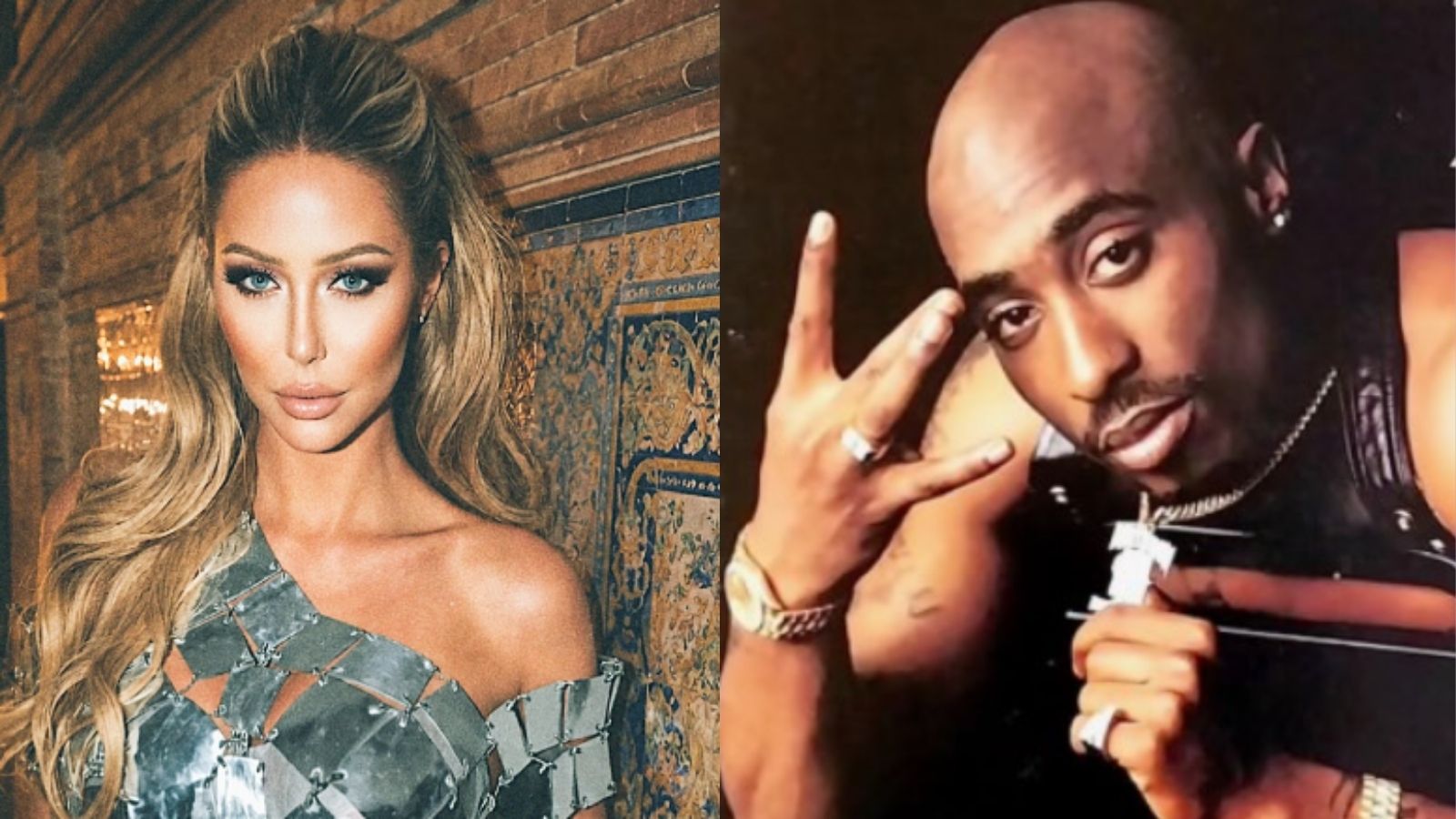
Aubrey O’Day did not waste any time reacting to Monday’s guilty verdict in Tupac Shakur’s murder case, and her reaction landed like a direct shot at her former mentor, Sean “Diddy” Combs.
A Las Vegas jury convicted Duane “Keffe D” Davis of first-degree murder with a deadly weapon in connection with the 1996 killing of the rap icon, marking the first conviction of any kind in a case that has haunted hip-hop for nearly three decades.
Within hours of the verdict, O’Day took to X to draw a pointed connection between the legal reasoning behind that conviction and the man she has spent years publicly criticizing.
“Watch Sean Combs: The Reckoning on Netflix,” O’Day wrote, referencing the Emmy-nominated docuseries executive produced by Curtis “50 Cent” Jackson. “You can see all of those who conspired to have Pac murdered.”
She followed up shortly after with a more detailed argument about legal accountability, one that made her underlying point almost impossible to miss.
“So now the question becomes: if evidence establishes that anyone else financed, ordered, encouraged, or knowingly set that murder in motion, why should their accountability be any different?” she asked, according to Complex.
It is important to be precise about what this is and is not. O’Day’s comments are an allegation and an opinion rooted in her interpretation of the Davis verdict, not a legal finding, criminal charge, or proven fact that Combs had any involvement in Shakur’s death.
TMZ, which first reported on O’Day’s remarks, said Combs’ camp declined to comment when reached for a response.
What the Keffe D Verdict Actually Established
To understand why O’Day’s comments carry the weight they do, it helps to understand exactly what jurors decided when they convicted Davis.
Prosecutors in Clark County never argued that the 63-year-old Davis fired the fatal shots that killed Shakur during a September 1996 drive-by shooting near the Las Vegas Strip.
Instead, according to NBC News, they argued he acted as a “shotcaller” for the South Side Compton Crips and orchestrated the attack in retaliation after Shakur and his entourage assaulted Davis’ nephew earlier that night.
Prosecutors said Davis handed the murder weapon to the actual shooter, believed to be either his nephew, Orlando “Baby Lane” Anderson, or another passenger in the vehicle, and that Davis was the only person still alive who had been in the car when the shooting happened.
Nevada law allowed for this outcome specifically because it permits someone who helps another person commit murder, without pulling the trigger themselves, to be convicted of that murder.
Chief Deputy District Attorney Binu Palal urged jurors during closing arguments to “find him guilty” of orchestrating the crime, and after a roughly two-week trial featuring testimony from two dozen prosecution witnesses, the jury did exactly that following less than three hours of deliberation.
Much of the case against Davis relied on his own words, including police interviews and a 2008 memoir in which he admitted to handing his nephew a gun on the night of the shooting.
Davis’ attorney argued those admissions amounted to nothing more than “full of crap” boasting, which is why he said his client was never charged for decades.
Davis did not testify in his own defense and now faces a possible life sentence, with a sentencing hearing scheduled for October 13.
His son and Shakur’s sister, Sekyiwa “Set” Shakur, both had visible emotional reactions in the courtroom when the verdict was read, according to the Associated Press, with Set Shakur crying and hugging prosecutors while Davis’ son covered his face.
Why O’Day’s Comments Point So Directly at Diddy
O’Day’s history with Combs stretches back two decades, long before her recent public criticism of him began. She rose to fame in 2005 as a member of Danity Kane, the girl group formed on Combs’ MTV reality show “Making the Band.”
That relationship has since curdled into one of the more consistent voices of public criticism aimed at Combs throughout his recent legal troubles.
O’Day did not testify in Combs’ federal criminal trial, telling listeners of a podcast in May that she had been contacted by Homeland Security but was “not here to testify for the Diddy trial, that I know of.”
Still, she has continued speaking out publicly whenever developments in Combs’ saga arise, and she also appeared as an interview subject in “Sean Combs: The Reckoning,” the same documentary she pointed followers toward this week.
That docuseries, which premiered on Netflix in December 2025, has become central to O’Day’s argument.
Directed by Alexandria Stapleton and executive produced by Combs’ longtime rival 50 Cent, the four-part series devotes significant attention in its second episode to the murders of both Shakur and fellow rap icon The Notorious B.I.G., framing the East Coast-West Coast rivalry of the 1990s as something that spiraled dangerously out of control.
The episode includes interviews with figures such as Shakur’s cousin William Lesane, former Bad Boy artist Mark Curry, former LAPD detective Greg Kading, and a former member of the Mansfield Crips, according to Netflix’s Tudum.
Notably, Netflix has stated publicly that 50 Cent, whose legal name is Curtis Jackson, served as an executive producer without creative control over the project and that no participants were paid to appear, a clarification the streamer offered after Combs’ representatives objected to Jackson’s involvement given his long-running public feud with Combs.
It is worth being direct here as well: the documentary raises questions and includes commentary from various sources about Combs’ alleged connections to the era’s violence, but it does not constitute a legal finding, and it has not resulted in any criminal charge against Combs related to Shakur’s murder.
Combs’ current legal situation is entirely separate from the Tupac case. He was convicted in July 2025 on two federal counts of transportation to engage in prostitution under the Mann Act, following a trial in which he was acquitted of the more serious charges of racketeering conspiracy and sex trafficking.
Judge Arun Subramanian sentenced him in October 2025 to 50 months in federal prison, a $500,000 fine, and five years of supervised release. Combs is currently serving that sentence at FCI Fort Dix in New Jersey while his legal team pursues an appeal.
Nothing in that federal case involved allegations connecting Combs to Shakur’s 1996 murder, and no law enforcement agency has charged him in connection with that killing.
O’Day’s message, stripped down to its core, is an argument about the principle of accountability rather than a direct accusation backed by evidence she has personally produced.
Her framing, that someone who finances, orders, encourages, or knowingly sets a murder into motion should face consequences just as much as the person who carries it out, mirrors almost exactly the legal theory that just secured a conviction against Davis nearly 30 years after the crime occurred.
Whether that theory will ever be applied to anyone else connected to Shakur’s death remains an open question, and as of now, Davis stands as the only person ever criminally charged in the case.
For O’Day, though, the timing of the verdict appears to have offered an opening she was clearly ready to take, using a nearly three-decade-old case’s long-awaited resolution to reignite a public feud that has defined much of her post-Danity Kane career.
The broader public reaction to O’Day’s comments has been swift, with many social media users drawing the same connection she intended between her statement and Combs without her needing to name him directly.
That ambiguity, whether intentional or not, has become something of a signature for O’Day’s public commentary on Combs over the past two years, allowing her to make pointed insinuations while technically stopping short of a direct legal accusation.
As the Keffe D case moves toward sentencing next month, and as Combs continues to serve his federal sentence while appealing his conviction, it seems unlikely that O’Day will be the last person to draw a line between the two men’s names in the wake of this verdict.
Other Stories You Might Like
- Nicki Minaj Is Trading the Barbz for the Boardroom as a Judge on Trump’s New $1 Million Business Show
- Mel Gibson Calls His Own Behavior “Thoughtless Idiocy” After Sign Language Backlash Erupts
If you like what you just read, then subscribe to our newsletter and follow us on social media.


