
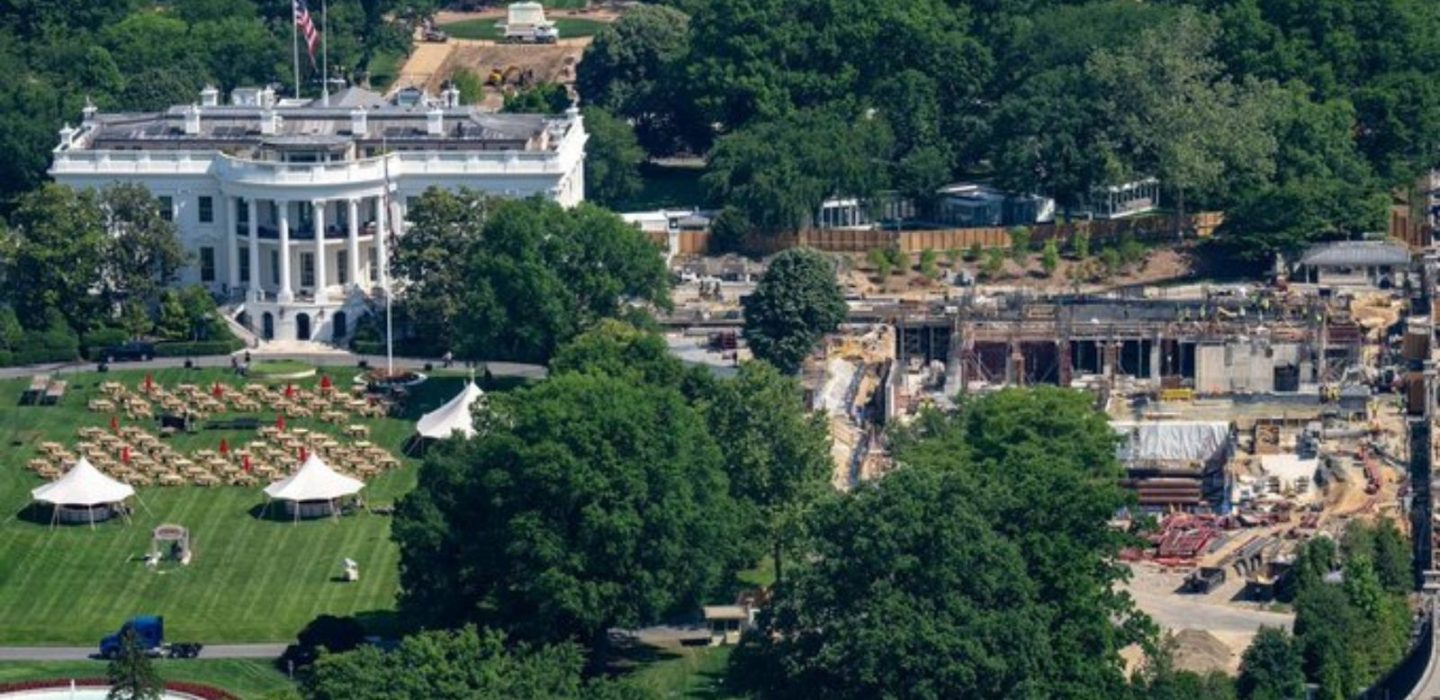

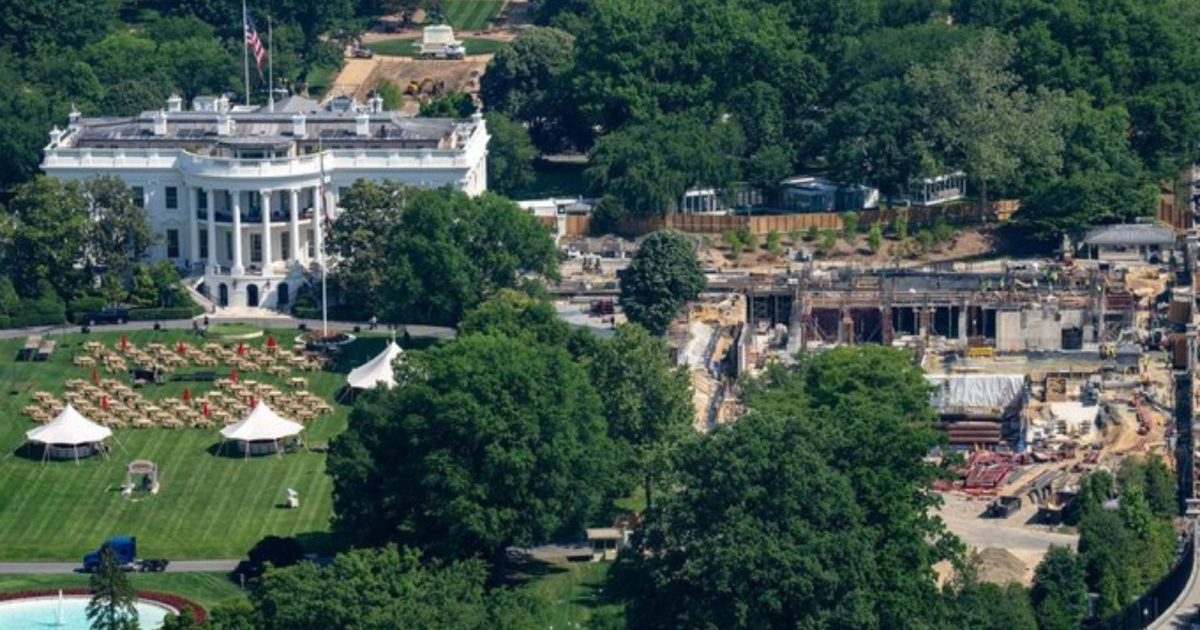
Appeals court leaves the ballroom without a roof.
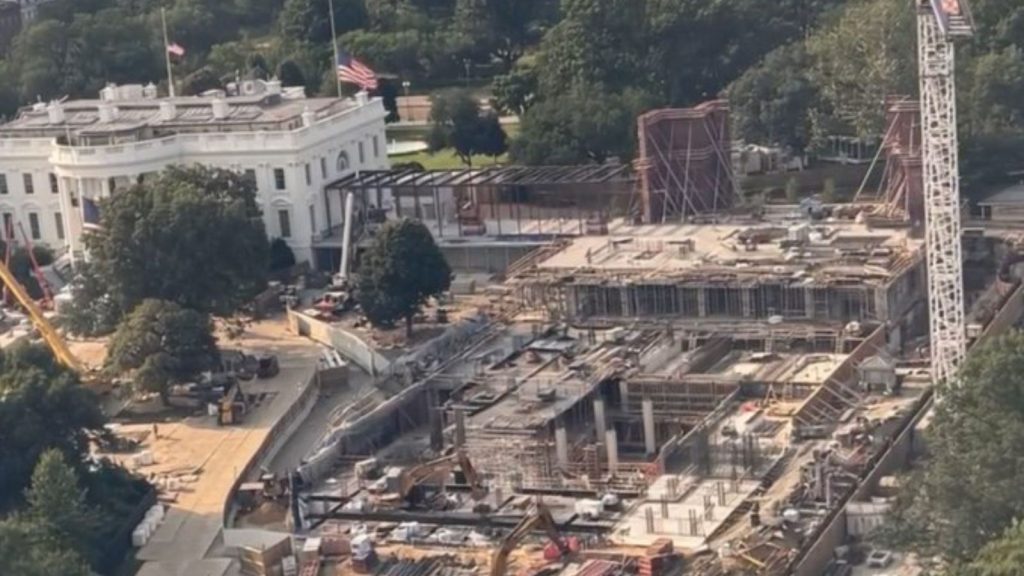
On August 7, the U.S. Court of Appeals for the District of Columbia Circuit upheld a preliminary injunction preventing the administration from continuing aboveground construction of the ballroom. The 2-1 decision affirmed an earlier order issued by U.S. District Judge Richard Leon.
The majority concluded that the administration probably lacked the necessary statutory authority to construct the ballroom without congressional approval. Congress holds constitutional power over federal property and federal spending, the judges explained, and lawmakers had not expressly or implicitly authorized the project.
The order does not completely close the construction site.
Work may continue on subterranean bunkers, bomb shelters, military infrastructure and medical facilities. Aboveground work considered strictly necessary to protect those facilities, the president, White House employees and the structural strength of the property can also proceed.
That distinction matters because the administration has increasingly described the development as more than an elegant venue for state dinners.
Trump has said the complex includes security features intended to protect future presidents and the nation’s most important executive building.
The court’s majority acknowledged those concerns yet found that the modified injunction already allowed essential security work to continue. In its published opinion, the court said responsibility for authorizing the ballroom itself belongs to Congress.
A grand project transforms into a constitutional test.
The planned 90,000-square-foot structure would stand approximately 55 feet tall on the site of the former East Wing. Its projected cost has risen to about $400 million, with Trump maintaining that private donations will finance the project.
The administration has presented the ballroom as a permanent solution to a familiar White House problem. Large state dinners and ceremonial assemblies often require temporary tents on the South Lawn because the existing rooms cannot accommodate enough guests.
Supporters see the new building as a practical modernization of a working government complex. Preservationists view it as an enormous architectural intervention that would permanently change the character of the White House grounds.
The National Park Service’s environmental assessment found that the ballroom would have lasting effects on the historic environment.
According to the court record, the new structure’s scale would dominate the eastern side of the property, creating a visual disproportion with the West Wing and the Executive Mansion.
The assessment also found that views of the White House from Lafayette Square and portions of the Ellipse would change permanently. Those findings became important evidence for the National Trust for Historic Preservation, which brought the lawsuit challenging the administration’s authority to proceed.
The woman at the center of the standing dispute
The National Trust based part of its claim to standing on Alison Hoagland, a member of the organization and a scholar of architectural history. Hoagland said she regularly visits President’s Park and values the historic views, symmetry and design of the White House grounds.
She argued that the ballroom’s height, size and placement would diminish her experience of the area.
The appeals court’s majority accepted that the threatened aesthetic and professional harm was sufficiently specific to support the lawsuit.
Judge Neomi Rao sharply disagreed. In her dissent, Rao argued that Hoagland’s concerns did not amount to the concrete injury required for a federal court to intervene. She accused the lower court of elevating one visitor’s “aesthetic displeasure” over government security interests and the risks of leaving the construction site exposed.
That disagreement could provide the administration with its strongest route to victory at the Supreme Court.
Why standing could decide everything
Former Justice Department attorney Abhishek Kambli told Fox News that the National Trust could encounter a demanding Supreme Court when defending its standing.
The organization may own historic properties, but it does not own President’s Park. Kambli argued that the Trust must still demonstrate that the lawsuit relates closely enough to its institutional purpose and that its members face an injury recognized by federal law.
Hans von Spakovsky, a senior legal fellow at Advancing American Freedom, also predicted that the administration could prevail. He argued that dissatisfaction with the appearance of the altered White House grounds does not establish the kind of concrete injury Supreme Court precedent requires.
These assessments represent the experts’ legal opinions, not a guaranteed outcome. The Supreme Court has not announced whether it will take the case, much less how it would rule.
The standing question nevertheless creates a possible escape hatch for the justices. If the Court decides that the National Trust cannot legally bring the lawsuit, it could dismiss the case without determining whether Trump possessed the authority to build the ballroom.
That would give the administration a courtroom victory while leaving the larger constitutional question unresolved.
A victory that might answer almost nothing
The distinction between standing and the merits is central to understanding what may happen next.
The merits concern the actual legality of the project: whether the president may use private donations and executive authority to make such a significant change to federal property without an act of Congress. Standing concerns whether this particular plaintiff is entitled to ask a federal court that question.
A Supreme Court ruling against the National Trust on standing would not necessarily mean the ballroom was unlawful. It would mean the preservation group was not the proper party to challenge it.
That outcome could make another lawsuit difficult.
A different challenger would need to identify a direct, individualized injury rather than a general objection to the president’s conduct.
Congress could potentially attempt to defend its institutional powers, but such litigation would bring its own procedural complications. Political divisions in the House and Senate could also make collective congressional action unlikely.
The construction site now carries national significance.
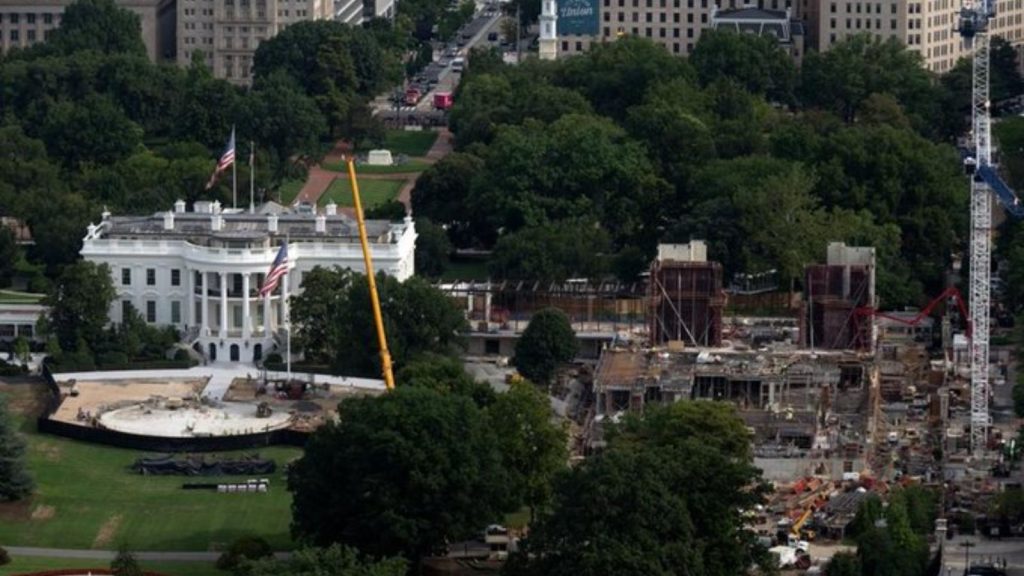
Trump has characterized the appellate ruling as a threat to national security and promised a Supreme Court appeal. The National Trust, meanwhile, maintains that even a president must follow the legal process governing historic federal property.
The dispute has therefore moved far beyond questions of columns, chandeliers and seating capacity. It now asks who controls the physical future of the White House and how far presidential authority reaches when private money finances work on public property.
For the moment, the ballroom remains suspended between an architectural vision and a judicial order. Underground security construction may continue, but the ceremonial structure above it cannot advance under the existing injunction.
The Supreme Court could eventually decide whether Congress must approve the project. It could also avoid that historic question entirely by ruling that the people challenging the ballroom never had the legal right to enter the courtroom. Either way, an addition designed to host major events has become the setting for a much more consequential confrontation one involving the limits of presidential power at the most famous address in America.
If you like what you just read, then subscribe to our newsletter and follow us on social media.


