

This article was originally published on Crafting Your Home. A human contributor also wrote and edited the post.
A sudden wave of migrant arrivals at Spain’s North African territory of Ceuta has placed Europe’s migration debate back at the center of political attention, after thousands of people crossed from Morocco in one of the most significant border incidents in recent years.
The scenes were dramatic. Large groups of migrants moved toward the Spanish enclave by sea and land routes, overwhelming local border resources and creating a humanitarian emergency that quickly spread beyond Ceuta’s narrow streets. The event has renewed questions about border security, migration policies, and the challenges facing countries located on Europe’s southern frontier.
Ceuta, a small Spanish territory located on the northern coast of Africa, has long been one of the world’s most closely watched migration hotspots. The territory shares a land border with Morocco, making it one of the only places where the European Union directly meets the African continent by land.
A border crossing that shocked authorities
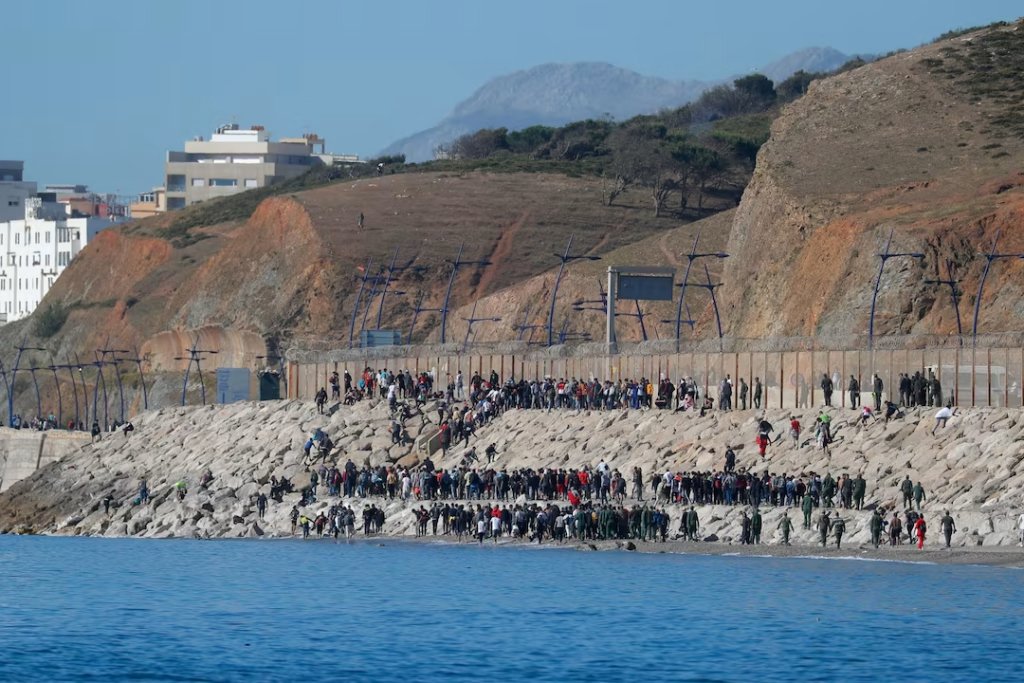
The latest surge caught authorities off guard as large numbers of migrants attempted to enter Ceuta from Morocco. Reports described thousands of people making their way toward Spanish territory, with many using coastal routes and attempting dangerous water crossings.
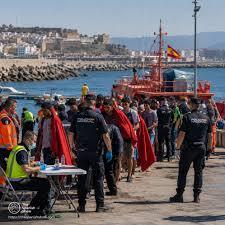
Spanish officials said the scale of the movement created major pressure on local police, emergency services, and reception facilities. The sudden arrival of large crowds forced authorities to focus on crowd management, medical assistance, and restoring control at key border points.
The crossing routes used by migrants were extremely risky. Some attempted to swim around coastal barriers, while others moved through areas near official checkpoints. Rescue teams were deployed to assist people struggling in the water, and authorities reported deaths linked to the dangerous journey.
For many migrants, reaching Ceuta represents a possible gateway to Europe. However, arriving in the territory does not automatically mean reaching mainland Spain or gaining permission to travel freely across the European Union.
Why Ceuta remains a migration flashpoint
Ceuta and Spain’s other North African territory, Melilla, have been at the center of migration disputes for years because of their unique geographic position. Although located on African soil, both territories are Spanish and form part of the European Union’s external border.
For migrants from parts of Africa and beyond, these territories represent one of the closest points of entry into Europe. The short distance between Morocco and Ceuta has made the area a focus for people seeking better economic opportunities, safety, or a new future.
Previous migration surges have shown how quickly the situation can escalate. In 2021, thousands of migrants entered Ceuta from Morocco during another major border crisis, creating diplomatic tensionsbetween Spain and Morocco.
The latest episode has again highlighted how difficult it is for European governments to balance border enforcement with humanitarian responsibilities.
Political debate grows across Europe.
The border surge has triggered a new politic