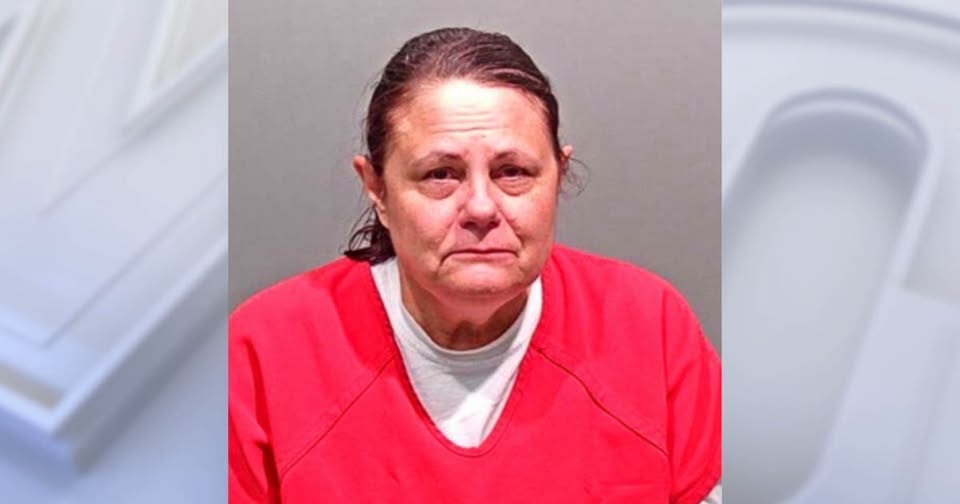
A Colorado murder case is drawing national attention after prosecutors alleged that a mother repeatedly supplied alcohol to her 16-year-old daughter before the teenager was found dead inside their Arvada home.
Investigators say the case did not begin with a single party, a single bottle, or one reckless night.
It allegedly unfolded over months, through daily messages, home alcohol deliveries, signs of worsening illness, and 173 empty bottles later found hidden in the teen’s bedroom.
Gretchen Leanne Ryan, 55, has been charged with one count of second-degree murder in connection with the March 2026 death of her daughter, identified in an obituary and media reports as Grace Elizabeth Ryan.
Prosecutors say the teenager died after prolonged alcohol use, and they allege her mother knowingly continued to provide alcohol despite warning signs that the girl’s health was deteriorating.
Ryan has not been convicted, and prosecutors have emphasized that a criminal charge is an accusation. She is presumed innocent unless proven guilty beyond a reasonable doubt.
A March 911 Call Turned an Arvada Home Into a Death Investigation

According to the First Judicial District Attorney’s Office for Jefferson and Gilpin counties, Arvada Fire and Arvada Police responded on March 9, 2026, to a home in the 6400 block of West 85th Avenue after receiving a report of an unresponsive juvenile female.
The 16-year-old was pronounced dead at the scene. What first appeared to be a medical emergency soon became a months-long criminal investigation into the household, the teen’s alcohol use, and the role prosecutors say her mother played in it.
Preliminary autopsy findings raised immediate concern. Medical professionals reported that the teenager had an abnormally fatty liver for someone her age, a finding they believed could point to extensive and prolonged alcohol consumption.
In an autopsy report issued April 4, Jefferson County Forensic Pathologist Dr. Dawn Holmes determined that the cause of death was aspiration pneumonia related to chronic alcohol use.
That medical conclusion is central to the case. Prosecutors are not alleging a typical homicide involving a weapon or a sudden act of violence.
Instead, the case focuses on whether a parent’s alleged pattern of supplying alcohol, ignoring severe warning signs, and failing to seek timely medical help can meet Colorado’s legal standard for second-degree murder.
Text Messages Became a Key Part of the Case
Investigators say forensic examinations of cellphones and devices belonging to Ryan and her daughter revealed a disturbing pattern. Beginning in September 2025, prosecutors allege, the mother and daughter discussed drinking and obtaining alcohol on an almost daily basis.
The district attorney’s office said the communications indicated that Ryan arranged regular alcohol deliveries to the home and took steps to hide the teen’s alcohol use from the girl’s father, who primarily lived in the basement of the residence.
Those alleged messages matter because they could help prosecutors argue that knowledge existed. In a second-degree murder case, the question is not simply whether a person made a bad decision.
Prosecutors must prove that the accused knowingly caused another person’s death. Colorado law defines second-degree murder, in part, as knowingly causing the death of a person.
The DA’s office said the messages also described serious physical symptoms in the months before the teen died. Investigators say the girl experienced vomiting blood, difficulty eating, trouble walking, and the use of diapers due to symptoms associated with excessive alcohol consumption.
Prosecutors allege that the teen repeatedly expressed fear that she was going to die and sought help from her mother.
The Night Before the Teen Died
The timeline released by prosecutors adds another painful layer. Messages exchanged the night before the death reportedly showed that the teenager was still communicating with her mother about feeling sick.
The district attorney’s office said the teen’s last outgoing communication was sent at 10:07 p.m. on March 8 from an iPad found near her body in the bathroom.
Messages later sent from Ryan’s device went unanswered, according to investigators. Prosecutors say 911 was not called until about 8:15 a.m. the next morning.
That gap may become a major issue as the case moves forward. Prosecutors are likely to focus on what Ryan allegedly knew, when she allegedly knew it, and what action she did or did not take after the teenager stopped responding.
Defense arguments may challenge the interpretation of those communications, the medical findings, the legal theory, or the evidence’s ability to prove the required mental state beyond a reasonable doubt.
173 Empty Bottles Hidden in a Bedroom
During a search of the teenager’s bedroom, detectives found 173 empty alcohol bottles concealed under the bed and inside a closet, according to the district attorney’s office.
The bottles included various brands and sizes of vodka and other hard liquor. Prosecutors describe the physical evidence as support for the allegation that the teen had been supplied alcohol for a prolonged period. )
The number is striking because it suggests more than casual underage drinking. It points to a repeated, hidden pattern inside the home.
For readers, it also raises a broader question: how does a child’s room become a storage place for that much evidence without intervention from the adults responsible for the child’s safety?
Authorities say the mother and daughter frequently consumed alcohol and marijuana together. The allegation is especially serious because the accused was not a peer, an older friend, or a party host. She was the parent.
That parent-child relationship sits at the center of why the case has become both a criminal prosecution and a public warning.
School Withdrawal and Isolation Added to the Concern
The DA’s office said the teen was unenrolled from her public high school in April 2025 to attend online school. By the time she died, prosecutors said, she had completed only one online semester of ninth grade and had not participated in activities outside the home for several months.
That detail matters because isolation can make warning signs harder to see. When a teenager regularly attends school, coaches, teachers, counselors, classmates, and friends’ parents may notice changes in appearance, attendance, behavior, or health.
When a teenager is mostly at home, the circle of people who might notice a crisis can shrink dramatically.
This does not mean online schooling caused the tragedy. It means the timeline described by prosecutors shows a teen who became less visible to the outside world during the same period investigators say alcohol use and health problems escalated.
In a case like this, reduced visibility may be one of the hardest public lessons to ignore.
The Medical Finding Behind the Murder Charge
Aspiration pneumonia can occur when food, liquid, vomit, or saliva enters the lungs instead of being swallowed properly. In this case, the forensic pathologist linked the teen’s fatal pneumonia to chronic alcohol use.
The DA’s office said Dr. Holmes noted that chronic alcohol use can increase the risk of aspiration pneumonia by suppressing gag and cough reflexes, reducing salivary gland function, and weakening immune function.
The autopsy classified the manner of death as natural because of the volitional component of alcohol consumption. That detail makes the prosecution more legally complex, not less.
Prosecutors are still pursuing second-degree murder, arguing that Ryan’s alleged conduct in providing alcohol and failing to act despite severe symptoms supports the charge.
This is where the case becomes legally unusual for many readers. The state is not simply saying alcohol was present.
It is alleging a prolonged chain of conduct: repeated supply, concealment, known medical decline, pleas for help, and a delayed emergency response.
Why Teen Alcohol Use Remains a National Public Health Issue
The Colorado case is extreme, but underage drinking remains a broader U.S. concern.
The National Institute on Alcohol Abuse and Alcoholism reports that, based on the 2024 National Survey on Drug Use and Health, about 2.9 million people ages 12 to 20 reported binge drinking in the past month, while 576,000 reported heavy alcohol use in the past month.
The Centers for Disease Control and Prevention also describes underage drinking as a major public health problem and notes that alcohol is the most common drug used by young people in the United States.
The CDC warns that young people who drink are more likely to engage in risky behaviors that can lead to injuries and other health consequences.
The public health backdrop is also worsening among adults. A CDC report found that average annual deaths from excessive alcohol use increased sharply from 2016–2017 to 2020–2021, with a larger percentage increase among females than males during that period.
These national numbers do not explain what happened in one Arvada home. But they show why alcohol-related harm is no longer just a private family matter or a college-campus issue.
It is a growing health and safety problem that reaches into households, schools, emergency rooms, and criminal courts.
The Legal Question: When Does Enabling Become Criminal Liability?
The heart of this case is not whether underage drinking is dangerous. That answer is clear. The harder legal question is whether Ryan’s alleged actions amount to knowingly causing death under Colorado law.
Prosecutors filed the murder charge on May 15, 2026, and a warrant was issued for Ryan’s arrest.
Arvada Police arrested her at her residence, and she was booked into the Jefferson County Jail. The DA’s office said she was being held on a $500,000 cash-only bond.
For the prosecution, the case may depend heavily on the pattern of alleged behavior. A single lapse in judgment would be one thing.
The DA’s public summary describes months of alleged alcohol procurement, nearly daily communications about drinking, documented health problems, and messages in which the teen reportedly feared she would die.
For the defense, the case may turn on whether prosecutors can prove causation and mental state beyond a reasonable doubt.
The autopsy’s classification of the manner of death as natural may also become part of the legal fight, even though prosecutors are proceeding with a murder charge.
A Case About More Than One Household
This case has attracted attention because the facts alleged by prosecutors are difficult to process. A teenager was dead. Her bedroom reportedly contained 173 empty bottles. Her messages allegedly showed fear, illness, and requests for help.
Her mother, the person prosecutors say supplied the alcohol, is now accused of murder.
The legal process will decide whether the state can prove its case. But the public concern is already clear. Underage drinking inside the home is often treated less seriously than drinking at parties, bars, or public events.
This case challenges that assumption. A home can protect a child, but it can also hide danger when the adults inside it fail to act.
For now, Ryan remains accused, not convicted. The evidence described by prosecutors will have to be tested in court.
The confirmed facts already make the case one of Colorado’s most disturbing recent examples of alleged parental enabling, teen alcohol abuse, and the devastating consequences that can follow when warning signs are ignored.