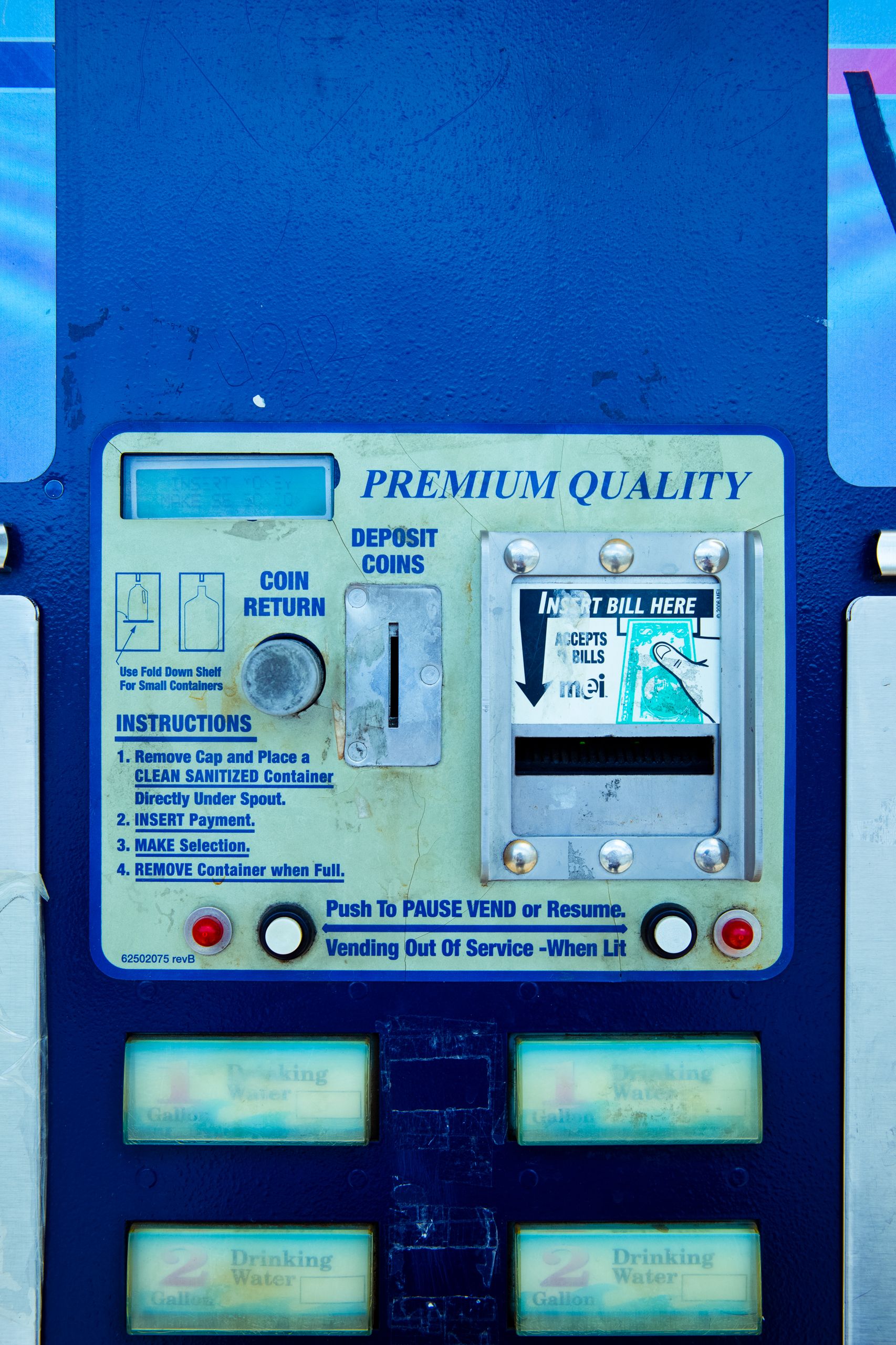
United States Gas Stations Face Major Shake-Up as Proposed Ban on Coin-Operated Machines Exposes Hidden Gambling Economy, Small Business Dependence, and Retail Identity Shift Across Convenience Stores
Across the United States, a quiet but increasingly controversial feature of everyday life is coming under new scrutiny: coin-operated machines inside gas stations and convenience stores.
These machines, often placed near entrances, beverage coolers, or checkout counters, have long blended into the background of American retail. But under a newly proposed ban in one state, they are now at the center of a growing debate about gambling regulation, small-business survival, and what modern convenience stores are actually becoming.
What appears to be a simple policy change is revealing something much larger: the transformation of gas stations into hybrid retail-gaming environments and the regulatory struggle to define where that transformation should stop.
Lawmakers move to restrict coin-operated gaming machines.
Image Credit : cottonbro studio via Pexels
The proposed legislation targets coin-operated machines commonly found in gas stations, convenience stores, and small retail locations.
These devices are typically marketed as “skill games” but function in ways that closely resemble gambling-style entertainment. They allow users to insert money or credits for a chance-based or partially skill-based outcome, depending on how they are legally classified.
Lawmakers supporting the proposal argue that the machines:
operate in a legal gray area between gambling and entertainment
lack consistent oversight across jurisdictions
may expose consumers to gambling-like behavior in everyday spaces
are difficult to regulate uniformly across retail environments
If enacted, the policy would require many convenience stores and gas stations to remove these machines entirely, fundamentally changing how some small retailers generate supplemental income.
The hidden shift: convenience stores as micro-gaming environments
Beyond the policy debate lies a deeper structural transformation that has taken place over decades.
Gas stations and convenience stores have evolved from simple fuel and retail stops into multi-function spaces that may include:
food and beverage sales
ATMs and financial services
lottery and scratch-off ticket sales
coin-operated gaming machines
This evolution has created what analysts describe as a convenience micro-economy, where retail space is used not only for essential goods but also for low-level entertainment and gaming activity.
The modern convenience store is no longer just a place to buy fuel; it is a hybrid retail environment blending commerce, services, and entertainment.
The proposed ban is, in many ways, a response to this long-running evolution.
Why locals care: small revenue streams that keep stores alive
Small retailers often operate on tight margins, relying on multiple income streams such as:
fuel sales
beverage and snack purchases
tobacco and convenience goods
machine-generated revenue
In this structure, coin-operated machines can represent a meaningful portion of daily cash flow, particularly for independently owned stores competing against larger chains.
Removing them could lead to:
reduced daily revenue stability
increased financial pressure on small operators
greater reliance on fuel margins alone
potential staffing or operational cutbacks in some locations
For many small businesses, these machines are not entertainment; they are part of the economic survival model.
At the same time, regulators argue that their widespread placement in accessible public spaces raises broader concerns about exposure and oversight.
The regulatory catch-up problem: law struggling to define a fast-moving system
One of the core challenges behind this proposed ban is that regulation has lagged behind the evolution of retail environments.
Over time, coin-operated machines have spread faster than consistent legal definitions. States often differ in how they classify them:
as legal skill-based entertainment
as unregulated gaming devices
or as illegal gambling machines
This inconsistency has created enforcement gaps, allowing machines to operate in some jurisdictions while being restricted in others.
Policy is now trying to regulate an ecosystem that expanded faster than the legal language used to define it.
The result is a fragmented regulatory landscape in which businesses face location-specific uncertainty.
The skill vs chance ambiguity: a legal gray zone under pressure
At the center of the debate is a long-standing legal question: what exactly separates a skill game from a gambling device?
Operators often argue that:
Player input influences outcomes.
Skill affects results in some formats.
Machines are not purely chance-based
Regulators counter that:
Outcomes are still heavily randomized.
Financial risk resembles gambling behavior.
enforcement becomes inconsistent without clear definitions
This ambiguity has allowed the machines to exist in a gray zone for years, but increasing scrutiny is forcing lawmakers to confront whether that classification still holds.
The core issue is not just legality; it is whether the system behaves like gambling regardless of how it is labeled.
Behavioral impact: everyday exposure to gaming-like systems
Another key concern driving the proposed restrictions is accessibility.
Unlike traditional casinos, these machines are:
located in everyday retail spaces
visible during routine errands
accessible without travel or planning
embedded in high-frequency consumer environments
This creates what behavioral analysts describe as incidental exposure environments, where users encounter gaming systems without actively seeking them out.
When gambling-like systems exist inside everyday errands, participation shifts from intentional to incidental.
This raises questions about consumer protection, especially in environments where individuals may not expect gaming-style interactions.
The retail identity shift: from fuel stops to hybrid service hubs.
What happens next: policy decisions and industry adaptation
As the proposed ban moves through the legislative process, several outcomes are possible:
full removal of coin-operated machines from retail environments
stricter regulation instead of outright prohibition
licensing systems that formalize their operation
legal challenges from affected business operators
If enacted, the policy could trigger broader changes across convenience retail, including:
redesign of store layouts
replacement revenue models
expansion of digital vending or lottery systems
increased regulatory oversight of retail entertainment devices
A small machine revealing a much larger shift in American retail
Image Credit : Ekaterina Belinskaya via Pexels
What appears to be a minor policy debate over coin-operated machines inside gas stations is, in reality, part of a broader transformation in how convenience retail operates in the United States.
These machines sit at the intersection of:
Small Business Economics
gambling regulation
consumer behavior
and evolving retail identity
And as lawmakers consider whether to restrict or remove them, the deeper question extends far beyond a single device.
It becomes a question about how much entertainment belongs inside everyday commerce and how far regulation should go in defining the boundaries of modern convenience spaces.
The debate is not just about machines; it is about what everyday retail in America is allowed to become.