

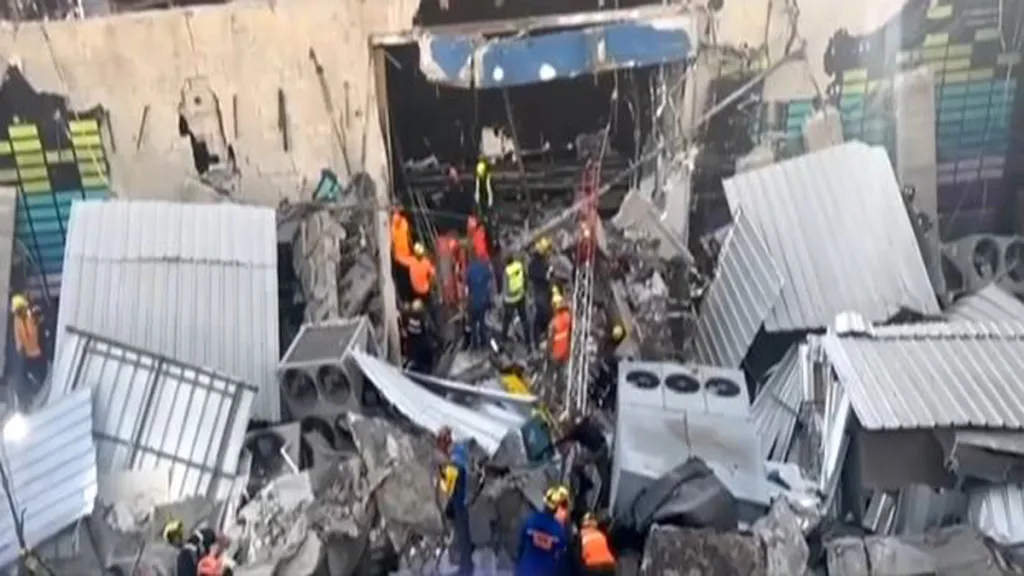
For many Dominican families in New York, the Jet Set nightclub collapse was never just a faraway tragedy. It was personal.
The Santo Domingo venue was part of a cultural world that stretched from the Dominican Republic to Washington Heights, the Bronx, Queens, Yonkers, and every New York block where merengue, family gatherings, and island memories still shape daily life.
Now, more than a year after the roof of the Jet Set nightclub collapsed during a live performance, the club’s sibling owners, Antonio and Maribel Espaillat, have been ordered to stand trial. A Dominican judge ruled that the two should face involuntary manslaughter proceedings after the April 8, 2025 disaster killed 236 people and injured more than 100 others.
What Happened at the Jet Set Nightclub in Santo Domingo
The collapse happened at the Jet Set nightclub in Santo Domingo, Dominican Republic, during a packed late-night concert. Hundreds of people were inside the venue when the roof gave way. The tragedy quickly became one of the deadliest public disasters in the country’s recent history.
Among those killed were merengue singer Rubby Pérez, former Major League Baseball pitcher Octavio Dotel, and many everyday Dominicans whose names may not have been famous but whose absence left deep wounds in families, workplaces, churches, and neighborhoods.
For New Yorkers with Dominican roots, the loss moved quickly across borders. Many residents knew someone connected to the victims, the performers, the venue, or the wider Santo Domingo nightlife scene.
Why the Court Ruling Matters Now
A judge in the Dominican Republic has ordered Antonio and Maribel Espaillat, the owners of Jet Set, to stand trial for involuntary manslaughter. Prosecutors have accused them of responsibility tied to the condition of the building, though the court did not approve more severe homicide charges sought by some victims’ families.
That distinction matters. The ruling means the case will move forward, but it may not satisfy families who wanted harsher charges. The judge reportedly found that the siblings likely did not foresee the collapse in a way that would support the more serious charge.
Still, prosecutors are expected to argue that warning signs and building conditions should have been addressed before so many lives were lost.
The owners have not been convicted. The trial will determine legal responsibility based on the evidence presented in court.
Why New Yorkers Are Paying Attention
New York is home to one of the largest Dominican communities outside the Dominican Republic. That is why the Jet Set case continues to carry emotional weight here.
In Washington Heights, where Dominican culture is woven into restaurants, barbershops, salons, churches, music, and family life, the collapse felt painfully close.
After the disaster, community members gathered in grief. Candles, prayers, conversations, and public mourning became part of the local response. The tragedy was not treated as distant international news. It became a reminder that many New York families still live with one foot in the city and one foot back home.
For some residents, the upcoming trial is about accountability. For others, it is about closure. For many, it is about ensuring that places built for music, celebration, and community are also safe enough to protect the people inside.
The Club’s Background and Why It Was So Well Known
Jet Set was not an ordinary nightclub. For decades, it was one of Santo Domingo’s best-known entertainment venues, especially for live merengue and major Dominican performers. It attracted celebrities, athletes, business figures, tourists, and working families celebrating birthdays, reunions, anniversaries, and nights out.
That history is part of why the collapse was so devastating. The venue had a place in Dominican cultural life. People went there to dance, hear beloved musicians, and feel connected to a shared tradition.
For Dominicans in New York, Jet Set represented something familiar: the sound of home, the glamour of a big night out, and the kind of music that often carries family memories across generations.
The tragedy turned that cultural landmark into a courtroom case.
The Allegations at the Center of the Case
Prosecutors have argued that the owners should be held criminally responsible for alleged failures related to the building’s condition. A former employee previously testified that the owners had been warned about problems at the venue, including through photos and videos.
The defense has pushed back against the idea that the collapse was intentional or foreseeable, as families and prosecutors have suggested.
That is why the coming trial will be closely watched. It will likely focus on what the owners knew, what repairs or inspections were done, what warnings existed, and whether the tragedy could have been prevented.
For victims’ families, those questions are not technical details. They are the heart of the case.
A Local Safety Lesson for New York Venues
The Jet Set collapse happened in the Dominican Republic, but the safety lesson matters in New York, too. Every restaurant, concert hall, banquet space, club, church hall, and event venue depends on trust. People walk in expecting that the building has been inspected, that capacity rules are being followed, that exits are clear, and that the structure is safe.
In New York City, large indoor gatherings generally require public assembly approvals when 75 or more people gather indoors.
These requirements are designed to address safety issues such as exits, occupancy limits, fire alarms, sprinklers, and seating arrangements. For residents, that means venue safety is not just a government paperwork issue. It is a family issue.
When people attend a wedding, concert, graduation party, memorial, or community fundraiser, they should not have to wonder if the building can hold them safely.
What Happens Next
The Espaillat siblings are now expected to stand trial, though a trial date has not yet been set. Prosecutors will have to present their evidence, and the defense will have the chance to respond. Families of the victims are expected to keep pushing for answers, especially around whether the collapse could have been avoided.
The case may take time, but the ruling marks an important step. After months of grief, public pressure, testimony, and legal arguments, the matter is moving toward a fuller courtroom review.
For Dominican families in New York, the next phase will likely be followed with pain, frustration, and hope. Many want accountability, but they also want the victims remembered as more than numbers.
Why This Matters Beyond One Nightclub
The Jet Set collapse is a tragedy about loss, but it is also a warning about public safety, responsibility, and the cost of ignoring concerns in spaces where people gather. It matters in Santo Domingo.
It matters in Washington Heights. It matters in the Bronx. It matters anywhere families walk into a crowded venue, trusting that someone has done the work to keep them safe.
For New York’s Dominican community, this trial is not only about what happened inside one nightclub on one terrible night. It is about memory, accountability, and the value of human life in places built for joy.
A night of music became a national wound. Now, the courts will decide what responsibility the owners bear, and families will continue to ask the question that has followed this tragedy from the beginning: could 236 lives have been saved?


