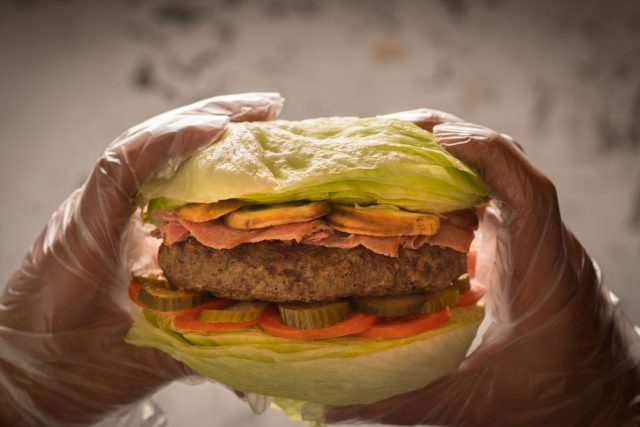
shrunk by 40% while its price has skyrocketed from around 50 cents in the late 1960s to more than $8 today. Many fast-food fans view this as a betrayal of nostalgia and a sign that the beloved burger has lost its value, but the reality is far more nuanced. Examining historical pricing, inflation, portion sizes, and consumer psychology provides a clearer picture of why this myth persists.
The Facts: Portion and Pricing Reality

The claim that the Big Mac has uniformly shrunk by 40% while its price more than doubled is a mixture of perception, exaggeration, and partial truth. Menu pricing has increased over the decades, reflecting inflation, rising labor costs, supply chain expenses, and evolving business strategy.
However, no verified documentation exists showing that McDonald’s intentionally reduced Big Mac portions by a standardized 40% across all locations. Online images comparing vintage and modern Big Macs often show different sandwich iterations, plating styles, or photography angles, exaggerating perceived shrinkage.
At the same time, the nominal price jump aligns with broader economic realities. While a Big Mac costing 50 cents in the 1960s seems shockingly cheap today, inflation-adjusted dollars place that price closer to $4–$5, making modern menu prices of $4.50 to $8 consistent with long-term economic trends.
Portion Perception vs. Reality
Nostalgia significantly affects how consumers perceive portion sizes. Many people recall their first Big Mac as “massive” and overestimate its original size. Today’s sandwich may appear smaller visually, but this is often due to changes in bun thickness, sauce distribution, and assembly consistency rather than intentional downsizing.
Psychological factors, combined with price increases, amplify the perception that the burger has shrunk, even when actual dimensions have remained largely comparable.
Inflation and Fast-Food Pricing Trends

Fast-food pricing has evolved alongside the economy. Inflation, wage increases, ingredient sourcing costs, and operational expenses have all contributed to rising menu prices. Historical comparisons show that the Big Mac’s pricing trajectory is consistent with broader trends in consumer goods.
For instance, a 50-cent Big Mac in the 1970s is roughly equivalent to $4–$5 today when adjusted for inflation. Similar patterns exist across other menu items, from cheeseburgers to small soft drinks, reflecting the influence of decades of economic change rather than corporate overcharging.
Consumer Psychology: Why the Myth Persists
The viral claim thrives because it taps into strong emotions, including nostalgia and perceived unfairness. Social media amplifies these perceptions by pairing vintage price comparisons with visually striking images that often lack proper context.
Even though corporate pricing and historical data contradict the 40% shrink claim, the story spreads rapidly because it resonates with consumers’ memories and expectations.
Digital Era Impacts on Pricing Perception
Modern ordering methods have also contributed to the myth. Mobile apps, kiosks, and third-party delivery platforms introduce optional service fees and slightly higher menu prices, which can reinforce the perception that the Big Mac costs more than it “should.” These app-based adjustments, while transparent, are sometimes mistakenly perceived as evidence of intentional corporate shrinkage or hidden fees.
Comparative Industry Perspective
Other fast-food chains show similar trends in pricing and portion perception. Burger King, Wendy’s, and Taco Bell have all experienced inflation-driven price increases and occasional visual changes in menu items.
Delivery service fees or app-specific charges can further shape consumer perception. This broader context demonstrates that McDonald’s is part of an industry-wide pattern rather than an outlier in pricing or portion-size changes.
Viral Misinformation Mechanics

The Big Mac shrink myth illustrates how misinformation spreads online. Nostalgic claims resonate emotionally, while side-by-side photos exaggerate differences. Social media sharing amplifies the narrative, often omitting critical context such as inflation, regional pricing, or assembly differences. This creates a self-reinforcing cycle in which perception overtakes reality in shaping public belief.
Final Takeaways
While the Big Mac’s price has increased significantly over time, this rise reflects decades of inflation and rising operational costs. No credible evidence supports a uniform 40% reduction in portion size. Consumer perception of shrinkage is heavily influenced by nostalgia, photography, and social media amplification. Comparing historical prices with inflation-adjusted values and accounting for regional menu differences provides a more accurate perspective on the Big Mac’s evolution. Understanding these factors allows consumers to appreciate the burger’s value while separating myth from fact.
Read the original post in Crafting Your Home.