


Death has always been humanity’s ultimate enigma, a finality no one can truly understand or control. While some cope with this inevitability through science, medicine, or careful planning, others turn to superstition, seeking omens and rituals to anticipate or influence the course of fate. These eerie beliefs, often passed down through generations, are rooted in a mixture of fear, cultural tradition, and the human desire to make sense of the unknown.
They transform ordinary objects, sounds, and occurrences into chilling harbingers of mortality, reminding us that death is never far from the human imagination. Some death superstitions are surprisingly practical beneath the surface, while others verge on the bizarre. They may involve performing a precise ritual, heeding the warning of a spectral figure, or interpreting the behavior of animals and insects.
Yet all of them illustrate the lengths people have gone to in order to negotiate with the unknown. Here are some of the most spine-chilling death superstitions across cultures, each steeped in history, legend, and human psychology.
A Witch Doctor Can Save You from a Deadly Haircut
In Mongolia, hair is more than personal grooming; it is a vessel for spiritual presence. Traditional belief holds that wandering spirits may attach themselves to strands of living hair, making it a delicate conduit between the human and the supernatural. Cutting one’s hair without proper spiritual guidance could harm both the person and the invisible inhabitant, potentially causing death or misfortune.
Before the first ceremonial haircut, a witch doctor inspects the hair, ensuring no spirit resides within and blessing the act to prevent fatal consequences. This ritual emphasizes the Mongolian intertwining of body, soul, and cultural respect for unseen forces, demonstrating how deeply superstition can dictate everyday life. It’s not just hair, it’s a potential link to life and death that demands careful consideration.
The ceremony also underscores the communal aspect of superstition. Families gather, observing precise rites, chanting protective incantations, and performing gestures designed to honor the spirits. The hair becomes a symbol of vitality and connection, reflecting the belief that every strand could harbor history, memory, and unseen entities. Ignoring this ritual was considered reckless, a direct affront to tradition that could provoke disastrous consequences.
Dogs See What We Can’t

Dogs have long been considered intermediaries between the natural and supernatural realms. In multiple cultures, including the United States, the United Kingdom, India, the Philippines, Mexico, Africa, and Japan, canine behavior is interpreted as a direct warning of death or spiritual presence. A dog staring intently at an empty corner, howling at midnight, or refusing to enter certain rooms is often considered a sign that unseen forces are at work.
British folklore tells of the spectral black dog, a death omen whose appearance near a home signals impending loss, while Connecticut legends of the Hanging Hills black dog suggest an imminent death in the observer’s close circle. The consistency of these beliefs across continents suggests a universal human instinct to link animal behavior with mortality, blending observation, imagination, and cultural storytelling. Beyond ominous sightings, dogs are often credited with perceiving subtle environmental changes, such as scents, frequencies, or vibrations imperceptible to humans.
This natural attentiveness reinforces the superstition, as an otherwise ordinary reaction is interpreted as a warning of death or spirit activity. In the Philippines, dogs are thought to see spirits directly, with behavior signaling protection or alerting humans to danger. The connection between canines and mortality also highlights a deeply emotional aspect: dogs often comfort, guard, and remain loyal to humans even at life’s end. Their role as both companion and supernatural sentinel magnifies their presence in death lore.
Three Knocks Equal Bad News
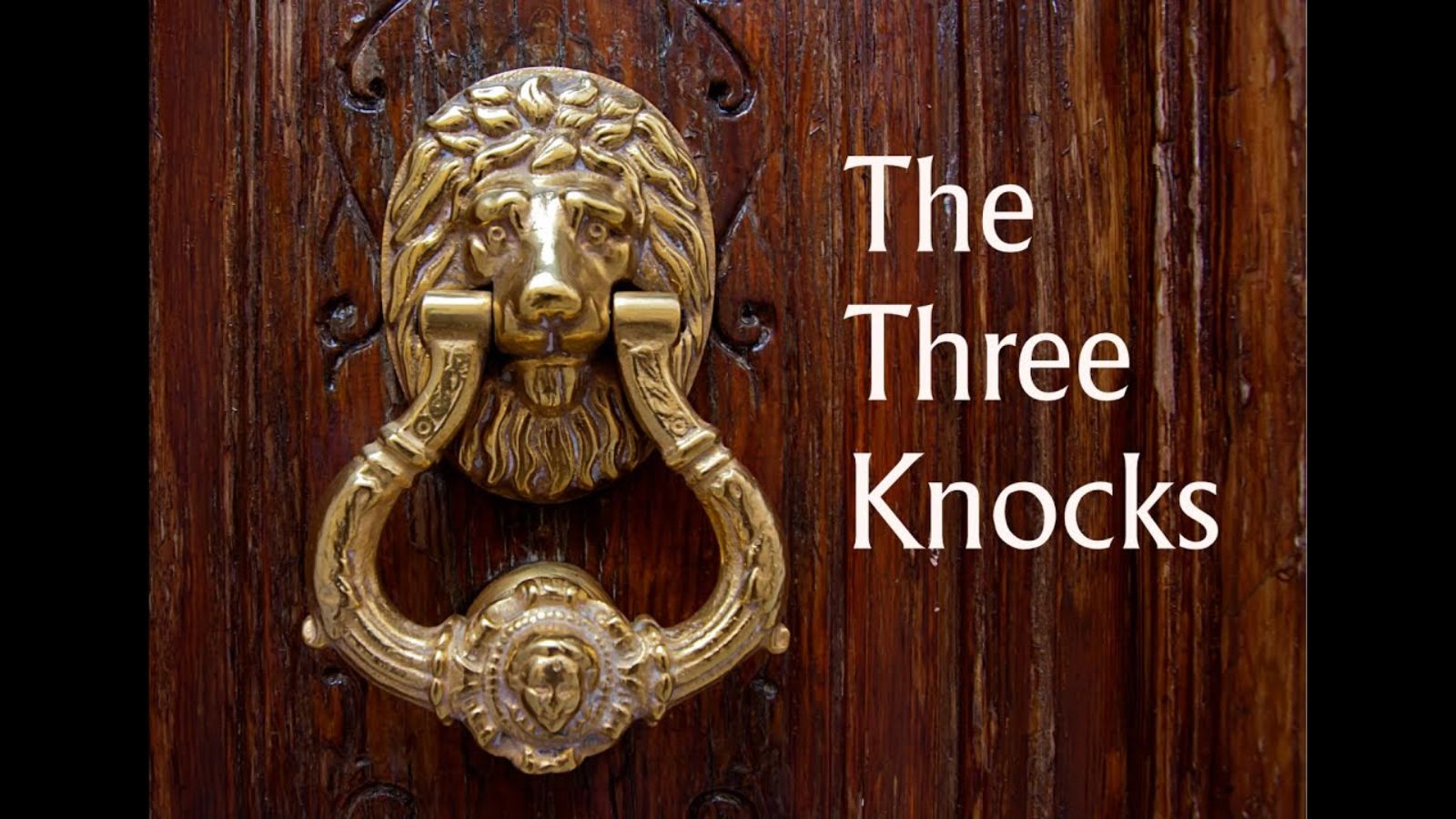
The superstition surrounding three knocks originates from historical anecdotes and symbolic numerology. During the Crimean War, soldiers were warned not to light three cigarettes with the same match, believing visibility in groups of three could invite danger, a concept later applied to death omens. In domestic settings, hearing three knocks on a door, window, or wall is interpreted as a forewarning of death within a period of three days, weeks, or months.
Some traditions hold that by the time the knocks are heard, the individual has already passed, suggesting that the sound serves as a bridge between the living and the deceased. Protective measures, such as knocking on wood three times, emerged as counter-rituals, illustrating how fear and human action become entwined. The power of the number three in these beliefs reflects a broader cultural significance. Across societies, three often symbolizes completeness or divine presence, lending gravity to the superstition.
Hearing three knocks alone may not alarm a skeptic, but within a narrative of loss and mortality, it becomes a potent psychological trigger. Families often interpret unexplained knocks in the context of other signs of dog behavior, wind, or household disturbances, fusing sensory input with folklore to produce a comprehensive warning system. This convergence of numerology, sound, and belief demonstrates the sophistication and emotional resonance of death-related superstitions.
Phantom Funerals Foreshadow Real Ones
Phantom funeral processions are a haunting superstition prevalent in Wales and parts of the British Isles. Witnesses claim to see ghostly processions moving silently down roads, often with identifiable figures later appearing in real funerals. Only those with a so-called “special gift” are said to perceive these apparitions, which serve as omens of imminent death within days or weeks. Folklore advises never to look directly into the casket of a phantom procession, as doing so may associate the observer with the next actual funeral, a chilling example of superstition dictating behavior in the living world.
Some traditions interpret these visions as fairy-driven pranks, while others treat them as serious warnings, illustrating the duality of fear and fascination that defines ghostly death omens. These phantom funerals reflect a communal negotiation with mortality. Villagers could not always understand or influence the timing of death, so such visions acted as symbolic notices. The spectral procession served as a narrative bridge, connecting the living and the departed while reinforcing cultural cohesion.
Observers learned to heed subtle signs, respect invisible forces, and recognize the rhythm of life and death encoded in folklore. In doing so, phantom funerals transformed ordinary roads into charged spiritual pathways, blending geography, myth, and social instruction in an unforgettable way.
Corpse Roads Must Cross a Body of Water
In medieval Britain, corpse roads were constructed to transport the deceased from homes to parish churches and cemeteries, often traversing rivers and straight paths. Folklore dictated that spirits traveled only in straight lines and could not cross running water, reinforcing the necessity of carefully planned routes. When processions encountered crossroads, participants would hurriedly cross or perform protective prayers to prevent the soul from returning to haunt the living.
This superstition intertwined practical funeral logistics with metaphysical precaution, demonstrating how geography and belief systems coalesced to manage mortality. Corpse candles, ethereal lights said to accompany the spirit, further amplified the haunting reputation of these pathways. The cultural significance of corpse roads extends beyond burial efficiency. They represented a community’s commitment to guiding the dead while protecting the living, embedding moral and spiritual responsibility into travel.
Crossing a river symbolized transition, purification, and safeguarding, ensuring that souls reached their final resting place without disruption. Stories of spirits following incorrect paths warn against negligence, while repeated observation of corpse candles reinforced communal awareness of supernatural order.
Never Put a Rocking Chair in Your Home

In Irish and Appalachian folklore, rocking chairs carry a dark reputation. An unmanned rocking chair moving independently may signify the presence of a spirit or the imminent arrival of death. Families were advised to place a stone beneath the chair to prevent movement or, for extreme caution, discard it altogether. This superstition reflects the human tendency to imbue ordinary objects with symbolic weight, turning familiar furniture into a potential medium of supernatural communication.
It also underscores a broader theme: objects associated with life, comfort, or domesticity can, in folklore, harbor foreboding messages from beyond. The rocking chair superstition illustrates the interplay between absence and presence. A chair meant for rest becomes a reminder of mortality when it moves on its own, signaling the unseen. Folk narratives often paired such objects with specific household behaviors, encouraging vigilance and ritual to maintain safety.
Beyond fear, these practices fostered awareness, mindfulness, and respect for the space occupied by both the living and the dead. They reveal the psychological mechanics of superstition: ordinary stimuli, amplified by context and story, transform into powerful symbols of death.
Hold Your Breath When You Pass a Cemetery

Victorian-era beliefs emphasized extreme caution near graveyards. Failing to hold one’s breath while passing a cemetery was thought to invite the spirit of the recently deceased into the body, or provoke jealousy from those who had passed. In some U.S. traditions, individuals are advised to hold their breath until passing a specific landmark, such as a white house, and walking backward inside a cemetery prevents spirits from following.
These customs exemplify ritualized negotiation with death, combining fear, reverence, and prescribed action to maintain safety. They demonstrate the psychological weight of physical movement, attention, and spatial orientation in death-related superstition. The underlying message reinforces respect for the boundary between life and death. The act of holding one’s breath signifies acknowledgment of mortality and the presence of unseen forces.
Walking backward or observing specific landmarks integrates the environment into protective ritual, transforming otherwise ordinary spaces into zones of spiritual vigilance. Such practices, while seemingly extreme today, offered a sense of control and agency in societies where death was both common and sudden, embedding superstition into everyday travel and behavior.
The Church Grim Appears Before Someone Dies
The Church Grim, a spectral black dog from England and Nordic folklore, is traditionally linked to death omens. Historical practices occasionally involved burying dogs alive beneath church corners as protective sacrifices, giving rise to legends of ghostly guardians. The appearance of the Church Grim, especially with glowing red eyes, is interpreted as a warning of imminent death, and its orientation during funerals may indicate which individual will die soon.
These stories blend protection with foreboding, illustrating how communities used animal symbolism to encode spiritual and social caution within sacred spaces. The Church Grim legend serves both moral and cautionary purposes. By combining supernatural presence with architectural sacredness, it reinforces community rules, ritual behaviors, and respect for church property. Simultaneously, the black dog embodies the unpredictability of mortality, turning fear into narrative and instructive tradition.
Its endurance in folklore demonstrates the potency of symbolic creatures in mediating human engagement with death, offering both a warning and a framework for understanding loss within communal and religious contexts.
The Deathwatch Beetle Ticks Off a Sick Person’s Last Moments

The deathwatch beetle superstition arose from 17th-century English households, where the insect’s rhythmic tapping in wooden walls or furniture was associated with death. Families interpreted the natural sound as the Grim Reaper’s fingers marking the final moments of a loved one. References in literature, such as Edgar Allan Poe and Mark Twain, cemented this association, illustrating the integration of ordinary phenomena into the realm of supernatural belief.
Despite the beetle’s harmlessness, its role as a death omen demonstrates the human tendency to attribute profound meaning to otherwise mundane environmental cues. This superstition also reveals the interplay between observation, fear, and narrative. The auditory pattern of the beetle provided a measurable signal that people could interpret, transforming random tapping into a structured omen.
Its persistence in literature and storytelling emphasizes how superstition becomes cultural memory, shaping perceptions of natural events and embedding fear within community consciousness. The deathwatch beetle’s story exemplifies how folklore and mortality intersect in the most ordinary corners of life.
First Hair Cutting Ceremony in Mongolia
Beyond the danger of cutting hair, Mongolian first haircut ceremonies carry layers of ritual significance. Families gather, perform chants, and follow meticulous procedures to ensure no spiritual harm befalls the individual. The hair is treated as sacred, reflecting the belief that each strand carries vitality and potential spiritual presence. Missteps in the ceremony could disrupt harmony with the spirits, underscoring the interdependence of personal grooming, ritual, and supernatural caution.
Such traditions exemplify how death-related beliefs can influence intimate, seemingly routine acts, transforming them into moments of reverence and communal protection. The ceremony’s complexity highlights the integration of superstition into social structure. It functions as a rite of passage, a protective ritual, and a form of cultural education, teaching respect for unseen forces and the consequences of neglect.
This blend of spiritual, social, and practical considerations demonstrates the pervasive influence of death-related beliefs on everyday life, showing how superstition can guide behavior, reinforce community cohesion, and instill ethical vigilance in ordinary acts.


