


It always starts as a small convenience, a few emails from the couch, a movie in bed, a late-night task finished with your legs acting as a makeshift desk. What feels cozy and harmless can quietly become a daily habit that strains your body, overheats your skin, and chips away at your comfort without asking permission. If working this way has become part of your lifestyle, the warning signs often show up long before you realize the setup is doing more harm than good.
Modern life already asks too much from our backs, eyes, necks, and nervous systems, so that an awkward laptop habit can push everyday stress into full-body discomfort. The problem is not just the device itself; it is the way your body bends, balances, absorbs heat, and stays frozen in unhealthy positions for too long.
These are the 9 signs that your lap setup may be far less safe than it seems.
Your thighs feel hot long after the laptop is gone.
One of the clearest warning signs is lingering heat on your legs after you have moved the device away. A laptop resting directly on your lap can trap heat against your skin, and that steady warmth can leave your thighs feeling irritated, overly warm, or strangely sensitive. When your body starts reacting this way, it is a sign that comfort has crossed into stress.
Your neck keeps begging for relief

A laptop placed on your lap almost always forces your head to tilt downward for longer than it should. That position may seem harmless in the moment, but it puts steady pressure on the neck and upper shoulders, creating the kind of ache that sneaks in quietly and lingers for hours. If your neck feels stiff, sore, or heavy after a short session, your posture is waving a red flag.
Your lower back aches after sitting in soft spaces

Couches and beds may feel inviting, but they rarely support the spine well enough for real work. The moment your laptop lands on your lap, your back often rounds, your core relaxes too much, and your body sinks into a shape that feels easy at first but punishes you later. If your lower back throbs after laptop time, your setup is not supporting you; it is wearing you down.
Your wrists and hands start to feel tight.t
Typing on a laptop on your lap often bends your wrists into awkward angles and reduces the natural support your arms need. Over time, that can create tightness in the hands, soreness in the wrists, and a dull strain that makes simple tasks feel heavier than they should. If your fingers feel stiff or your hands tire quickly, the position may be the problem.
Your legs go numb or start tingling.ng
Another warning sign is the strange prickly feeling that creeps into the legs after the laptop has been resting there for a while. Pressure from the device, combined with sitting still in an uneven position, can affect circulation and leave your legs feeling numb, tingling, or oddly heavy. That is your body telling you movement and relief are overdue.
You notice redness or skin irritation.
Sometimes the warning shows up on the surface, with red patches, sensitivity, or a faint pattern of heat irritation where the laptop usually rests. Skin reacts quickly when something hot and heavy repeatedly presses against it, and those visible changes are worth taking seriously. When your body leaves evidence behind, it is asking for a different routine.
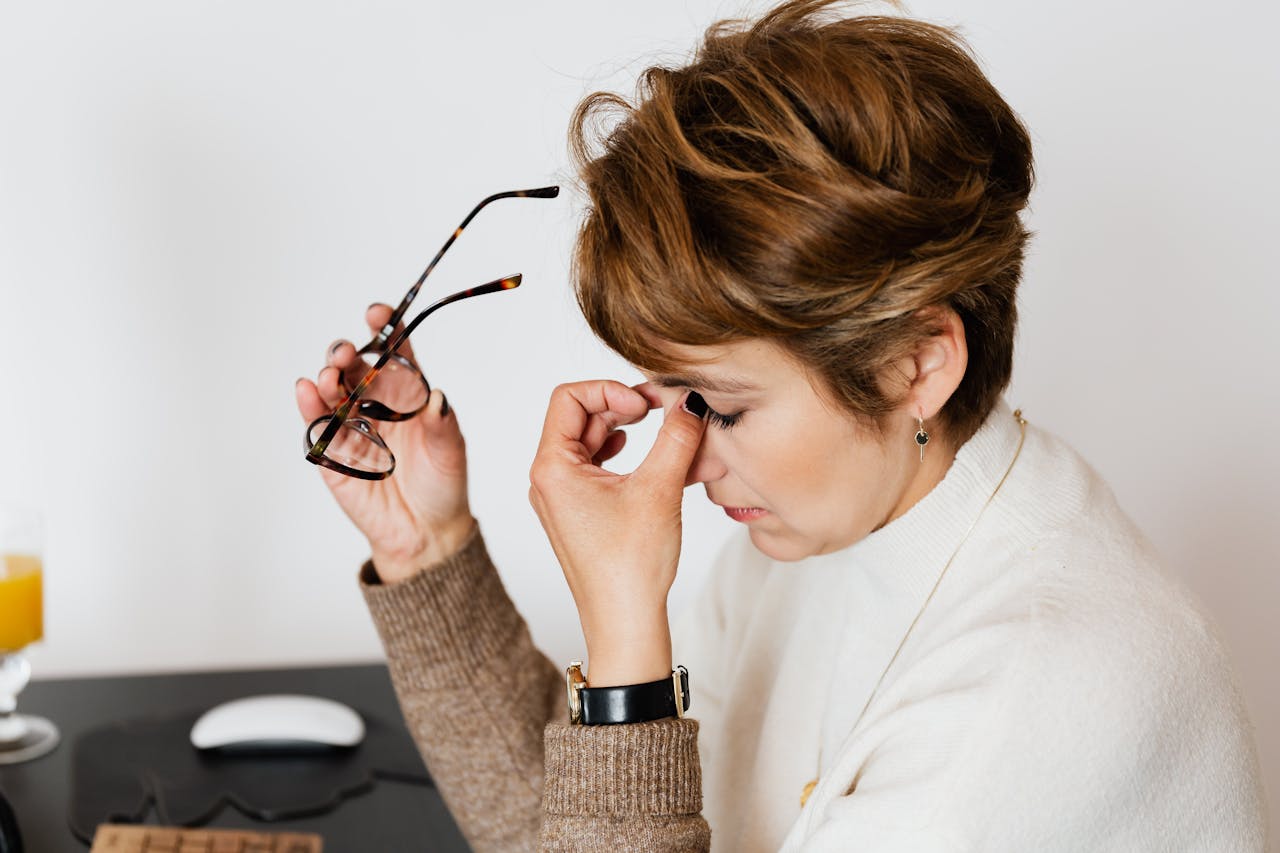
Your eyes feel more tired than usual
Via Pexels
Working on a laptop on your lap often puts the screen too low and too close to your face. That awkward viewing angle can force your eyes to work harder, especially when the lighting is poor, and your posture keeps shifting to chase a better view. If your eyes burn, blur, or feel exhausted quickly, your lap setup may be quietly straining more than your legs.
Your laptop fan is always working overtime.
A laptop needs airflow to stay cool, and your lap is one of the worst places to provide it. Fabric, blankets, and soft clothing can block vents, trap heat, and force the device to work harder to prevent overheating. If the fan gets loud fast or the device becomes uncomfortably hot, that is a warning sign for both the machine and the person using it.
You have started treating discomfort like normal

Perhaps the biggest warning sign of all is that you no longer question the aches, heat, stiffness, or awkwardness that come with the habit. When discomfort becomes part of the routine, it is easy to stop noticing how much your body is adjusting, tolerating, and compensating to make the setup work. That kind of normalization is dangerous because it hides the problem in plain sight.
Conclusion
A laptop on your lap may feel casual, cozy, and efficient, but the body often pays for that convenience in subtle ways before the mind catches up. Heat, stiffness, numbness, poor posture, eye strain, and skin irritation are not random annoyances; they are signals that your daily routine may be harming your health. What feels normal is not always safe, especially when modern lifestyle habits already keep the body under pressure.


