7 everyday items that are so dirty you must wash your hands instantly after touching them
You might think your bathroom is the grossest place in your house, but you’re dead wrong.
I hate to break it to you, but we live in what Dr. Elmer Pfefferkorn famously called a “fecal veneer.” While I scrub my toilet like a maniac, I often overlook the everyday items that are actually teeming with way more nastiness. The 2025 State of Handwashing Report from the National Foundation for Infectious Diseases (NFID) reveals that 48% of adults skip handwashing at key moments, and 20% actively choose not to wash their hands because they think it’s “unnecessary.” Gross, right? That means the world is covered in other people’s germs, and you’re constantly picking them up.
Here are seven everyday items that are so dirty you need to wash your hands immediately after touching them.
Your smartphone is a portable petri dish

We take our phones everywhere, to dinner, to bed, and yes, to the bathroom. A QS Supplies report shows that Americans spend around 2 days doom-scrolling on the toilet, exposing our devices to the dreaded “toilet plume.” Consequently, your phone likely harbors about 25,127 bacteria per square inch, roughly 20 times the number on the average public toilet seat.
I used to check my texts while eating a sandwich until I learned that 1 in 6 phones carries MRSA (an antibiotic-resistant bug) and E. coli. Since our phones generate heat, they act like a cozy little spa for bacteria to multiply. IMO, you should wipe that screen down with an alcohol wipe daily unless you want a side of Staph with your lunch.
The kitchen sponge is actually a bacterial hotel
You trust your sponge to clean your dishes, but it’s likely the filthiest thing you own. The National Sanitation Foundation (NSF) identifies the kitchen sponge as the #1 germiest item in the home, hosting significantly more bacteria than your bathroom faucet handles. Because sponges stay wet and trap food particles, they become what microbiologists call a “small apartment building for bacteria.”
- 75% of sponges contain coliform bacteria (fecal indicators).
- They can house up to 362 different species of germs.
- Microwaving them doesn’t always work; it just kills the weak ones, leaving the super-strong bacteria behind.
Gas pump handles are fueling sickness
Ever notice how sticky the gas pump handle feels? A study by Kimberly-Clark Professional found that 71% of gas pump handles are highly contaminated with illness-causing germs. In fact, these handles can be 11,000 times dirtier than a public toilet seat, carrying an average of 2 million colony-forming units (CFU) per square inch.
Since nobody cleans these pumps between uses, you’re basically shaking hands with every sick person who fueled up before you. I keep a bottle of sanitizer in my driver’s door specifically for this moment. Do yourself a favor: grab a paper towel to hold the nozzle, or sanitize your hands instantly before you touch your steering wheel.
Hotel remote controls are luxury germ traps
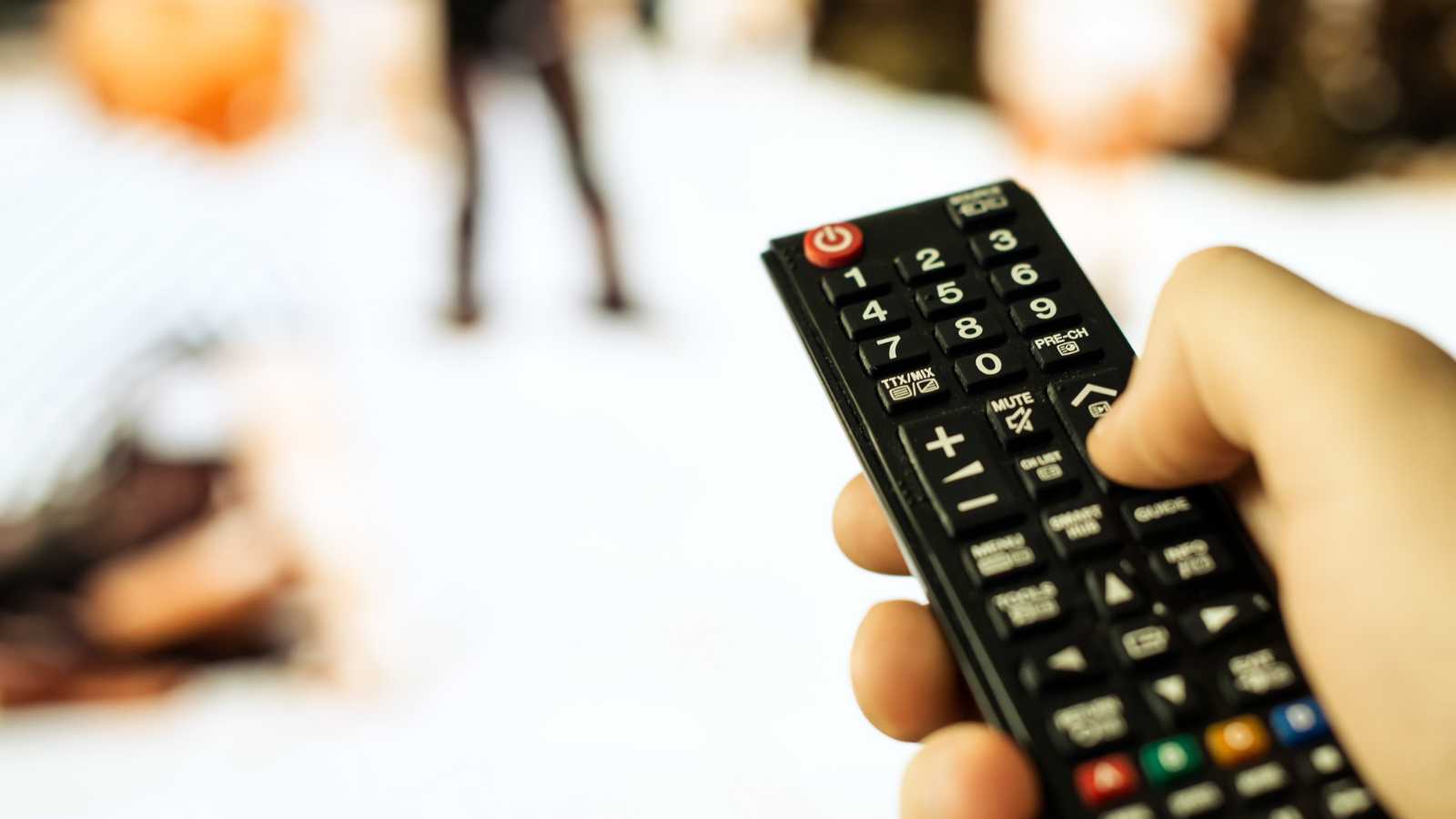
When I check into a hotel, I immediately wrap the remote in the plastic ice bucket bag. Why? Researchers at the University of Houston found that remotes are often the most contaminated items in hotel rooms. Surprisingly, a Travelmath study found that remote controls in 5-star hotels were actually dirtier (averaging ~2 million CFU) than those in 3-star hotels.
Housekeeping staff focus on making the bed look crisp, but they rarely disinfect the tiny buttons on the clicker. These devices harbor everything from fecal bacteria to MRSA. Trust me, you do not want to flip channels and then eat room service fries without washing up first.
Toothbrush holders collect more than just water
We worry about our toothbrushes, but the cup holding them is the real villain. The NSF ranks toothbrush holders as the third germiest household item. Studies show that 27% of holders contain coliform bacteria, largely because they sit within the blast radius of the toilet.
When you flush with the lid up, aerosolized water (and whatever else is in the bowl) sprays up to six feet. This mist settles into the bottom of your toothbrush cup, creating a stagnant sludge of spit, paste, and poop particles. I run mine through the dishwasher weekly now, and you should too.
Office keyboards hold a buffet of bacteria
If you eat at your desk, you might want to stop. Dr. Charles Gerba (aka “Dr. Germ”) from the University of Arizona found that the average desktop has 400 times more bacteria than a toilet seat. He calls the accumulation of crumbs in your keyboard a “bagel-flake snowstorm” that feeds bacterial colonies for weeks.
In hospitals, it’s even scarier: a National Institutes of Health (NIH) study found that 95 of 100 keyboards tested positive for pathogens such as Streptococcus. Wash your hands before and after typing, and shake that keyboard out over a trash can once in a while. You’ll be horrified by what falls out.
Cash and credit cards are filthy currency
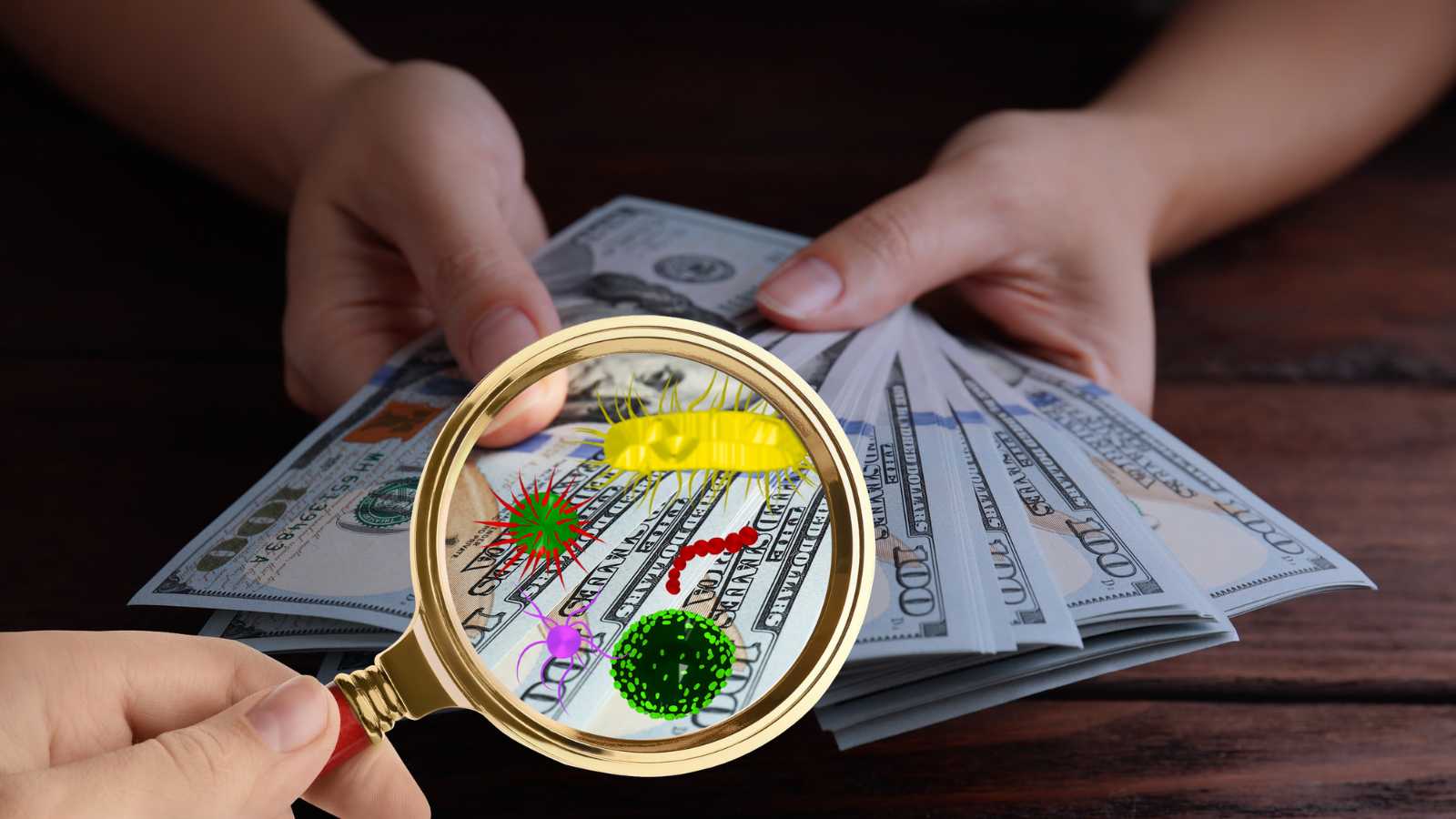
Money makes the world go ’round, but it also spreads disease. U.S. bills are a blend of 75% cotton and 25% linen, creating a fibrous net that traps germs effectively. Researchers at NYU identified 3,000 types of organisms on dollar bills, including bacteria linked to pneumonia and food poisoning.
Plastic isn’t safe either; a UK study found that 1 in 10 bank cards contains fecal organisms. FYI, that’s likely because people use them right after the bathroom without washing their hands. Next time you pay for coffee, sanitize your hands before you take that first sip.
Key Takeaway

The “fecal veneer” is real, and it covers the things we touch most. While you can’t live in a bubble, you can outsmart the germs by recognizing these high-risk items. Wash your hands with soap for 20 seconds after handling your phone, money, or gas pumps to break the chain of infection. Stay safe, scrub up, and stop texting on the toilet!
Read the Original Article on Crafting Your Home.