7 everyday habits you didn’t realize are rooted in ancient pagan traditions

You might think you’re a completely modern, logic-driven human, but you’re actually practicing ancient magic on a daily basis. Despite living in an era of smartphones and AI, a surprising amount of our behavior is dictated by superstitions that predate electricity. In fact, a Fall 2024 Pew Research Center survey found that 30% of U.S. adults still consult astrology or tarot cards, proving that we haven’t quite shaken our desire to peek behind the spiritual curtain.
I’ll be the first to admit it: I check my horoscope way too often for someone who claims to believe in science. But why do we cling to these old scripts? Expert folklorists like Sabina Magliocco suggest that these rituals give us a sense of control in a chaotic world. We are functional pagans in business suits, performing mini-rituals to appease gods we stopped worshipping centuries ago. Let’s look at seven habits that prove you’re more mystical than you think.
Knocking on wood to avoid jinxes

Ever praised your own good health and immediately rapped your knuckles on a table? I literally just did this while typing. A survey of folklore enthusiasts found that 72% of people knock on wood specifically to ward off bad luck. This reflex comes straight from the ancient Celts and Germanic tribes who practiced dendrolatry, or tree worship.
They believed that spirits and gods lived inside trees (specifically oaks for the thunder gods). By touching the wood, you were either acknowledging the spirit’s presence to ask for protection or making enough noise to distract mischievous spirits from hearing your boast and ruining it out of spite. So, next time you knock on a conference table, know that you’re technically ringing the doorbell of a tree god.
Blowing out birthday candles
We drop serious cash on birthdays; the global party industry is projected to grow from $20.07 billion in 2026 to $41.52 billion by 2034, but the central ritual of the cake is pure pagan adoration. The ancient Greeks baked round cakes to honor Artemis, the goddess of the moon. They placed lit candles on top to mimic the moon’s glow and believed the smoke carried their prayers up to the gods.
When you tell a kid to “make a wish” and blow out the candles, you are instructing them to perform a votive offering. The modern “wish” is just a secular prayer. FYI, if you want to be historically accurate, you should probably be asking Artemis for a successful hunt rather than a new PlayStation.
Wearing a wedding ring on the left hand
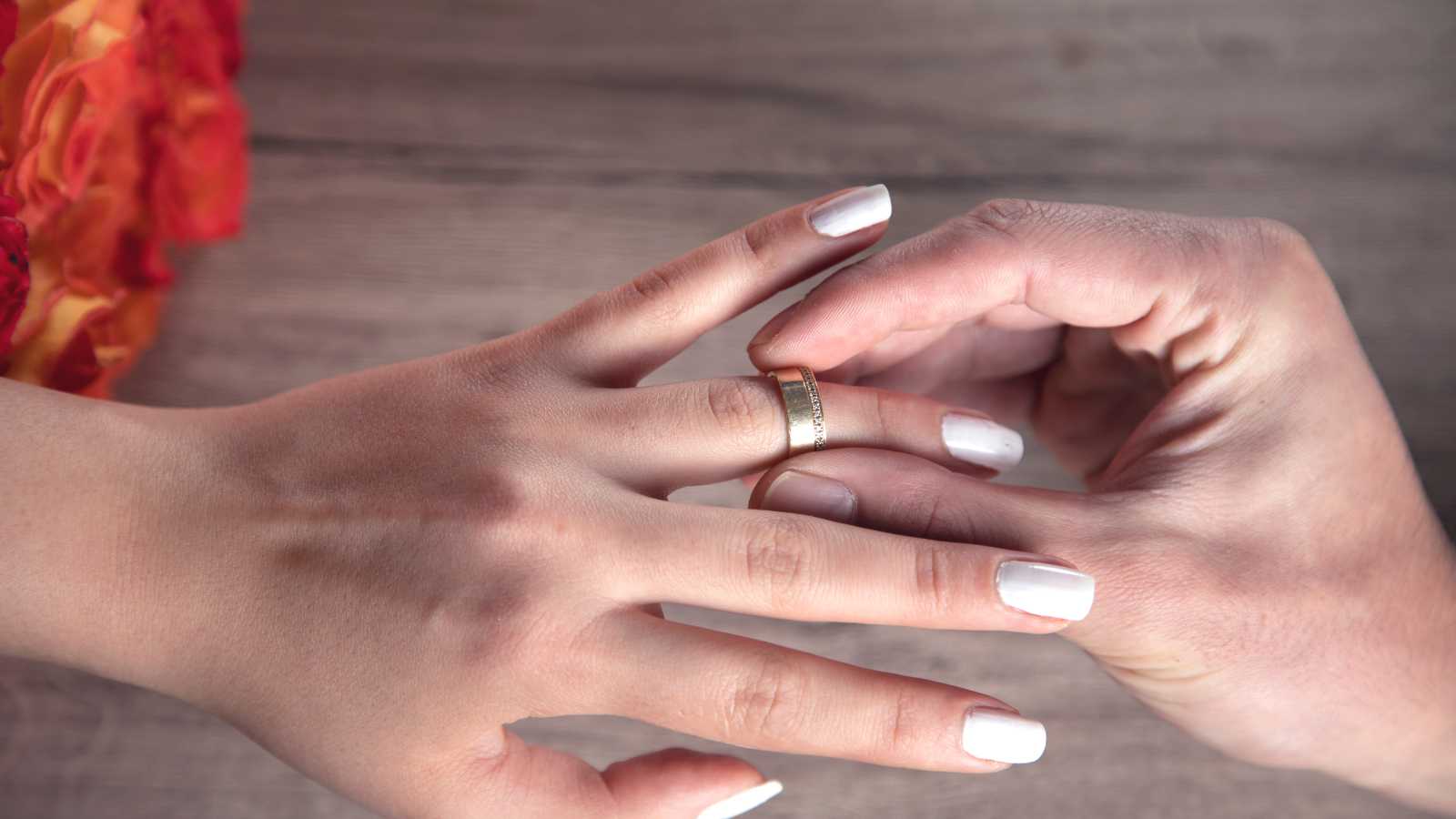
We view the wedding ring as a romantic necessity, fueling a U.S. market valued at $97.3 billion in 2024. But why that specific finger? You can thank a physiological misunderstanding from ancient Egypt and Rome. They believed in the Vena Amoris or “Vein of Love,” a blood vessel that supposedly ran directly from the fourth finger of the left hand to the heart.
Placing a ring there wasn’t just jewelry; it was a binding spell to claim the partner’s heart. Modern anatomy tells us this vein doesn’t exist (sorry, romantics), but we still follow the protocol. It’s a multi-billion-dollar habit based on bad anatomy and ancient binding magic.
Dressing bridesmaids in matching outfits
Ever wondered why we force our best friends to wear identical, often questionable, dresses? It’s not just for the aesthetic. In ancient Rome and feudal China, a bride was considered a prime target for evil spirits and jealous suitors on her wedding day. The bridesmaids were essentially decoys.
By dressing the attendants to look exactly like the bride, families created a “shell game” to confuse malevolent forces. If the spirits couldn’t figure out who the real bride was, they couldn’t curse her. So, your bridesmaids are historically human shields protecting you from demonic interception. That justifies the expensive dress.
Saying “bless you” after a sneeze

This is the polite thing to do, right? It’s also a mini-exorcism. Ancient cultures believed that a sneeze was a moment of spiritual vulnerability. Some thought the soul was violently expelled from the body during a sneeze, leaving it empty and open to invasion by evil spirits.
The phrase “God bless you” (or the Pope Gregory-sanctioned version during the plague) was a verbal shield thrown over the sneezer to protect them until their soul could return. Today, some Americans still believe this habit brings good luck or protection, proving we still fear the spiritual void of a sneeze.
Covering your mouth when you yawn
Your mom told you to do this because it’s rude to show your tonsils. Ancient superstition says you do it to stop the devil from entering your body. Much like sneezing, yawning was seen as creating a dangerous opening.
St. Theodore of Sykeon even warned that an unprotected yawn could let demons slip right in. The hand-to-mouth gesture wasn’t originally about hygiene; it was a physical barricade against possession. It’s a habit that morphed from spiritual warfare into table manners.
Naming the days of the week

You can’t even schedule a dentist appointment without invoking a pagan deity. In English, our days are a roll call of Norse gods. Tuesday is Tyr’s day (god of war), Wednesday is Woden’s/Odin’s day (the Allfather), Thursday is Thor’s day (thunder), and Friday belongs to Frigg (goddess of love).
Every time you say, “See you next Thursday,” you are technically honoring Thor. It’s a linguistic fossil that keeps these ancient gods on our lips every day, even if we don’t realize we’re speaking their names.
Key Takeaway

We aren’t as far removed from our ancestors as we pretend to be. Whether we are invoking Thor to schedule a meeting or lighting fires to honor the moon goddess on our birthdays, our daily lives are stitched together with ancient magic. These habits persist because they offer us a tiny sense of control, and let’s be honest, in 2026, we need all the luck we can get. So go ahead, knock on wood. It can’t hurt.
Read the Original Article on Crafting Your Home.