6 telltale signs fine dining servers use to judge you the second you walk in

Believe it or not, your dining performance begins the moment you cross the threshold, long before you’ve even glanced at the wine list. While you might be busy soaking in the ambiance, the staff is already engaged in a rapid-fire “threshold assessment” to determine if you’re a dream guest or a nightmare in the making. According to a 2025 Resy report, 49% of diners agree that being rude to staff is the fastest way to tank your “aura points,” proving that the vibe you bring is just as critical as the credit card you carry.
Here are the six telltale signs servers use to profile you immediately, backed by industry data and expert insights.
The “Vibe Check” Starts at the Host Stand

First impressions are everything, and in 2025, the “vibe check” is a literal operational tool. Industry pros can instantly spot a “high-maintenance” guest by how they handle the host stand. Do you barge past the podium to scout your own table, or do you wait for the host to guide you? Ignoring the restaurant’s “command center” signals entitlement and disrespect for the dining room’s flow.
Servers also listen closely to your language. Guests who confidently announce, “I am [Name],” tend to signal ownership and ease, whereas those who timidly say, “It’s under [Name],” often reveal discomfort or passivity. IMO, confident but polite eye contact is the ultimate green flag here.
Your “Quiet Luxury” Might Be Screaming the Wrong Message
For years, wearing unbranded, high-end cashmere was the ultimate status symbol, but servers in 2025 are judging this trend through a new ethical lens. Following the Loro Piana labor scandal, where it was revealed that workers were paid as little as €4 ($4.50) an hour to make luxury coats, savvy staff might view your “stealth wealth” outfit as a sign of ignorance rather than sophistication.
Instead of just looking at labels, servers check your shoes and watches. A pristine pair of loafers or a vintage mechanical watch signals a guest who appreciates craftsmanship and is likely to order quality wine. Conversely, flashing huge logos often screams “new money” trying too hard to impress.
The “Right-to-Left” Menu Scan
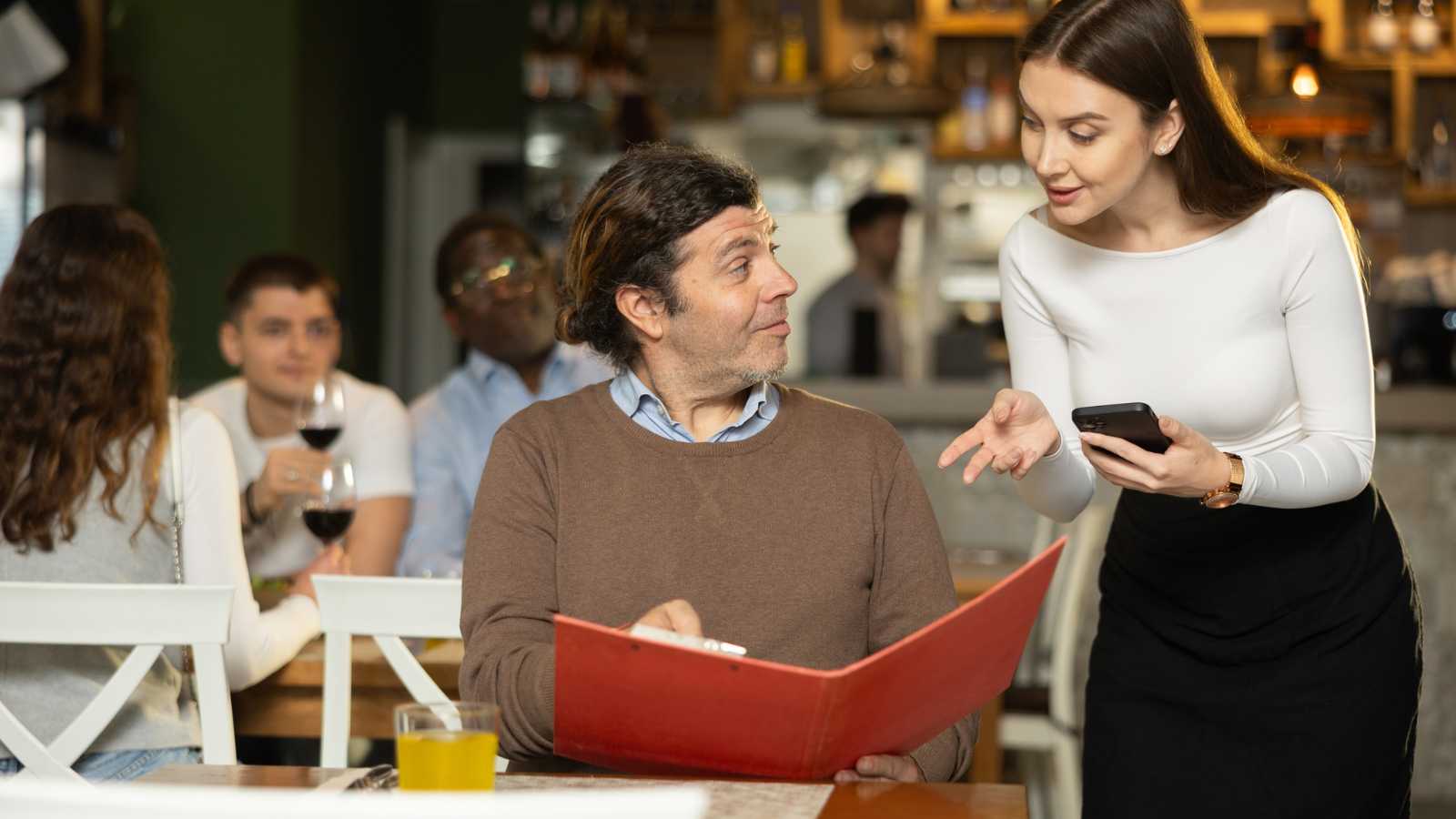
Ever caught yourself reading the menu prices first? Servers spot this “right-to-left” scan immediately. Guests who read the price column before looking at the dish description are instantly flagged as price-sensitive, which changes how the server approaches upselling.
Wealthy regulars or true enthusiasts typically focus on ingredients and preparation methods, trusting the kitchen rather than the calculator. If you’re constantly asking, “What’s included?” to ensure you’re getting enough volume for the price, you’re signaling that you view the meal as a transaction rather than an experience.
The Rise of the “Table Captain.”
Does your table have a leader, or is it a chaotic free-for-all? A massive trend for 2025 is the “Table Captain”, a designated person who handles ordering and communication for the group. In fact, 72% of diners now say that having a Table Captain makes the experience better.
Servers love this behavior because it streamlines service. If you’re part of a group where everyone is shouting different drink orders over each other, you’re creating an operational nightmare. Designating a leader shows you understand how to dine efficiently. Just don’t order viral TikTok trends like “Pickle Bread” or “Dirty Sodas” unless you’re at a spot that actually serves them; it’s a major pet peeve.
The “Ick” of Digital Detachment
We all love our phones, but are you letting them dehumanize your server? One of the biggest “icks” for staff is when a guest refuses to put their phone down while ordering or, worse, snaps their fingers to get attention. Snapping fingers is universally reviled; it treats the professional serving you like a servant.
Active engagement is key. Servers notice if you make eye contact and treat them with basic human decency. Interrupting their greeting to bark “Diet Coke” is a surefire way to get the bare minimum service for the rest of the night.
The “Camper” Dilemma
Finally, servers judge you by how you value their time and real estate. Are you a “camper”? Staying at a table for hours after paying your bill prevents the server from turning the table and earning more tips.
While lingering is part of the fun, doing it during a rush when people are waiting is a sign of obliviousness. Also, FYI: if you use the coat check, tip the attendant. Failing to drop $1–$3 per item is a rookie move that signals you don’t understand the full hospitality ecosystem.
Key Takeaway
Dining out is a two-way street. The data shows that the guests who receive the best service aren’t necessarily the biggest spenders, but the ones who show “dining intelligence.” By respecting the host, appointing a Table Captain, and treating the staff like humans, you signal that you belong in the room, no matter what shoes you’re wearing.
Read the Original Article on Crafting Your Home.