

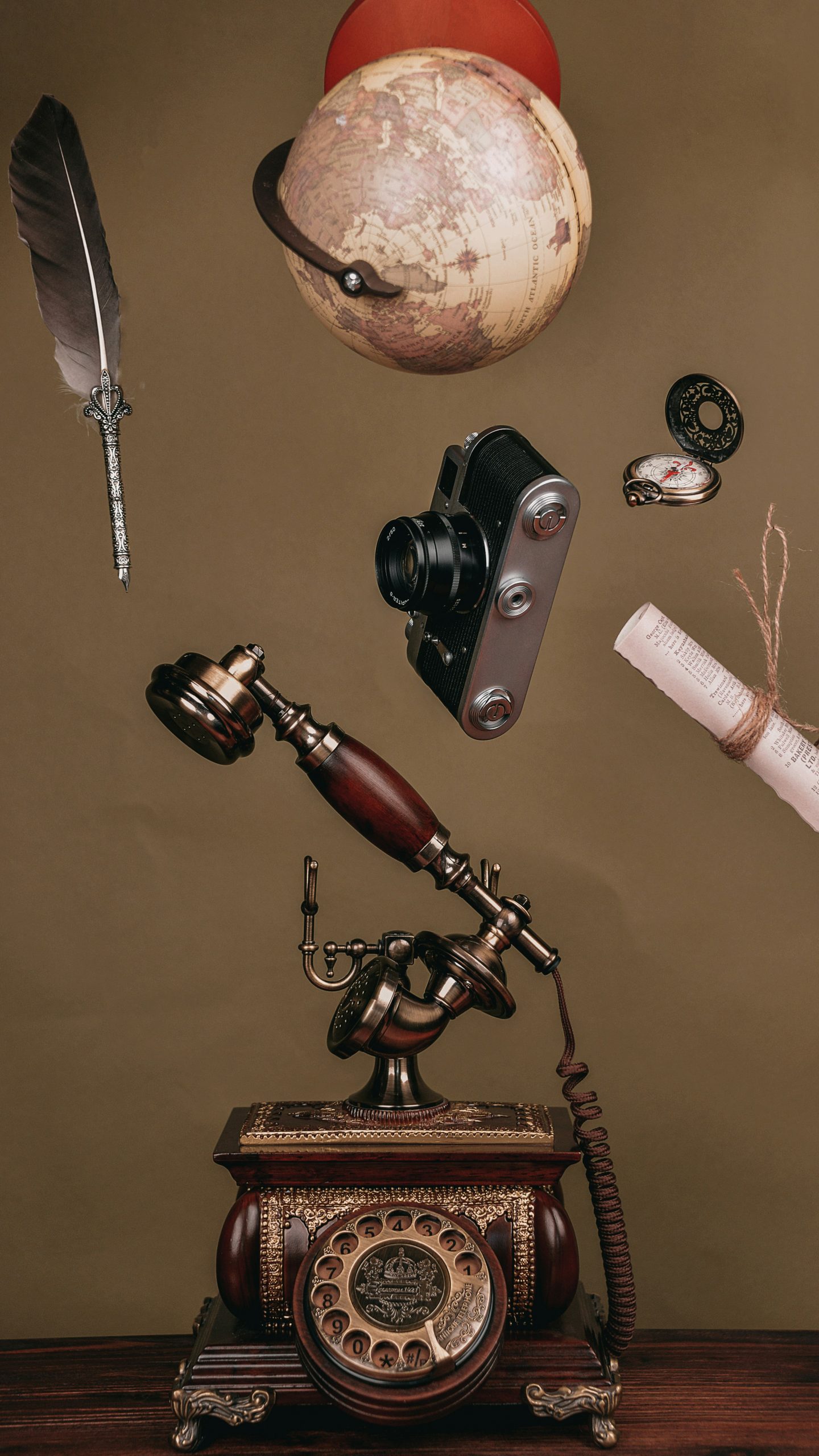
We often think of great inventions as deliberate and methodical, the result of careful planning and the work of genius minds. But some of the most useful things in our lives came into existence by sheer accident.
From life-saving medical breakthroughs to everyday household items, these happy accidents remind us that sometimes, innovation happens when things go wrong.
Matches

John Walker didn’t set out to revolutionize fire-starting when he accidentally scraped a chemical-coated stick against his hearth in 1826. The resulting flame sparked a world-changing invention, the friction match, making fire easier and more accessible for all.
Mauve Dye
William Henry Perkin was trying to create synthetic quinine, but instead he produced mauveine, a vibrant purple dye. This “mistake” launched the synthetic dye industry and opened the door to modern chemical manufacturing.
Rubber

Charles Goodyear’s failed experiment to stabilize rubber in extreme temperatures led to the discovery of vulcanization. This process made rubber durable and practical, turning a temperamental material into a cornerstone of modern industry.
The Slinky
Richard James was aiming to create a spring to stabilize equipment on ships. Instead, he dropped it, watching it “walk” down a shelf. The Slinky became a beloved toy, captivating generations with its simple, mesmerizing movement.
Microwave
Percy Spencer, while working with magnetrons in 1945, noticed a chocolate bar in his pocket had melted. This unexpected discovery led to the creation of the microwave oven, forever changing how we heat food.
Penicillin
Alexander Fleming’s discovery of penicillin came when mold contaminated a petri dish in 1928. Rather than discard it, he realized the mold killed the surrounding bacteria, paving the way for antibiotics and saving countless lives.
Post-it Notes
Spencer Silver’s attempt to create a strong adhesive led to a weak one instead. But Art Fry’s idea to use it as a bookmark holder turned this “failure” into the world-renowned Post-it Notes, making office life just a bit more organized.
Potato Chips
In 1853, a frustrated chef, George Crum, sliced potatoes thinner and fried them extra crispy after a customer complained that the fries were too thick. What started as a response to a complaint became the beloved potato chip.
X-Rays

While studying cathode-ray tubes, Wilhelm Röntgen noticed an unexpected glow coming from a distant screen. His investigation led to the discovery of X-rays, transforming medicine by enabling doctors to see inside the human body.
Vaseline
In 1859, Robert Chesebrough was working with oil-drilling equipment when he discovered a jelly-like substance in the wells. After refining it, he discovered its healing properties. What started as a crude substance has now become Vaseline, one of the most famous skincare products worldwide.
Coca-Cola
Dr. John Pemberton, a pharmacist, was attempting to create a new medicinal syrup in 1886 when he accidentally mixed it with carbonated water. The result? Coca-Cola soon evolved from a health tonic to one of the world’s most recognizable beverages.
Teflon
In 1938, chemist Roy Plunkett was trying to create a new refrigerant when he accidentally created Teflon. This non-stick material, originally a mistake, became a household staple, revolutionizing cookware and finding use in various industrial applications.
Safety Glass
In 1903, French chemist Édouard Bénédictus dropped a glass flask coated with a plastic resin, and it didn’t shatter. Instead, it cracked but held its shape. This led to the invention of safety glass, a material that now protects drivers and pedestrians worldwide.
Cornflakes

In 1894, Dr. John Kellogg and his brother were trying to create a food for patients in a sanitarium. When they accidentally left wheat on the stove, and it became stale, they tried to press it into flakes and discovered they had made the first cornflakes, a breakfast staple that would go on to revolutionize cereal.
Conclusion
These inventions show us that great discoveries don’t always come from calculated plans. Sometimes, innovation strikes in the unlikeliest of places, born out of mistakes or accidents that changed the world. What they remind us is that success often lies in our ability to recognize opportunity, even when things don’t go as expected.


