


The post 11 Movies That Were Banned in Other Countries — and Why first appeared on Crafting Your Home.
A comedy about mistaken identity. A film about a boxing victory. A drama about a country’s recent war. Movies have faced censorship for reasons that reach well beyond what appears on screen.
Some restrictions concerned graphic violence or sexual content. Others involved religion, racial power, or criticism of government actions. Put together, these cases offer a revealing way to look at film history: through the decisions about what audiences were allowed to see.
For readers choosing a movie at home, the word “banned” needs context. A local prohibition differs from a national restriction, and a delayed release differs from a refusal of classification. A historical decision also does not establish that a film remains prohibited today.
These 11 titles faced different kinds of restrictions. Their stories deserve more precision than a “too shocking to watch” label.
Life of Brian (1979)
Monty Python’s comedy follows Brian Cohen, a Jewish man repeatedly mistaken for the Messiah. Allegations of blasphemy followed the film into its censorship history.
Although the British Board of Film Classification awarded it an AA certificate in 1979, 39 British local authorities banned it. It also faced prohibitions in places including Ireland and Norway.
The distinction matters: those British decisions were local bans despite a national classification. The BBC reports that the film subsequently received a UK 12A rating, so its earlier restrictions should not be presented as its continuing status.
The Last Temptation of Christ (1988)
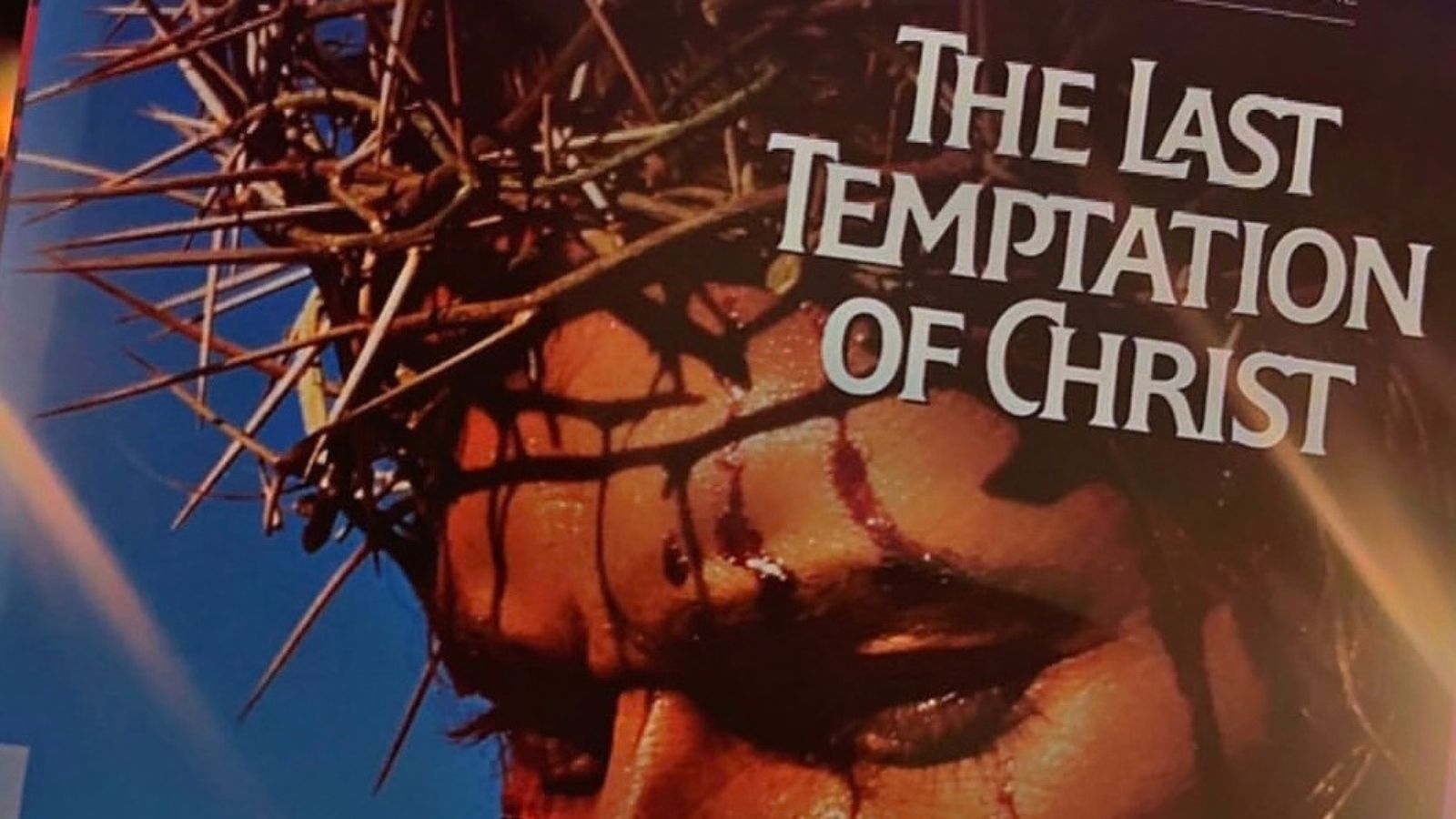
Martin Scorsese’s adaptation of Nikos Kazantzakis’s novel drew intense objections to its fictional portrayal of Jesus’ humanity and temptations.
The film was barred or restricted in several places, with objections centering on alleged blasphemy or offense to Christians. The controversy also extended beyond official decisions: arsonists attacked a Paris cinema showing it in 1988.
The Battle of Algiers (1966)
Gillo Pontecorvo’s film dramatizes Algeria’s struggle for independence from France, including urban guerrilla warfare and state repression.
The Library of Congress identifies it among films critical of French government and military actions that were censored or withheld from French audiences for years.
Here, the controversy concerned a politically sensitive history rather than a religious joke or an extreme horror scene. Describing its experience as censorship or withheld exhibition preserves the distinction from a straightforward, continuing national ban.
Related: 10 Movies That Feel Morally Wrong to Watch
The Little Soldier (1960)
Jean-Luc Godard’s film also encountered French censorship over its treatment of the Algerian War. It was not released in France until 1963.
The Library of Congress places it alongside works criticizing French government and military policy toward Algeria that were censored or not shown for years.
The delayed release is an essential part of the story. Leaving it out would make a historical restriction sound permanent and obscure what eventually happened to the film.
The Johnson–Jeffries Fight (1910)
This film recorded Black heavyweight champion Jack Johnson defeating white former champion James J. Jeffries.
The South African theatre archive cited in the brief identifies it as the first film banned in South Africa. The restriction reflected white authorities’ fears about the social and political meaning of Johnson’s victory.
Efforts to restrict the footage also occurred in the United States amid racial tensions. Its place here is especially striking because the contested material was an athletic result, with racial power shaping the response.
A Serbian Film (2010)
Australia’s Classification Review Board unanimously refused classification to the original 96-minute version of A Serbian Film.
Its official decision cited the treatment of sex, crime, cruelty, violence, and other material considered beyond generally accepted standards. It also cited the depiction or description of someone appearing to be under 18.
“Refused Classification” has specific distribution consequences in Australia: the film cannot legally be sold, hired, advertised, or publicly exhibited there. That decision does not establish a worldwide prohibition.
The Human Centipede 2 (Full Sequence) (2011)
Australia’s Classification Review Board records a Refused Classification decision for this film in 2011.
That gives the entry a documented regulatory basis rather than relying on its reputation for extreme horror. The official decision and the film’s controversy are distinct pieces of information.
The record supplied here establishes that historical classification outcome. It does not establish the current status of every version or release.
Related: The Best Dog Movies Of All Time
The Grand Illusion (1937)
Jean Renoir’s antiwar film was banned by Nazi authorities in occupied France because it was considered anti-German.
According to the Library of Congress, Nazi propaganda authorities established film censorship and oversight, blocked imports from Allied countries, and prohibited works they deemed anti-German.
This case places a film restriction within a broader system of political control. The objection concerned the work’s perceived message, rather than the classification questions surrounding the horror titles on this list.
Cuties (2020)
Australia’s Classification Review Board lists a Refused Classification decision for Cuties dated October 23, 2020.
That formal Australian action should be distinguished from the online backlash surrounding its Netflix release. Public outrage alone is not evidence of a legal ban.
The documented decision supports a specific claim about Australia at that time. It does not support describing the film as banned worldwide.
Cannibal Holocaust (1980)
Ruggero Deodato’s exploitation-horror film used a pseudo-documentary style that led some people to believe its depicted violence was real, prompting investigations.
It faced prohibitions and prosecutions in multiple countries. Extreme violence, sexual violence, and genuine onscreen animal killings were central to its controversies. The BBC also connects it with Britain’s “video nasties” panic.
Its censorship history needs no inflated tally. The promotional claim that it was banned in 50 countries should not be treated as an established fact.
The House on Garibaldi Street (1979)
This television film dramatizes the pursuit of Adolf Eichmann. The supplied brief reports that Argentina’s military dictatorship banned it, apparently because the hunt for Eichmann in Argentina was politically sensitive.
However, the brief flags this entry as its weakest-sourced case. An Argentine archive, censorship record, academic source, or contemporary report is needed to substantiate the restriction and its rationale:
Look Beyond the “Banned” Label
Before treating a restriction as part of a movie’s appeal, ask who imposed it, what it covered, and whether it later changed.
These histories raise different questions. Which troubles you more: restrictions over graphic content, or those aimed at religious satire, racial equality, and political criticism?
Other Posts You Might Like
If you like what you just read, then subscribe to our newsletter and follow us on social media.


