10 Terrifying Real-Life Stories of Imaginary Friends That Defy Explanation

Imaginary friends have long been a hallmark of childhood creativity, invisible companions who share secrets, comfort loneliness, and help children explore their imagination. But sometimes, these “friends” reveal something far darker.
Throughout history, there have been chilling accounts of imaginary companions becoming catalysts for horror, violence, or deep psychological mystery.
The Haunting of Ricky Cole- The Man and His Dark Companion
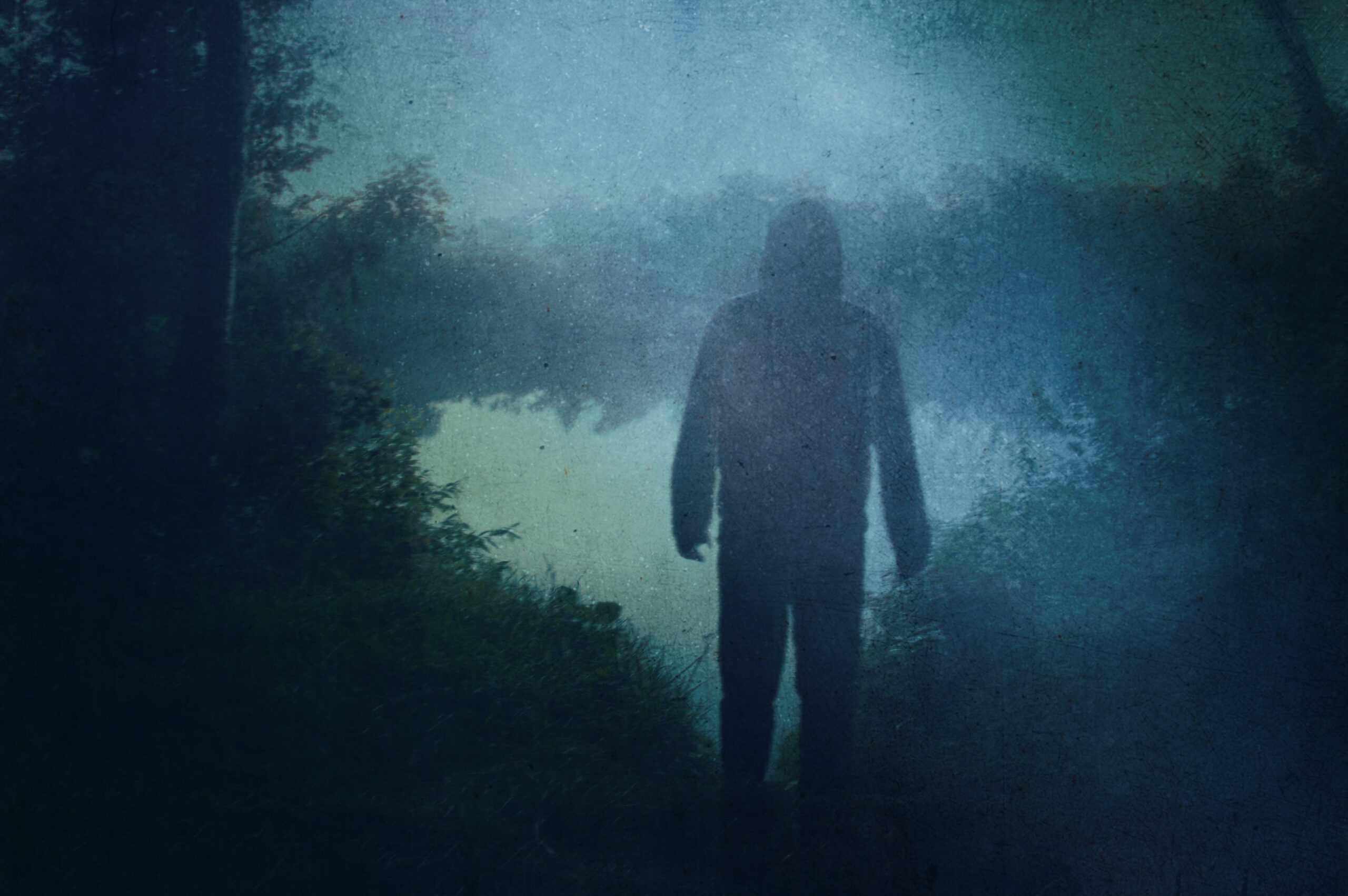
Ricky Cole was a troubled man with a reputation for violence and mental instability. According to his acquaintances, he often spoke to “Vern,” an invisible entity who lived in a black box and instructed him to harm others.
Vern’s voice dominated Cole’s life, influencing his every violent act, until Cole himself met a brutal end at the hands of Jason Cote in 2013.
Cote later testified that he killed Cole out of fear, having overheard Cole’s eerie conversations with Vern. Whether Vern was a figment of psychosis or something more sinister remains unknown.
The Boy in the Closet- Rebecca and “Jonathon.”
When three-year-old Rebecca began speaking about her “friend” Jonathon, her parents assumed it was harmless play. But her obsession with the closet grew disturbing.
She claimed Jonathon “lived” there and would whisper to her at night. Years later, when the family moved away, the new homeowners discovered a trapdoor beneath that very closet, hiding a small box labeled “Jonathon’s” filled with baby clothes and photos.
Was Jonathon a ghost of the home’s past? Or something darker that only children could perceive?
Karl-Anthony Towns and His Game-Day Alter Ego
Even in the world of sports, imaginary friends make unexpected appearances. NBA star Karl-Anthony Towns revealed that during games, he converses with his “other self,” an imaginary companion named Karlito.
Karlito serves as his internal motivator, a mental projection that channels focus and control.
While not malevolent, Karlito’s presence raises questions about identity and mental visualization in high-performance psychology — proof that imaginary friends can transcend childhood and evolve into complex adult coping mechanisms.
January Schofield- The Girl with Too Many Voices
January Schofield’s story remains one of the most documented cases of early-onset schizophrenia in the United States. By four, she was conversing with multiple invisible entities who urged her to harm her brother and herself.
Her “friends,” including animals and children from her imagined world, “Calalini,” completely dominated her mind.
Her parents’ struggle to distinguish imagination from illness led to a diagnosis that shocked doctors: childhood schizophrenia, a condition so rare it’s almost unheard of at her age.
Jess and the Victorian House Apparition

In Psychic Kids, author Lynne Gallagher recounts the chilling tale of a young girl, Anna, who befriended a spectral child named Jess after her family moved into an old Victorian home.
Jess disliked dogs and warned Anna to stay away from her dollhouse. One stormy night, Anna’s mother witnessed a pale girl stroking her daughter’s hair by candlelight. When the family dog barked, the apparition screamed, leaving behind a pool of blood that defied explanation.
Bleeder- The Robot That Commanded Violence
Rylan, a young boy born with severe behavioral disorders, created an imaginary friend named Bleeder, a robotic figure who ordered him to hurt others.
By age six, Rylan had already cut off his own fingertips and threatened his adoptive parents with knives at Bleeder’s command.
The story, featured on Dr. Phil, revealed the terrifying potential of imagination intertwined with inherited trauma. Whether Bleeder was a symptom of psychosis or an external influence, he left a psychological scar that persists to this day.
Eric- The Shadow of Violence
He told police that Eric “made” him do it, that Eric tied up the girl, whispered to her, and encouraged the violence.
While law enforcement dismissed his story as delusion, psychologists suggested Fischer may have been suffering from dissociative episodes where “Eric” represented a fragmented part of his psyche.
Laughing Jack- The Killer Clown Imaginary Friend
Originating as an internet legend, Laughing Jack is said to be a clown who befriends lonely children before gruesomely murdering them. In 2015, a 12-year-old Indiana girl claimed Laughing Jack told her to kill her stepmother, and she obeyed.
Investigations uncovered her severe mental illness, but the fact that a fictional internet character had manifested so vividly in her mind reveals the frightening influence of digital mythology on developing brains.
The Slender Man Stabbings- Myth Meets Madness
In 2014, two 12-year-old Wisconsin girls lured their friend into the woods and stabbed her 19 times, claiming Slender Man demanded a sacrifice. They believed he would kill their families if they refused.
Born from an online meme, Slender Man became more than a story; he was an entity the girls truly believed in, merging imagination, fear, and delusion into one horrific act.
Casey Anthony and Her Fabricated World

Casey Anthony’s case captured global attention not just for her daughter’s tragic death, but for her elaborate network of lies. She fabricated entire people, including a nanny, a job at Universal Studios, and friends who didn’t exist.
Psychologists have described her as a master of self-created fiction, living in an “imaginary world” so complete that she convinced even herself. Anthony’s story demonstrates that imaginary constructs can evolve into dangerous realities when deception replaces truth.
Conclusion
Imaginary friends reflect the human mind’s vast creative and emotional power, but they can also mirror our deepest fears and psychological fractures.
From harmless companions to malevolent specters, these stories reveal the razor-thin boundary between imagination and madness.
As we explore the growing intersection of psychology, folklore, and the digital age, one thing remains clear: sometimes, the most terrifying monsters are the ones we invent ourselves.