10 Strange Marriage Laws You Didn’t Know You Might Be Breaking
Marriage is a sacred institution in many cultures, but over the centuries, various nations and states have developed odd, bizarre, and sometimes downright strange laws surrounding it.
These legal stipulations can often go unnoticed, but if you’re not careful, you might find yourself in violation of a law you never even knew existed.
From quirky regulations meant to preserve cultural traditions to more questionable laws that seem to have no purpose but to baffle, the world of marriage law is full of surprises.
The Weirdest Marriage Laws Around the World
While many modern-day marriage laws are relatively straightforward, others stem from historical events, local customs, or even outdated beliefs.
But they can still affect us today. If you’re planning a wedding, a marriage, or even just considering a marriage, it’s crucial to know whether you’re breaking any strange marriage laws without realizing it.
Marrying Without Parental Consent in South Korea

In South Korea, it’s illegal to get married without parental consent if either individual is under the age of 20. While this may seem like an odd requirement in today’s world, it’s rooted in tradition and has deep cultural significance.
The law was put in place to ensure that young couples didn’t rush into marriage without fully understanding the responsibilities it entailed.
In South Korea, parental influence remains strong, and marriage is often seen as a family matter. The consent requirement can be seen as a way to maintain social harmony and respect family decisions, making sure the parents approve of the marriage and its suitability.
For those in South Korea, this means that even if you’re madly in love and eager to tie the knot, you must still get your parents’ approval if you’re under 20, something many young couples may find frustrating, but which is still legally binding.
Marrying a Deceased Person in France
In France, the idea of marrying a deceased person isn’t as outlandish as it sounds. In fact, under specific circumstances, French law allows people to marry the deceased, but there’s a catch: the marriage must be authorized by the President of France.
This bizarre law stems from a historical case in the 1950s when a woman sought permission to marry her deceased fiancé after he tragically passed away before they could marry.
The French court ruled that the deceased’s wish to marry should be respected, and since then, the “posthumous marriage” law has remained on the books.
While rare, this law is still available for those in France who feel the need to marry a deceased partner, provided they can prove that their partner’s wishes were genuine.
Marriage Laws in Japan

In Japan, there is a peculiar marriage law that makes it illegal for a woman to get married if she is found guilty of stealing a man’s heart, literally. Under the “Theft of a Heart” rule, which originated in feudal Japan, a woman could be accused of “stealing” a man’s affections without his consent, a crime punishable by not being able to marry.
Though the law has been largely abolished, it still carries a cultural legacy. It reflects the complex views of personal relationships in traditional Japanese society, where marriage was often viewed as a matter of property and familial duty rather than personal choice. The unusual nature of this law is a remnant of a bygone era that continues to spark debate even in modern Japan.
The U.S. and Its Strange Marriage Laws
While most marriage laws in the United States are relatively standard, there are still a few quirky, outdated laws lingering in some states that could surprise you. Let’s take a closer look at some of the more peculiar marriage laws that can be found across the United States.
Marriage by Proxy in Montana
In Montana, it’s possible to get married by proxy, which means you don’t even need to be physically present to say “I do.” This bizarre law allows individuals to marry someone who is absent, usually in the case of military personnel who are deployed overseas or people who are unable to attend their wedding due to extenuating circumstances.
While this law is in place to accommodate those who are unable to attend their weddings due to unavoidable situations, it raises many questions about the legitimacy of such marriages and whether they can stand the test of time.
The Weird Six Blackbirds Law in Massachusetts
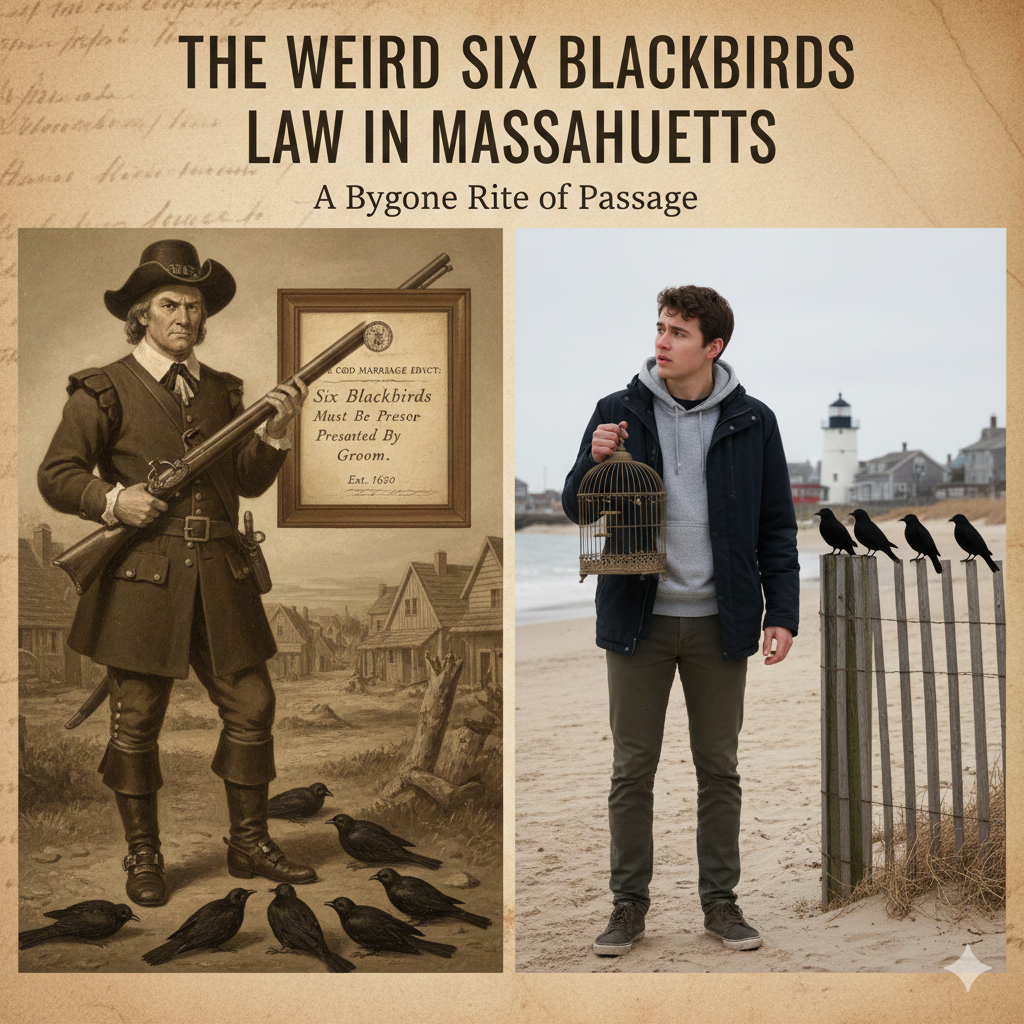
Here’s one of the most unusual marriage laws you may have never heard of. In a small town on Cape Cod, Massachusetts, a man is legally required to kill six blackbirds before he can marry. This law, which dates back centuries, is meant to ensure that the groom has enough fortitude to endure the hardships of married life.
While no one is seriously enforcing this law today, it remains an interesting historical relic that shows how marriage used to be intertwined with various forms of ritual and symbolism. The six blackbirds were once considered a rite of passage, symbolizing the man’s readiness to take on the challenges of family life.
The Tennessee “Single Female” Marriage Law
In Tennessee, there’s an old law on the books that says women who are considered “single” and not marriedby the age of 40 are breaking the law. While this law is no longer actively enforced, it still exists and reflects outdated notions of marital status and societal expectations.
The law was intended to encourage women to settle down and get married, but it never made much sense given modern societal norms. Nevertheless, it’s a curious example of how marriage laws once sought to enforce conformity in relationships.
Unusual Divorce Laws You Didn’t Know About
Just as there are strange laws about marriage, there are also unusual rules governing divorce in different parts of the world. Some countries have laws that make it incredibly difficult to divorce, while others allow for quick and easy separations. Let’s take a look at some of the oddest divorce laws around the world.
Divorce in the Philippines
The Philippines is one of the only countries in the world where divorce is illegal. While annulments are allowed in certain circumstances, the process is often lengthy, expensive, and complicated. As a result, many married couples in the Philippines remain legally married even if they’ve been separated for years.
While this law is rooted in the country’s deeply religious and cultural values, it has garnered significant criticism in recent years. Many advocates believe that divorce should be legalized to provide individuals with a way out of toxic or abusive marriages.
Divorce in Malta
Malta, a small island nation in the Mediterranean, has one of the longest and most difficult divorce processes in the world. In fact, divorces in Malta can take up to ten years to finalize, which is a shocking amount of time for a modern legal system.
This extended waiting period is based on the country’s conservative religious views, which prioritize marriage as an unbreakable bond. While Malta has made strides in recent years to streamline the process, the lengthy and difficult divorce process remains a challenge for many people.
Divorce in India
In India, divorce is still considered a taboo in many communities, and the law requires a spouse to prove that the other is “at fault” in order to get a divorce. This can mean proving infidelity, abuse, or abandonment in a court of law.
Though this rule is beginning to shift in more progressive parts of the country, it still remains a significant obstacle for many individuals seeking a divorce. The “fault” requirement is often criticized for forcing people to endure painful legal battles just to escape an unhappy or abusive marriage.
Myths, Legends, and Folklore About Marriage Laws
Marriage laws around the world are steeped in fascinating myths and legends. These stories have been passed down through generations and often carry deeper meanings about culture, tradition, and the way marriage was viewed by previous generations.
The Legendary Marriage of Ares and Aphrodite in Greek Mythology
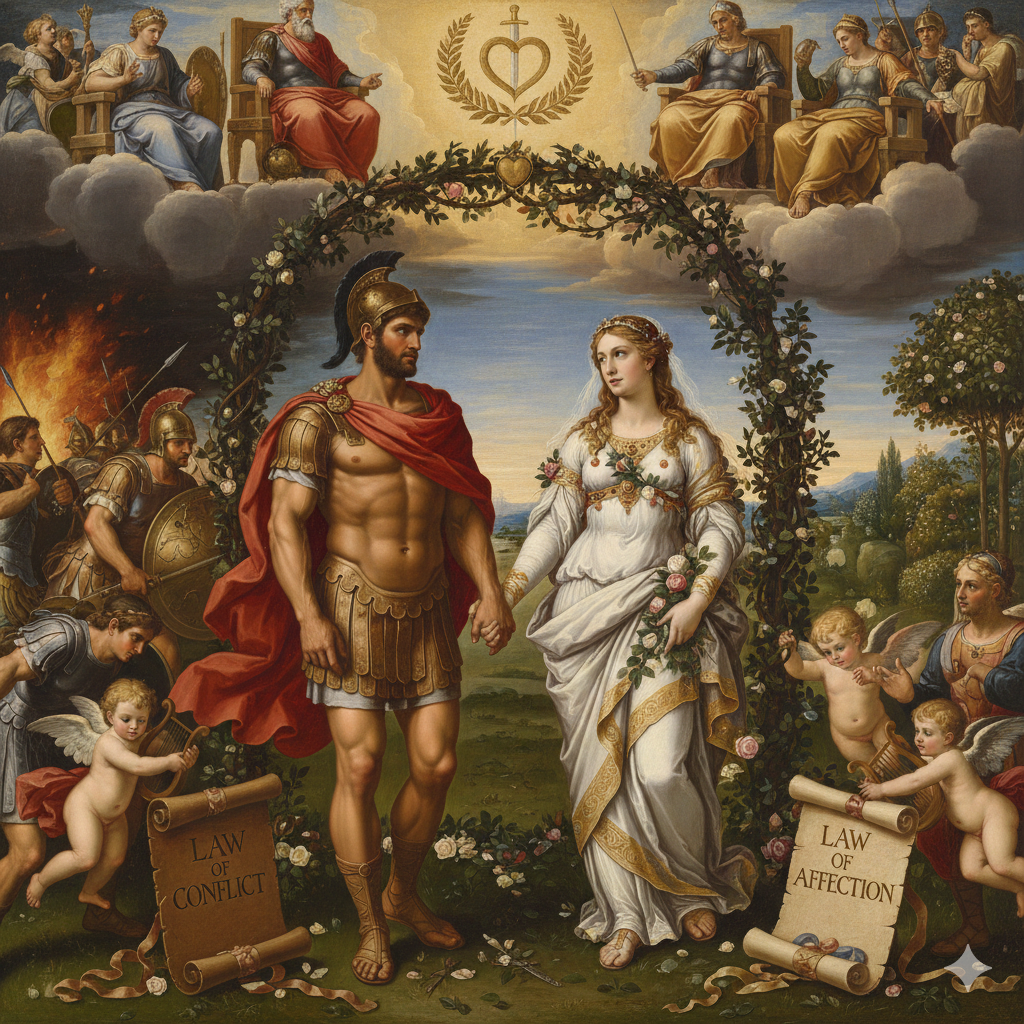
In ancient Greek mythology, Ares, the god of war, and Aphrodite, the goddess of love, were married despite being opposites. Their union was the subject of many myths, some of which explain how their marriage laws were guided by the very forces they represented—war and love. This mythical marriage speaks to the idea that love and war can co-exist, even if they come from opposite ends of the spectrum.
The story of Ares and Aphrodite is a reminder that marriage laws, like love itself, are subject to many forces beyond mere logic and practicality.
The Story of the “Bluebeard” Curse
In medieval Europe, a story was told about a wealthy nobleman named Bluebeard who had married several women, each of whom mysteriously disappeared. According to legend, the women had violated a marriage rule by opening a forbidden door in his home, leading to their doom.
While this story is more of a cautionary tale than an actual law, it became deeply ingrained in European cultures as a warning about the dangers of marriage and the rules that come with it. The idea of forbidden doors and mysterious, hidden elements within marriages continues to haunt popular culture today.
Conclusion
Strange marriage laws, whether outdated, quirky, or downright bizarre, serve as fascinating windows into the history, culture, and values of different societies. While many of these laws may no longer be enforced, they continue to be a reminder of how society once viewed marriage and the roles it played in shaping personal relationships.
For those about to get married, understanding the intricacies of marriage laws, no matter how strange they may seem, can help avoid unexpected surprises.
In some cases, a simple understanding of historical or cultural significance can help prevent violations of these odd regulations. In others, it’s about recognizing how much marriage laws can vary depending on location and tradition.
As you go about your wedding preparations or simply explore the world of marriage and divorce laws, remember that some of these strange rules may be more about tradition than actual legal enforcement. Nevertheless, they offer valuable insights into the rich tapestry of human relationships and the laws that have governed them throughout history.
Read the Original Article on Crafting Your Home