

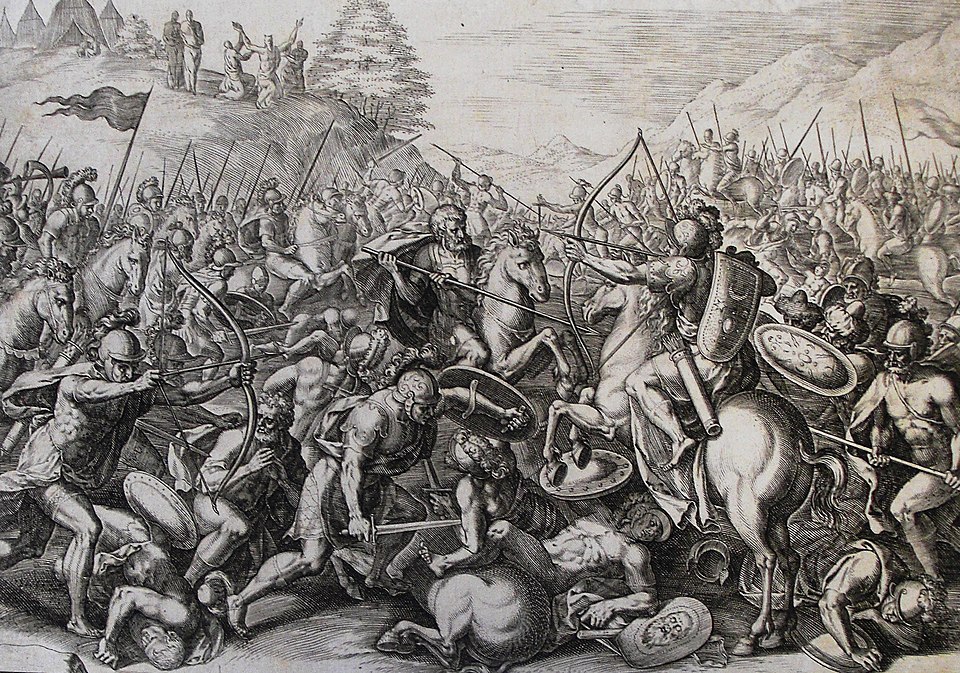
The question of Old Testament violence is one of the hardest questions many readers bring to the Bible. We open its pages and find beauty, poetry, rescue, covenant, mercy, and divine patience, yet we also meet flood waters, plagues, wars, judgment oracles, and commands that sound severe to modern ears. For many people, the tension feels personal: how can the same God described as loving, patient, and good also command judgment, punish nations, and allow scenes of bloodshed?
We cannot answer that question well by pretending the difficult passages are not there. We also cannot answer it by reading ancient texts as if they were modern newspaper reports, military manifestos, or isolated moral slogans. If we want a serious answer, we must read the Old Testament within its own storyline, covenant world, moral claims, and larger biblical arc. When we do that, a clearer picture emerges: the God of the Old Testament is not hateful, cruel, or unstable. He is holy, patient, just, merciful, and fiercely opposed to evil because evil destroys the people and world he created.
The Question About Old Testament Violence Is Really a Question About God’s Character

That concern deserves a careful answer because the Bible itself does not hide from moral difficulty. Scripture shows human violence honestly, sometimes painfully, and often without softening the horror. Cain murders Abel. Pharaoh enslaves the Israelite children. Empires crush the weak. Kings abuse power. Families break apart through jealousy, lust, pride, and revenge. The Old Testament is not a sanitized religious book. It is a truthful book about a violent world.
That matters because many accusations against the Old Testament assume that God enters a peaceful world and brings violence into it. The biblical story says the opposite. God creates a good world, humanity rebels, and violence spreads through human sin. By Genesis 6, the world is described as filled with violence. Divine judgment enters the story not as random cruelty but as God’s answer to a world that has become morally corrupt, destructive, and dangerous.
God’s Anger in the Old Testament Is Not Like Human Rage
One of the most common mistakes we make is imagining God’s anger as a larger version of human anger. Human anger is often selfish, impulsive, defensive, proud, or cruel. We lash out because we feel insulted. We punish because we want control. We resent people because they threaten our comfort. If we project that kind of anger onto God, the Old Testament will look terrifying.
The Bible describes God’s anger differently. Divine anger is not emotional instability. It is holy opposition to evil. God’s anger burns against slavery, idolatry, murder, corruption, false worship, exploitation of the poor, betrayal, arrogance, and the abuse of power. His anger is not the opposite of love. It is one expression of love when love confronts what destroys life.
We already understand this at a human level. A judge who feels nothing toward human trafficking is not loving. A parent who feels no anger when a child is abused is not gentle. A society that never becomes morally outraged at injustice is not compassionate. Anger can be sinful, but the absence of moral anger can also be a sign of moral deadness. The Old Testament presents God as morally alive, deeply patient, and unwilling to treat evil as harmless.
God’s Justice and God’s Love Work Together in the Bible

Many readers assume love and judgment cannot belong together. We often imagine love as acceptance without confrontation and judgment as punishment without compassion. The Bible refuses that split. In Scripture, God loves what is good, protects what is vulnerable, and judges what destroys. His justice serves his love because real love cannot make peace with evil forever.
The Old Testament repeatedly connects God’s character with both mercy and justice. Exodus 34 describes God as merciful, gracious, slow to anger, and abounding in steadfast love, yet it also says he will not clear the guilty as if guilt does not matter. That balance is central to the Bible’s vision of God. He is not soft on evil, and he is not eager to destroy. He is patient without being morally indifferent.
That balance helps us avoid two distortions. If we remove justice from God’s love, we end up with a sentimental God who comforts victims but never confronts oppressors. If we remove love from God’s justice, we end up with a harsh God who punishes without mercy. The Old Testament gives us neither. It gives us a God whose mercy is real and whose justice is serious.
Why Old Testament Judgment Cannot Be Read as Random Cruelty
Old Testament judgment passages are often read as if God suddenly attacks people without warning, reason, or patience. That is not how the biblical narrative presents them. Judgment usually comes after long patterns of rebellion, violence, exploitation, idolatry, arrogance, or covenant betrayal. The Bible often emphasizes delay before judgment, showing that God’s patience is not weakness and his judgment is not impulsive.
The flood narrative, for example, is tied to a world filled with violence and corruption. The judgment on Sodom is tied to grave wickedness and social cruelty. The plagues on Egypt come after Pharaoh enslaves Israel, murders children, hardens his heart, and refuses repeated warnings. The exile of Israel and Judah comes after generations of prophetic calls to repentance. Again and again, the Old Testament shows that judgment is not God losing control. It is God responding to entrenched evil after patience has been despised.
This does not make every passage emotionally easy. It does mean the Bible’s own explanation must be heard before we judge the text from a distance. Old Testament judgment is covenantal, moral, and theological. It is never presented as permission for ordinary people to baptize their rage, conquer their enemies, or commit violence in God’s name.
The Old Testament Also Shows God’s Deep Mercy

The claim that the Old Testament God is hateful often survives only because people remember judgment scenes and forget mercy scenes. The Old Testament is full of divine compassion. God clothed Adam and Eve after their rebellion. He protects Cain from revenge even after murder. He saves Noah. He hears the cries of enslaved Israel. He provides manna in the wilderness. He forgives repeatedly. He sends prophets to warn rather than destroy immediately.
The Psalms repeatedly describe God as gracious, compassionate, slow to anger, and rich in steadfast love. The prophets portray God grieving over his people’s rebellion, calling them back, and promising restoration after judgment. Hosea presents God as a wounded husband whose love remains painfully faithful. Jonah shows God’s mercy toward Nineveh, a violent foreign city that Israel would have preferred to see destroyed.
That story is especially important. Jonah does not struggle because God is too violent. He struggles because God is too merciful toward Israel’s enemies. The book ends with God expressing concern for a great city full of people who do not know their right hand from their left, and even for its animals. That is not a portrait of divine hatred. It is a portrait of mercy larger than human prejudice.


