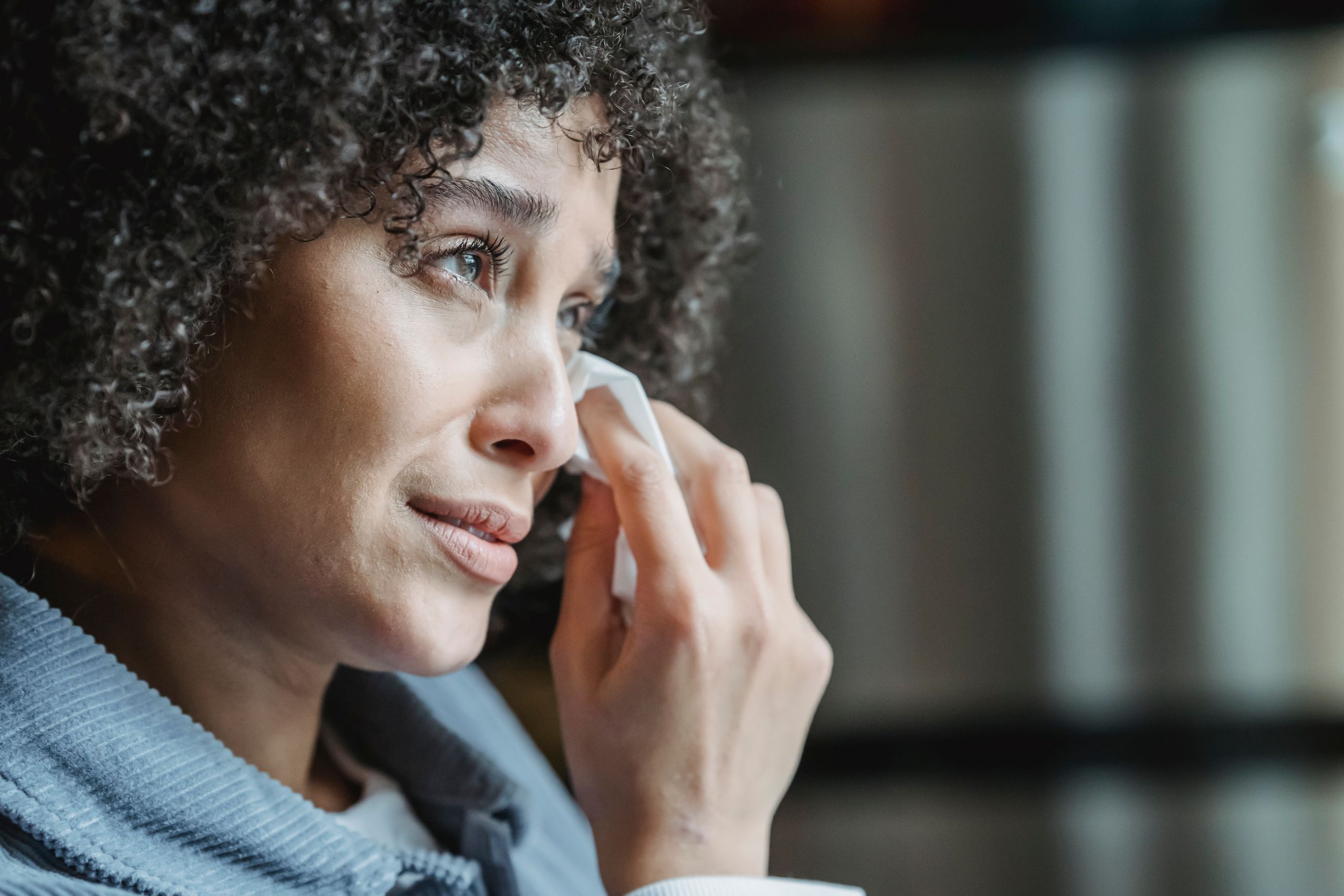
Crying is usually linked with sadness, grief, or pain. But tears can also appear during some of the happiest moments of our lives.
People cry at weddings, graduations, reunions, after receiving good news, or when meeting a newborn baby for the first time. These tears may seem confusing because happiness and crying seem like opposites.
However, science suggests that happy tears are a normal response to intense emotion. They may help the brain and body regulate overwhelming feelings and return to a more balanced emotional state.
Happy Tears Are Caused by Emotional Intensity
Image credit: Debabrata Mukherjee/pexels
One of the main explanations for happy crying is that the brain responds not only to whether an emotion is positive or negative, but also to how intense that emotion is.
When something deeply meaningful happens, several emotions can occur at once. You might feel joy, relief, excitement, love, pride, and surprise all within a few seconds.
That emotional intensity can become overwhelming.
Crying may be one way the body manages that powerful emotional reaction.
Psychologists sometimes describe this as a dimorphous expression of emotion. This happens when a person expresses an emotion in a way that seems opposite to what they are actually feeling.
For example, someone might cry when extremely happy or say they want to “squeeze” something because it is incredibly cute.
Researchers are still studying exactly how emotional tears influence the nervous system, so scientists do not yet have a complete explanation. However, emotional regulation remains one of the strongest theories behind happy crying.
Happy Tears Often Include Mixed Emotions
Image credit:Patrick Alves Fotografias/pexels
Happy crying is rarely caused by happiness alone.
Major life events often contain several emotions at once.
A parent watching a child graduate may feel pride and happiness, but also nostalgia about how quickly the child has grown.
Someone getting married may feel excitement and love while also realizing that a major chapter of life is changing.
A person reunited with a loved one may experience happiness mixed with enormous relief after a period of worry.
These are examples of mixed emotions, where positive and negative feelings occur together.
Tears may be the body’s response to this complicated combination of emotions.
The Brain Does Not Separate Happiness and Sadness Completely
It is tempting to imagine that the brain has completely separate systems for happiness and sadness, but emotions are more complicated than that.
Many brain regions involved in emotional processing respond to different types of intense experiences.
This is why the body can produce similar physical reactions during very different emotions.
For example, people may experience a racing heart when they are frightened, excited, nervous, or attracted to someone.
They may shake from fear or from overwhelming excitement.
And they may cry from sadness or extreme happiness.
In many situations, the intensity of the emotion matters as much as whether it is positive or negative.
Crying Is Also a Social Signal
Image credit:Pavel Danilyuk/pexels
Tears do more than express what is happening inside the body. They also communicate emotions to other people.
When someone cries, others immediately recognize that the moment is emotionally important.
Happy tears may therefore help strengthen relationships.
For example, someone crying during a reunion may communicate just how much they missed the other person. A parent crying at a wedding or graduation may silently express pride, love, and emotional connection.
In this way, crying can function as both an emotional response and a powerful form of nonverbal communication.
Why Do Some People Cry More Than Others?
Not everyone cries easily when they are happy.
People differ in how they experience and express emotions.
Factors such as personality, culture, upbringing, hormones, life experiences, and social expectations can all influence how often someone cries.
Some people may tear up during emotional movies or celebrations, while others rarely cry.
This doesn’t necessarily mean one person feels emotions more deeply than another. People process and express emotions differently.
What Are Emotional Tears?
Image credit: Liza Summer/pexels
Humans produce several different types of tears.
Basal tears keep the eyes moist and protected.
Reflex tears appear when the eyes are irritated by smoke, dust, or onions.
Emotional tears are triggered by strong psychological experiences.
Emotional crying is especially interesting because humans seem unusual in using visible tears as a social and emotional signal.
Scientists continue to investigate whether emotional tears have additional biological benefits beyond their role in emotional expression.
Why Can Happy Crying Feel So Good?
Many people say they feel relieved after crying.
This may happen because happy tears often appear after a period of stress, anticipation, or uncertainty.
Imagine waiting for the results of an important examination, job interview, or medical test. When the outcome is positive, the built-up tension can suddenly disappear.
The person may cry not only because they are happy but also because they are experiencing an enormous release of stress.
Comfort from other people, such as a hug or words of reassurance, may also make the experience feel even more relieving.
The post Firstborn, Middle or Youngest? What a Large Study Found About Birth Order and Personality first appeared on Crafting Your Home. Rodica Ioana Damian…
The post Super-Recognizers Never Forget a Face: What Scientists Have Learned About Them first appeared on Crafting Your Home. London police officer Gary Collins likes…