A winter den is a survival strategy, not ordinary sleep.

The surprising part: bears slow their metabolism without freezing themselves
One of the most fascinating discoveries about bear hibernation is that they dramatically reduce energy use without letting their body temperature drop to the levels seen in many smaller hibernating animals.
A landmark 2011 study published in Science examined American black bears and found that the animals reduced their metabolism to about 25% of their normal basal rate, a reduction of roughly 75%. Yet their body temperature was regulated within approximately 30–36°C (86–97°F), rather than falling close to the surrounding temperature as it does in some small hibernators.
This combination makes bears unusual. They enter a powerful state of metabolic suppression while remaining relatively warm compared with many classic hibernators. Researcher Øivind Tøien of the University of Alaska Fairbanks, the study’s lead author, emphasized this point, arguing that bears “truly hibernate because they actively suppress their metabolic rate to the level as is known in other hibernators.”
The terminology can be confusing. Some wildlife sources describe bear hibernation as torpor because bears do not experience the dramatic body-temperature drops associated with smaller mammals, and because they can be more responsive in their dens. The National Park Service notes that, technically, this is torpor, but people often call it hibernation. The debate is largely about definitions not whether bears undergo a profound physiological transformation.
A heartbeat that slows to single digits
The most striking details of bear hibernation often appear in the body’s rhythms. In the black-bear study, researchers recorded heart rates dropping from about 55 beats per minute to as low as 9 beats per minute during hibernation. Katmai National Park also describes hibernating bears as capable of averaging around 8–10 beats per minute, with breathing slowing to about one breath per minute.
These numbers are not fixed rules for every bear. Different animals and conditions can vary. But they reveal the scale of the change: a bear’s body enters an exceptionally energy-efficient state while remaining alive and carefully regulated.
During the prolonged hibernation period observed in the black-bear study, the animals did not eat, drink, urinate, or defecate. Their bodies were adapted to function through this extended period without the usual daily needs of an active animal. This is not inactivity in the simple sense. It is an active biological adjustment.
Months in a den and even new life begins there.
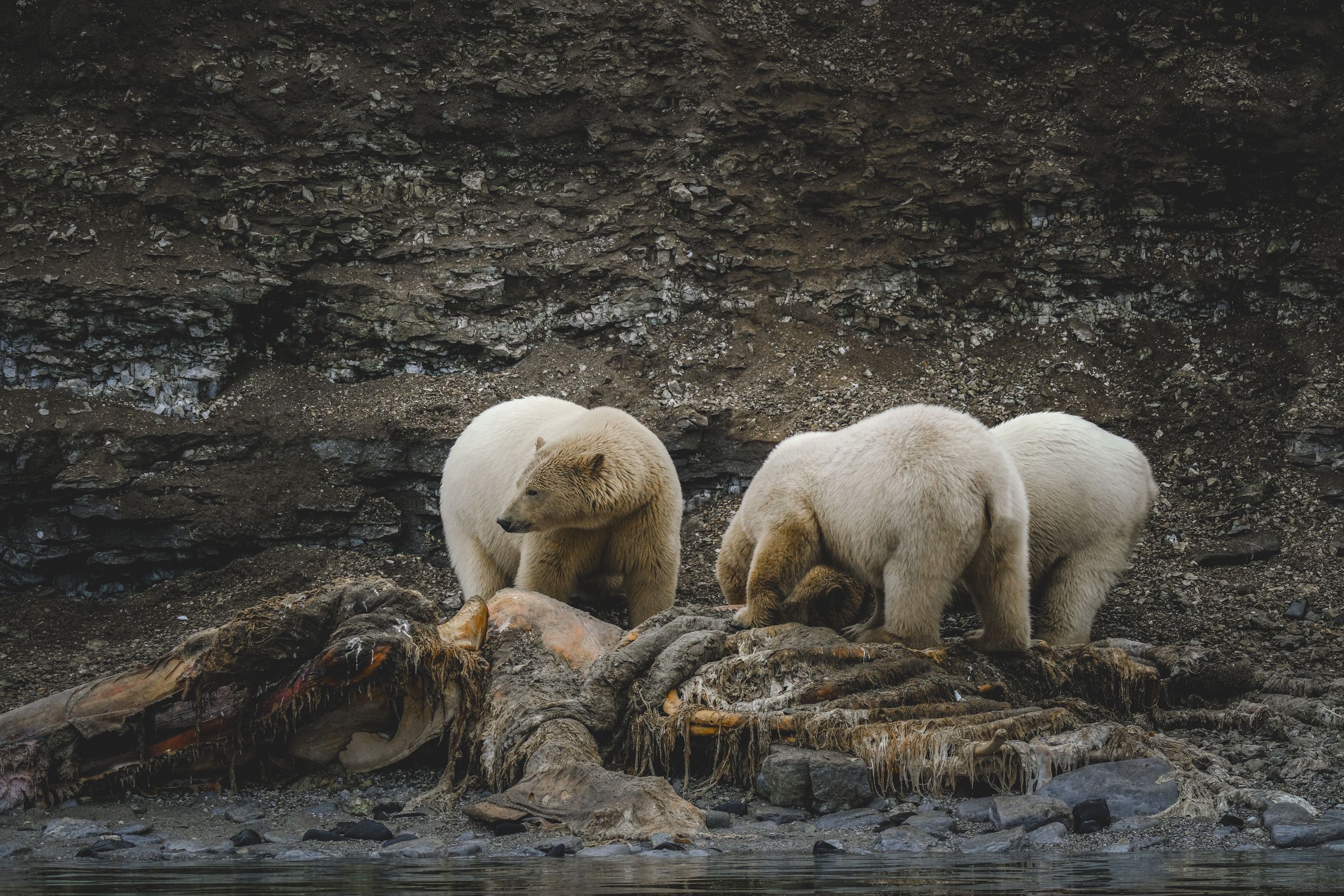
How long a bear stays in a den depends on many factors, including species, location, sex, reproduction, and food availability. No single “hibernation length” applies to all bears. In the 2011 black-bear study, hibernation lasted five to seven months. In the Brooks Range, National Park Service researchers documented an average brown-bear denning period of 206 days, with one bear remaining in its den for 233 days.
The winter den can also become a place of new beginnings. Female brown bears may give birth and nurse cubs while still denning. This means denning is not merely a pause in life it is a period where survival, energy conservation, and early development happen together.
Cold matters, but food drives it.
It is easy to assume that bears hibernate because winter is cold. Temperature plays a role, but the deeper reason is food. When food becomes scarce, remaining active can require more energy than the environment can provide. Entering a metabolically reduced state lets bears survive months when finding enough calories is difficult.
The Brooks Range research clearly illustrates this connection. Bears with access to late salmon runs entered dens later, showing that den timing was linked to food availability rather than simply the arrival of cold weather. A bear’s winter sleep is therefore not an escape from the season it is an adaptation to it. Beneath the quiet of a snowy den, a bear is not simply waiting for spring. Its body carries out one of nature’s most remarkable examples of survival: reducing energy use, preserving resources, and sustaining life through months of scarcity.
Other Posts You Might Like:
If you like what you just read, then subscribe to our newsletter and follow us on social media.