


This article was originally published on Crafting Your Home. A human contributor also wrote and edited the post.
A routine drive can change in minutes. One moment, you’re heading to work, picking up the kids, or starting a weekend trip. The next, your phone buzzes with an emergency alert warning about flooding, severe weather, wildfire, or a road closure.
For many Americans, this is what a local travel advisory actually looks like. It is not always a formal notice telling people to stop traveling. More often, it is information about changing conditions that can affect whether a particular trip, route, or destination remains safe.
Knowing how to read those warnings and when to change your plans can make a significant difference.
The warning may be closer than you think.
The phrase “travel advisory” often makes people think about international travel. For example, the U.S. Department of State issues travel advisories for Americans going abroad.
Domestic travel is different. Inside the United States, residents receive safety information through a network of federal, state, and local agencies. The National Weather Service issues watches, warnings, and advisories for hazards including flooding, tornadoes, winter weather, hurricanes, and extreme heat. Local emergency-management agencies and transportation authorities can provide additional information about evacuations, road closures and other emergencies.
FEMA’s Integrated Public Alert and Warning System allows authorized government agencies to distribute emergency messages through several channels, including Wireless Emergency Alerts sent to compatible mobile phones.
That means a travel warning may reach you while you are already on the road.
The road can look safe when it isn’t
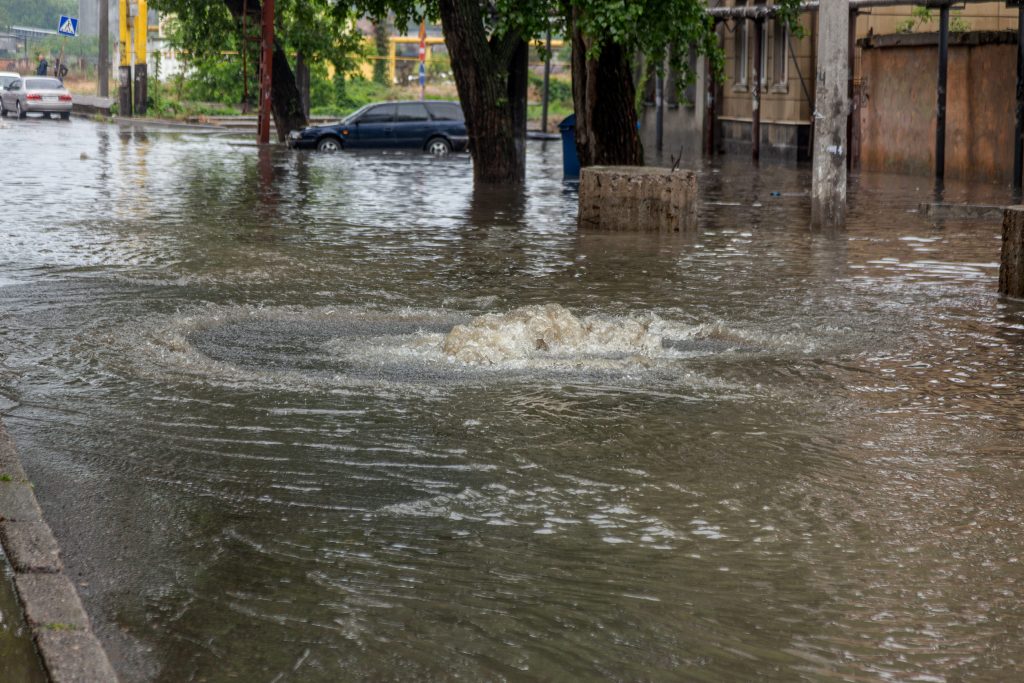
Flooding is one of the clearest examples.
Imagine driving along a familiar road after several hours of heavy rain. Water has covered part of the pavement, but the road still appears visible. Another vehicle has just crossed, and your SUV seems more than capable of handling the conditions.
It can be tempting to continue.
The National Weather Service strongly warns against driving through flooded roads because water can hide washed-out pavement, debris, and other dangers. Its “Turn Around, Don’t Drown” guidance warns that even relatively shallow moving water can be dangerous to people and vehicles.
The important lesson is that a driver’s eyes may not tell the whole story. The surface beneath the water may be damaged, and the depth or speed can be hard to judge from behind the wheel.
A road that looks passable is not necessarily safe to cross.
Your usual route may suddenly become the wrong route.
Familiarity can create another problem.
Residents know their usual commute. They know which roads are quickest and which shortcuts save time. But those same roads can become dangerous because of flooding, ice, fallen trees, wildfire, debris, or severe weather.
That is why local warnings matter even to people who have lived in an area for years.
The National Weather Service advises drivers not to go around barricades blocking flooded roads. A closure can indicate damage that is not visible from the driver’s seat.
Taking a detour may be frustrating. Arriving late may be inconvenient. But those are very different problems from becoming stranded on a damaged or flooded roadway.
Your phone may warn you before the road does

Modern emergency alerts have changed the way residents receive local safety information.
Wireless Emergency Alerts can deliver geographically targeted messages to compatible mobile phones through participating wireless carriers. These alerts can be used for certain severe-weather warnings and emergencies that require immediate public attention.
For travelers, that matters because conditions can change after they leave home.
A highway may be open at 7 a.m. and closed later. A storm can intensify during a commute. Floodwater can rise quickly. A wildfire can cause authorities to change evacuation instructions.
The message on your phone may therefore be the first indication that the conditions around your journey have changed.
When that happens, don’t simply dismiss the notification. Find out which area is affected, what hazard is involved, and what action authorities recommend.
Not every warning means “stay home”

This is where travelers can easily become confused.
A weather advisory does not automatically mean every road is closed. Different alerts communicate different levels and types of risk.
A winter-weather advisory, for example, may indicate conditions that could make travel difficult or hazardous. A warning may indicate a more immediate threat. A road closure provides a different kind of information: it tells you that a particular route is unavailable or should not be used.
The practical question is therefore not simply, “Is there an alert?”
It is, “What does this alert mean for my trip?”
That distinction can prevent both unnecessary alarm and dangerous complacency.
Check the route, not just the destination.
Another common mistake is checking whether the destination is open without checking the journey itself.
A store, workplace, airport, or hotel may still be operating normally while the road leading there is flooded, icy, blocked, or affected by another emergency.
Weather information and transportation information serve different purposes.
The National Weather Service can tell you what hazardous conditions are occurring or expected. Transportation agencies and local authorities can tell you about specific road closures and restrictions.
Before leaving during severe conditions, residents should consider both.
Knowing that heavy rain is falling is useful. Knowing the bridge on your planned route is closed because of flooding is much more useful.
Evacuation warnings require a different response.
Some local advisories are about changing your route. Others are about leaving an area entirely.
During wildfires, hurricanes, floods, and other emergencies, authorities may issue evacuation orders for specific communities.
The difficult part is that danger may not always be obvious when the order is issued. A neighborhood can appear calm even as conditions elsewhere deteriorate.
Residents should therefore pay close attention to official evacuation instructions rather than waiting for the danger to become visible outside their homes.
FEMA’s emergency-management system involves federal, state, local, tribal, and territorial authorities, so residents should know which local agencies provide official emergency information in their communities.
The safest decision may be to wait.

A travel advisory does not always require finding another route.
Sometimes the best decision is to postpone the trip.
The National Weather Service recommends canceling, delaying, or rerouting travel when flooding makes roads dangerous.
For a commuter, that could mean arriving late. For a family, it could mean changing weekend plans. For someone traveling to an appointment, it could mean making a phone call and rescheduling.
Those inconveniences are frustrating, but they are precisely why warnings are issued: to give people an opportunity to make a safer decision before conditions become more dangerous.
When the road changes, change the decision
Local travel advisories are most useful when residents treat them as decision-making information, not background noise.
Before leaving, check the weather and your route. During a trip, watch for official alerts. If conditions change, reassess the journey. If a road is closed, don’t assume you know better because the road looks clear. If authorities issue an evacuation order, take the instruction seriously.
The technology can deliver the warning, but the final decision still belongs to the person receiving it.
Sometimes the right choice is another road. Sometimes it is turning around. Sometimes it is waiting until conditions improve.
And sometimes the safest journey is the one you decide not to make.
The important thing is to recognize when the road has changed and understand that your decision may need to change with it.
Other Post you might like:
- These Top Travel Destinations Are Now Restricting Older Boomers.
- 5 Most Dangerous US States You May Want to Avoid
If you like what you just read, then subscribe to our newsletter and follow us on social media.


