

The post What Is ‘Swedish Death Cleaning’? The Gentle Decluttering Method Explained first appeared on Crafting Your Home.
Swedish death cleaning is a method of gradually sorting and reducing personal possessions with the future in mind. Despite its stark name, the idea is not simply to throw things away or strip a home of everything personal. It is about deciding what you actually want to keep and making it easier for family members to deal with your belongings later.
The Swedish term is döstädning, combining dö (“death”) and städning (“cleaning”). The concept became widely known outside Sweden through artist and author Margareta Magnusson’s book The Gentle Art of Swedish Death Cleaning, first published in English by Scribner in 2018. The publisher describes it as a practical approach to putting a home in order while considering what possessions are worth keeping.
Swedish Death Cleaning Explained
At its core, Swedish death cleaning means going through your possessions and deciding what should remain, what to give away, what to sell, and what no longer needs to be kept. Magnusson’s approach is not presented as a strict checklist with a required number of possessions. Instead, it is a way of thinking about ownership. The central idea is that belongings may eventually need to be sorted by someone else, so dealing with unnecessary possessions yourself can keep that task from becoming someone else’s responsibility.
You can also use this approach before old age. Magnusson’s book presents döstädning as something you can do at different stages of life, not just a task reserved for people approaching the end of life.
The 7 Principles of Swedish Death Cleaning
Own Less, Intentionally

Swedish death cleaning starts with a simple question: Do I have a reason to keep this? That doesn’t mean every item needs a practical function. Photographs, letters, family objects, artwork, and other possessions may be worth keeping precisely because they carry personal meaning.
The distinction is between intentional ownership and passive accumulation. An item that remains in a cupboard simply because it has always been there is different from an item you consciously decide to keep.
Related: 8 Household Items That Begin to Feel Immature After 30
Start Before You Have To
One practical idea behind döstädning is that sorting possessions becomes harder when you postpone it indefinitely. A study using data from the U.S. Health and Retirement Study found that after age 50, people became progressively less likely to dispose of belongings, give things away, or donate them. After age 70, about 30% of participants reported doing nothing in the previous year to clean out, give away, or donate possessions. More than 80% reported that they had sold nothing.
This does not prove that everyone should begin Swedish death cleaning at a particular age. It does suggest that delaying decisions about possessions can keep a collection of belongings largely unchanged over time.
Think About Who Will Deal With Your Things
The distinctive feature of Swedish death cleaning is its consideration of other people. A large household can contain objects that are rarely used, stored out of sight, or remembered only by the owner. If relatives eventually have to sort those possessions, the decision-making process shifts to them.
The Swedish study of older adults found that some participants explicitly wanted to spare their children from deciding what to do with their possessions, while others expected their children to handle the sorting after death. The researchers described the process as both an individual matter and a family matter.
Declutter by Category

Rather than moving randomly from room to room, it can be easier to consider groups of similar possessions. You might begin with clothing, then books, kitchen equipment, paperwork, storage areas, photographs, and other categories. Looking at similar items together makes duplication easier to notice.
The goal is not speed. A slower process gives you more opportunity to distinguish between things you use, things you genuinely value, and things you have simply continued storing.
Leave Sentimental Items Until Later
Sentimental possessions are often among the hardest things to evaluate because their value may have little to do with their practical usefulness. A 2018 study on cherished possessions found that meaningful objects can play an important role in people’s relationships with identity, place, and everyday life. At the same time, possessions can sometimes disrupt daily life or a person’s relationship with their home.
For that reason, start with the most emotionally difficult objects. It can be easier to start with items where the decision is relatively obvious.
Related: 4 Essential Items You Should Never Throw Away After Losing a Loved One
Give Useful Things a Second Life
An unwanted possession does not automatically have to become rubbish. Depending on its condition, you might give an item to a relative or friend, donate it, sell it, recycle it, or pass it on in another way. Magnusson’s book specifically discusses giving away things you no longer want while identifying certain personal objects, such as photographs and letters, as things someone may choose to keep.
The appropriate destination depends on the item and local options. The key is to make a real decision rather than moving unwanted belongings from one storage area to another.
Keep the Things That Have Meaning
Swedish death cleaning is not about achieving an empty home. A possession can earn its place because you use it frequently, because it is useful in a specific situation, or because it represents an important person, period, or experience.
The research on older adults and possessions makes clear that objects can represent relationships between generations. In the Swedish study, some cherished possessions were closely connected with family relationships and memories.
Swedish Death Cleaning: Step by Step
Choose a Manageable Starting Point
Begin with an area where decisions are relatively straightforward. A wardrobe, bathroom cabinet, duplicate kitchenware, or storage box may be easier than a collection of family photographs.
Starting small builds a process, rather than trying to empty an entire home in one session.
Make Four Categories
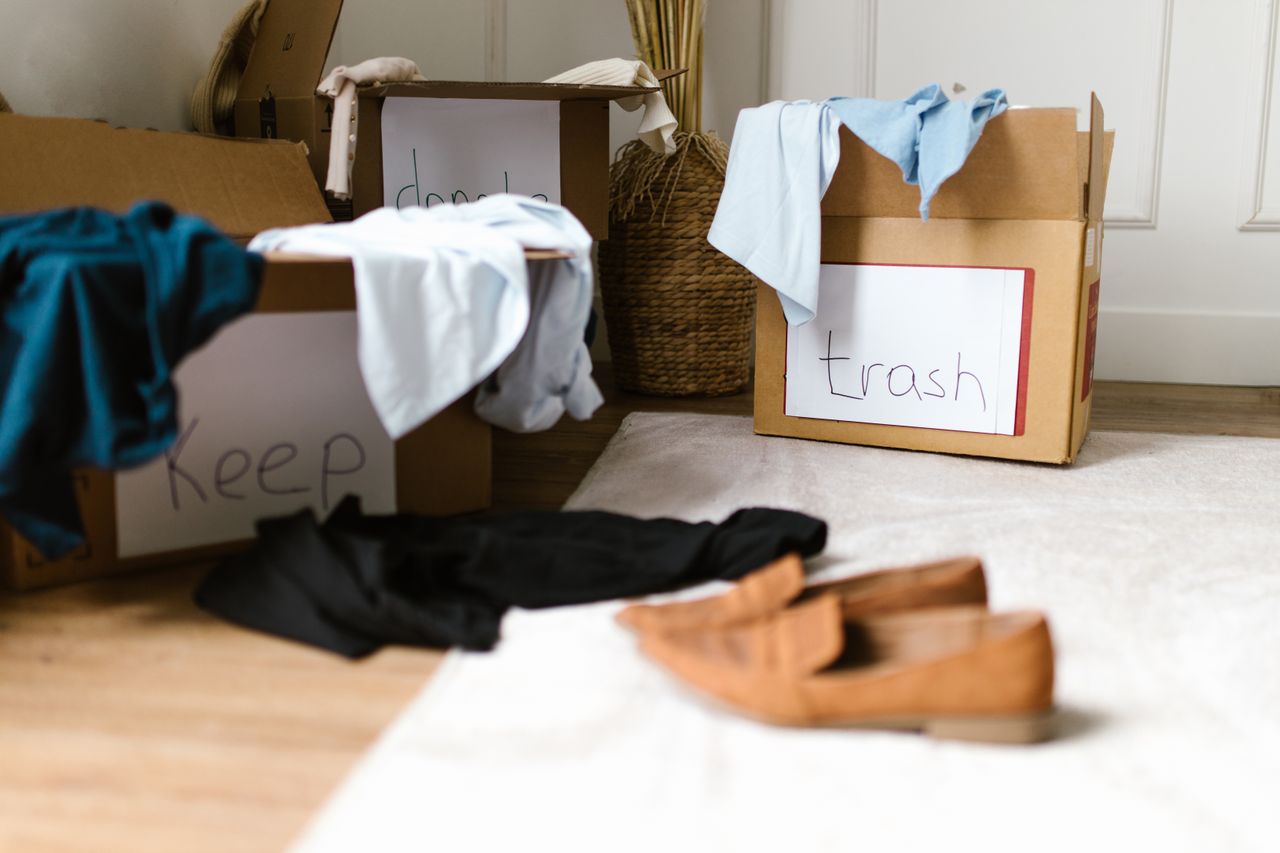
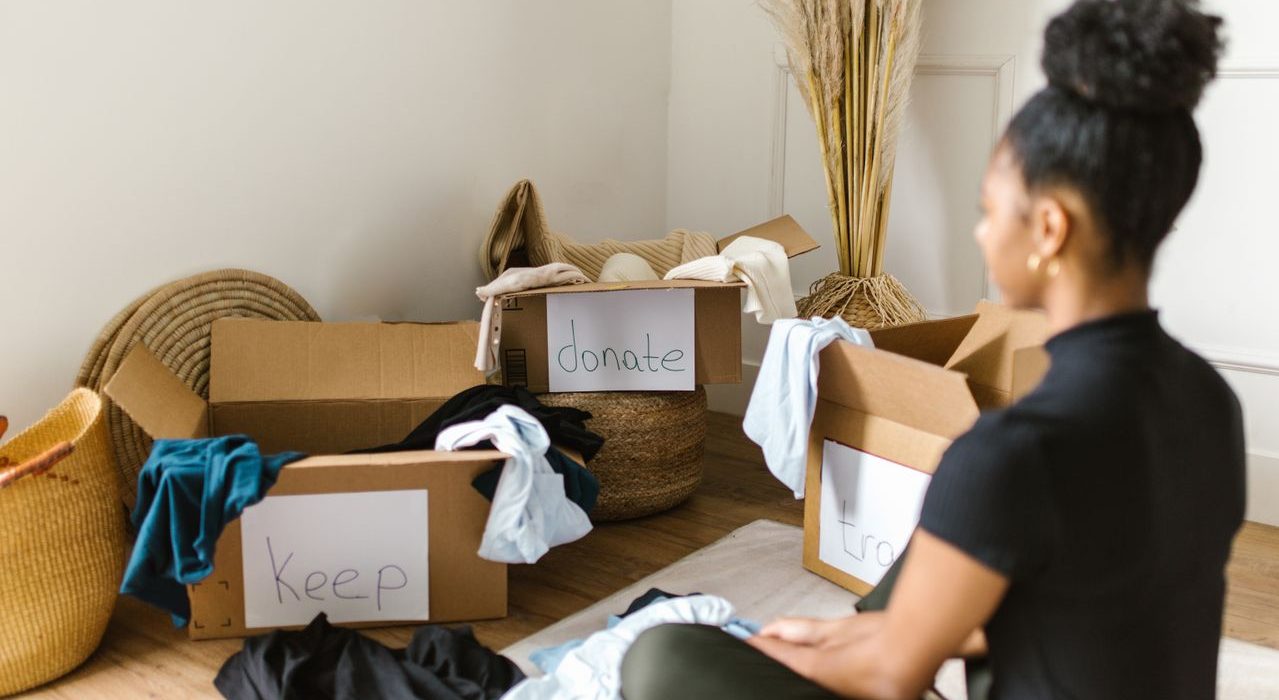
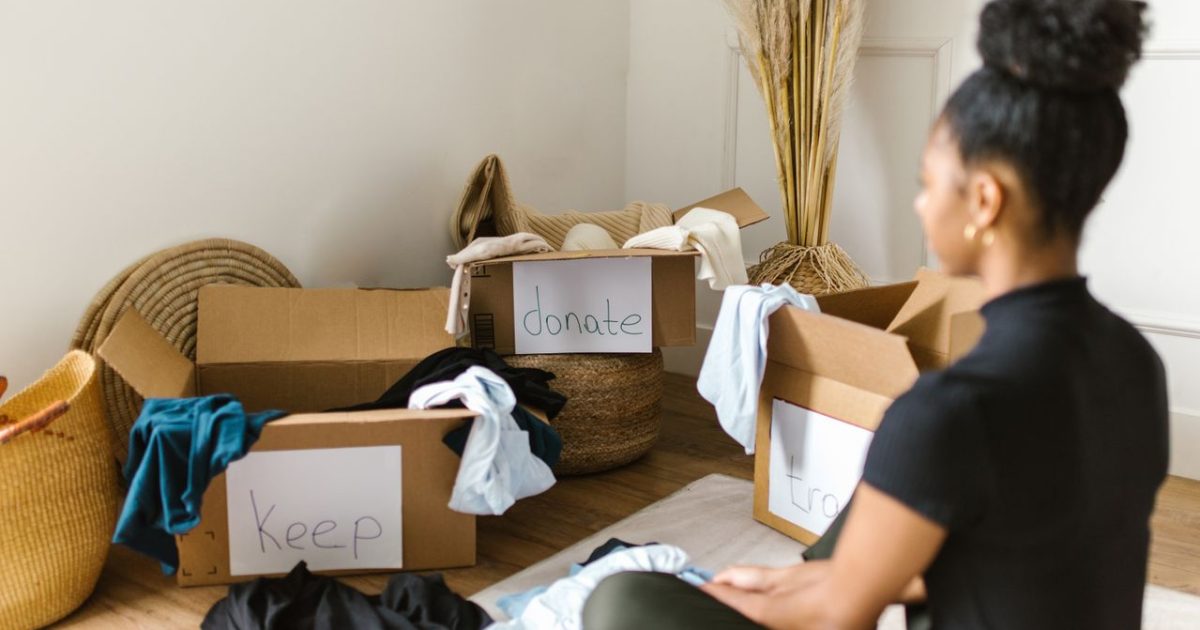
Create four broad destinations:
- Keep: Items you use or genuinely want to retain.
- Give away or donate: Useful items you no longer need.
- Sell: Items that have enough value to justify selling.
- Discard or recycle: Things that are damaged, obsolete, or unsuitable for reuse.
You can adapt the categories to suit your circumstances. The key is that each item eventually has a clear destination.
Sort Everyday Items
Everyday belongings are usually a practical place to begin. Look for duplicates, unused gifts, clothes you never wear, equipment you no longer use, and objects you’ve kept simply because you have storage space.
Magnusson’s book uses examples such as unworn clothing, unwanted gifts, and excess household items to discuss possessions that may be easier to let go of.
Tackle Storage Areas
Storage spaces can reveal how much of a household’s possessions no longer fit into everyday life. Work through one cupboard, box, shelf, or drawer at a time. Avoid taking everything out at once if it will create a mess you can’t reasonably manage.
Research on older adults’ possessions shows why storage can be complicated: many objects remain in homes even when rarely used, while their owners may attach different practical, emotional, and family meanings to them.
Related: 6 Places in Your Home You Should Never Use for Storage
Review Documents and Digital Possessions
Handle physical paperwork based on its importance, retention requirements, and local rules. Keep important records securely and dispose of obsolete documents appropriately. The same principle applies to digital possessions. Old files, duplicate photographs, unused accounts, and disorganized digital archives can also create work for someone else later.
Digital decluttering is not a defining requirement of döstädning, however, so it is better viewed as a modern extension of the underlying principle rather than an original rule of the method.
Handle Sentimental Items
Once you have the easier categories under control, move to possessions that carry memories.
You might photograph an object before giving it away, identify family members who would genuinely value it, or keep a small selection rather than an entire collection.
Create a Plan for Remaining Possessions
After sorting, consider whether you’ve clearly identified important belongings and whether the people closest to you understand what should happen to particular items.
This is where Swedish death cleaning differs from ordinary tidying. The objective extends beyond making a room look organized. It is about making ownership more deliberate and reducing unnecessary future decisions.
Is Swedish Death Cleaning Right for You?
The method may be useful if you have accumulated possessions you no longer use, are preparing for a move, want to make your household easier to manage, or simply want greater clarity about what you own. It does not require a particular age, household size, or level of minimalism. Nor does it require getting rid of family heirlooms or objects that matter to you.
The strongest principle is straightforward: make conscious decisions about your possessions while you can.
Key Takeaways

Swedish death cleaning is less about throwing things away than about taking responsibility for what you own.
The method encourages people to examine possessions before they become an unresolved task for someone else. It also recognizes that belongings can have practical, emotional, and family significance.
A practical way to begin is to choose one uncomplicated category, remove items you already know you no longer need, and save the most sentimental decisions for when you have more time and perspective.
The goal isn’t an empty home. It is a home in which the things you keep have a reason to be there.
Other Posts You Might Like
- Selling These 9 Things at a Garage Sale Could Cost You More Than You Think
- 8 Ways to Declutter Your Home and Simplify Your Life
- 6 Genius tiny-living hacks that will transform your apartment
If you like what you just read, then subscribe to our newsletter and follow us on social media.


