


Somewhere in the produce section right now, someone is knocking on a watermelon. They are not entirely sure why. They heard somewhere that a hollow sound means it is ripe.
Or was it a dull thud? They knock on a second one for comparison. Then a third. They are committed now. Other shoppers are watching. The knocking continues.
Picking a good watermelon is one of those tasks that feels like it should be simple, it is a fruit, not a stock portfolio, and yet manages to produce genuine anxiety in otherwise competent adults.
The good news is that there is actual science behind watermelon selection, and once you know what to look for, you will never again stand in a produce aisle tapping melons like you are trying to find a secret passage.
Here are eight things worth knowing before that watermelon goes in your cart.
The Field Spot Tells You Almost Everything
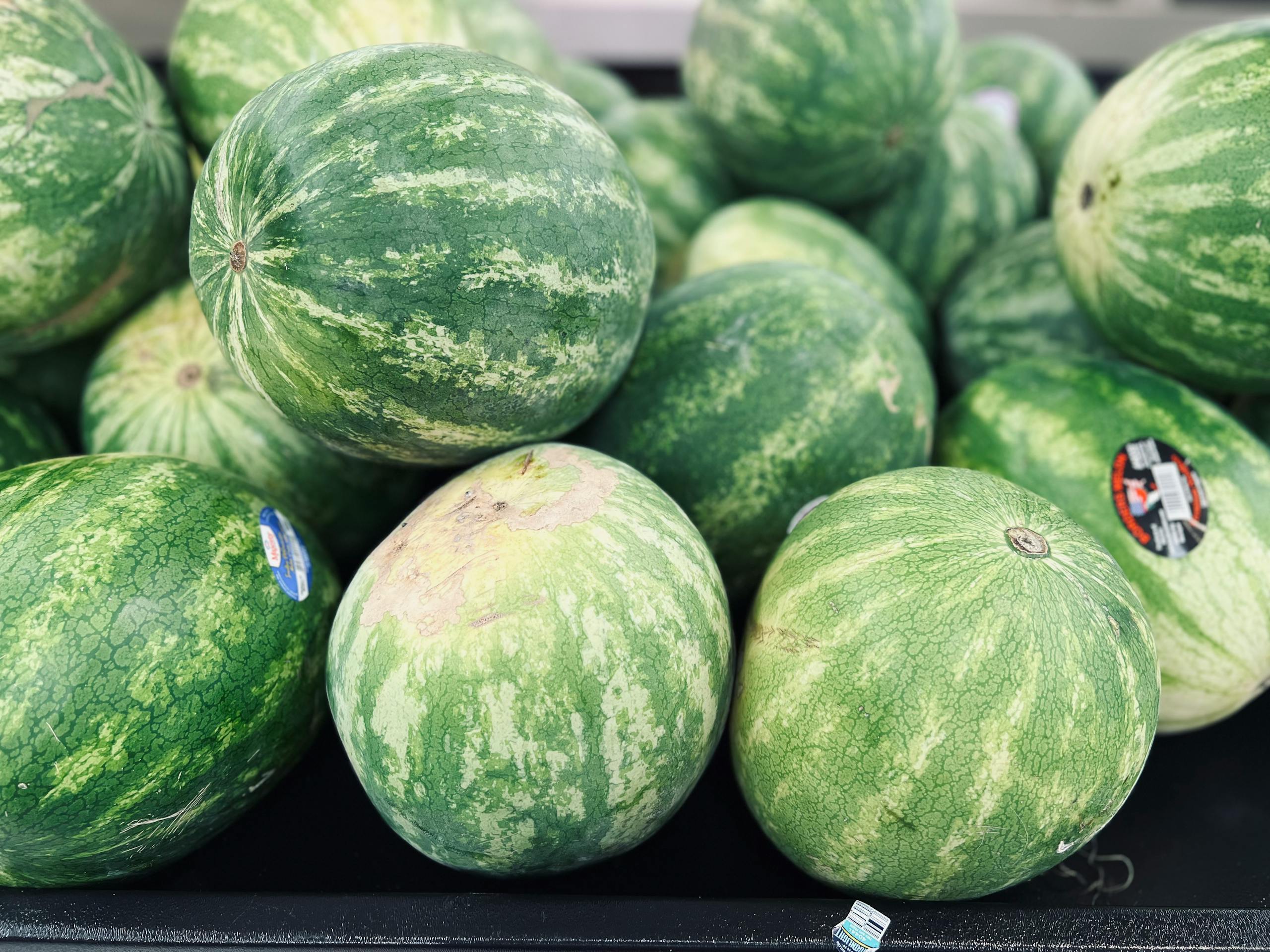
Turn the watermelon over. On the underside, there will be a patch where the fruit rested on the ground while it was growing.
This is called the field spot, and it is the single most reliable indicator of ripeness available to you without cutting the melon open.
A good field spot is creamy yellow, sometimes deep gold, almost butter-colored. This coloration means the watermelon spent enough time on the vine to develop its sugars properly.
A white field spot, or one that is barely there, means the melon was picked early, before it had finished the work of becoming sweet.
The rest of the watermelon’s exterior can look perfect and the inside can still disappoint you. The field spot does not lie. Find the yellow, buy the melon.
Heavy for Its Size Means Juicy
Watermelons are approximately 92 percent water, which is where both their name and their appeal come from on a hot day. A ripe watermelon that has fully developed its flesh will feel noticeably heavy for its size.
Pick it up, then pick up a similarly sized melon next to it. The heavier one is almost always the better choice.
What you are feeling is water content, which correlates directly with juiciness and texture. A lighter melon has less moisture in the flesh, which translates to a drier, less satisfying eating experience.
This is one of those cases where the obvious sensory clue, this feels surprisingly heavy, is exactly the right signal to follow.
Dull Skin Beats Shiny Skin

A watermelon with a shiny exterior might look appealing on a display, but shine is actually a flag worth noticing. Ripe watermelons have a matte, slightly waxy surface.
The sheen on an underripe melon comes from the rind still being in an earlier stage of development.
Look for a melon with a firm, dull exterior, not matte in a damaged way, just without obvious gloss. Run your hand across the surface.
It should feel solid and consistent, with no soft spots, no cracks, and no areas that give slightly under pressure. Any of those signs indicate either damage or decay, neither of which improves once you get the melon home.
Symmetry Matters More Than You Think
Irregular shapes in watermelons, lumps, flat sides, significant asymmetry, often indicate inconsistent growing conditions.
A watermelon that grew in steady, uniform conditions with consistent water and sunlight tends to develop evenly.
One that experienced stress, irregular watering, or temperature fluctuations may have developed unevenly, and those same inconsistencies often affect flavor.
This does not mean every imperfect-looking watermelon is bad, but when you are choosing between two melons that both pass the field spot and weight tests, the more symmetrical one is the better bet.
Shape is a proxy for growing conditions, and growing conditions are what create sweetness.
Timing Your Purchase Changes Everything
Watermelons are available in grocery stores year-round, but available and good are not the same thing. The peak season for domestic watermelons runs from late May through early September, with July and August typically being the height of quality.
During these months, the melons have traveled shorter distances, spent less time in cold storage, and were harvested at closer to their natural peak.
Outside of peak season, most grocery store watermelons are imported from distant growing regions and have spent significant time in transit and refrigeration.
They are edible but rarely exceptional. If you find yourself buying watermelon in January and wondering why it tastes vaguely disappointing, the answer is not your selection technique, it is the calendar.
Buy watermelon in summer. Specifically, buy it in July. This is when the fruit is doing what it was designed to do.
Yellow-Fleshed Watermelons Are Worth Trying

Most people have encountered only the standard red-fleshed watermelon and assume that is what the fruit is.
But yellow and orange-fleshed varieties exist, they are genuinely different in flavor, and they are increasingly available in larger grocery stores and farmers’ markets.
Yellow watermelons tend to have a honey-like sweetness that is distinct from the bright, slightly acidic sweetness of red-fleshed varieties.
The flavor is mellower, rounder, and often described as closer to honey or apricot than the classic watermelon taste. Orange-fleshed varieties fall somewhere between the two.
From the outside, yellow and orange watermelons look virtually identical to red ones, which is why the label matters when you are shopping. If you see an unfamiliar variety at a farmers’ market, ask. The answer might be a new summer favorite.
Seedless Does Not Mean Inferior
The seeded-versus-seedless debate generates more passion than it probably warrants, but the persistent belief that seedless watermelons are less flavorful deserves some examination.
Seedless watermelons are produced through conventional plant breeding, specifically, a hybridization process that creates triploid plants, which cannot produce mature seeds.
This is not genetic modification. It is the same category of deliberate breeding that created most of the produce in your grocery store.
Whether seedless or seeded watermelons taste better ultimately comes down to the specific variety, the growing conditions, and the individual melon, not the seed situation.
A well-grown seedless watermelon from peak season will outperform a poorly grown seeded one every time. The seeds are irrelevant to the flavor. Apply the field spot and weight tests regardless of which type you are buying.
Store It Right or Lose What You Paid For

You have done everything correctly. You found the golden field spot. You chose the heavier melon. You bought it in July. Do not undo all of that with bad storage.
A whole, uncut watermelon is best stored at room temperature, between 50 and 60 degrees Fahrenheit if possible, which in practice means a cool spot in your kitchen or a basement, not a hot car and not a refrigerator.
Refrigerating a whole watermelon actually degrades its texture over time, breaking down the flesh in ways that affect both the eating experience and the nutritional content. Room temperature storage for up to two weeks is fine for an intact melon.
Once you cut it, the rules change entirely. Cut watermelon goes in the refrigerator immediately, covered tightly or transferred to an airtight container. Eat it within three to five days.
Leaving cut watermelon at room temperature accelerates bacterial growth, the high water content that makes it so refreshing also makes it an excellent environment for things you do not want in your food.
Conclusion
Buying a good watermelon is not complicated, but it does require paying attention to the right things instead of the wrong ones.
External color is mostly irrelevant. Knocking on the rind is not meaningless but not definitive either.
What actually works is the field spot, creamy yellow, clearly developed, combined with a melon that feels heavier than it should for its size, a dull rather than shiny surface, and a shape that suggests it grew without stress or interruption.
Do those four things, buy your melon in the middle of summer, store it properly, and the produce aisle anxiety goes away entirely.
The person still knocking on melons in the next aisle over will figure it out eventually. Or they will read this..


