Unraveling 10 Mysteries of Satan: A Deep Dive into One of History’s Most Intriguing Figures
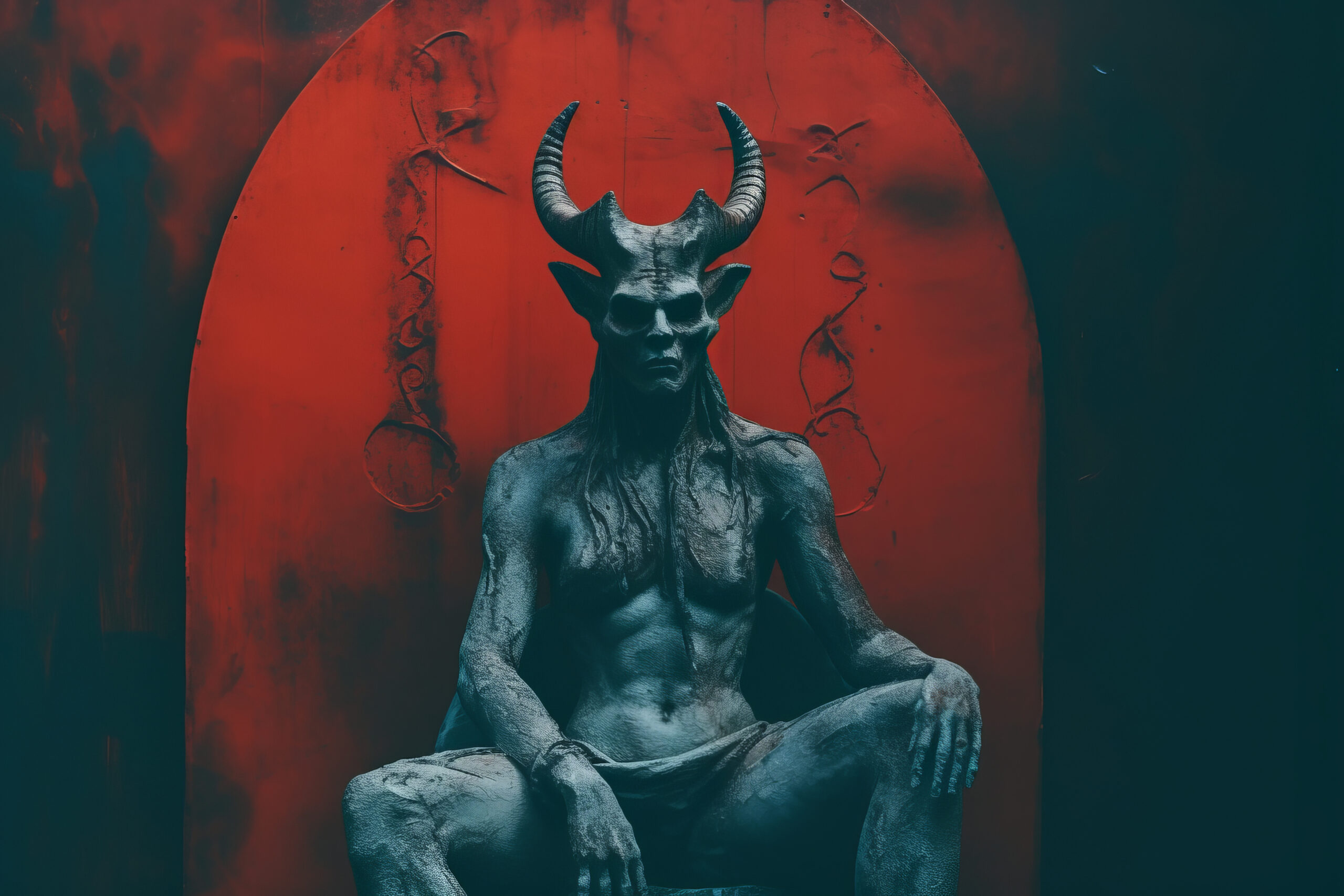
Satan, known by various names across different cultures and religions, is one of the most enigmatic figures in human history.
From his association with temptation and evil to his mysterious role in various religious texts, many aspects of Satan remain shrouded in mystery.
Over time, Satan has evolved from a mere adversary in early scriptures to the embodiment of evil in popular culture.
The Serpent in Eden- Was It Really Satan?

One of the most enduring questions in religious studies is whether Satan was the serpent who tempted Eve in the Garden of Eden. The Bible itself never explicitly identifies the serpent as Satan, leaving room for interpretation and speculation.
Genesis describes the serpent as “the most cunning of all the wild animals the Lord God had made” (Genesis 3:1). Some scholars argue that this reference is not to Satan but to a symbolic creature that represents temptation and evil.
Interestingly, while the serpent’s actions align with Satan’s later role in Christian theology, the association between the two figures appears to be more of a theological development rather than a direct Biblical claim.
Census contradiction- God or Satan?
The story of King David’s census in the Bible presents a notable inconsistency between two accounts. In 2 Samuel 24, God incites David to conduct the census, an action that later results in divine punishment for the land.
However, 1 Chronicles 21 attributes the incitement to Satan. This discrepancy between the two texts has baffled scholars for centuries.
One explanation posits that Satan’s role was permitted by God, with the latter allowing the former to tempt David for a greater purpose.
The True Name of Satan- A Mystery Still Unsolved
Satan is often referred to as a proper name in modern culture, but is this the case in the Bible? The term “Satan” is derived from the Hebrew word satan, meaning “adversary” or “accuser,” and is frequently used as a title rather than a personal name.
In the Old Testament, it appears as a descriptor for beings who oppose or challenge God’s will, such as the “satan” in the Book of Job who serves as a heavenly prosecutor.
The Bible offers no direct evidence of Satan’s true name, nor does it clarify whether “Satan” refers to a single entity or a title held by multiple beings.
The name “Lucifer,” often associated with Satan, only appears once in the Bible (Isaiah 14:12) and refers to a fallen angel or king of Babylon, not Satan in the Christian sense.
Other names like Beelzebub and Belial are similarly ambiguous and are not used in the same way as personal names. This uncertainty leaves the true name of Satan a mystery that has yet to be definitively solved.
The Concept of Satan Ruling Hell- Origins and Evolution
The popular image of Satan ruling Hell is ingrained in modern consciousness, yet it is absent in the Bible.
While Satan is certainly associated with Hell in apocalyptic texts, the idea that he presides over Hell as its ruler is a later theological development. This concept is not explicitly stated in either the Old or New Testament.
The notion of Satan as the ruler of Hell likely stems from Greco-Roman mythology, where gods like Hades and Pluto governed the underworld. In addition, Zoroastrian beliefs about Angra Mainyu, the evil spirit who torments souls in the afterlife, may have contributed to this image.
The Changing Role of Satan- Old vs. New Testament

In the Old Testament, Satan is portrayed more as an accuser or adversary who acts at God’s command.
His role in the Book of Job, where he challenges Job’s faithfulness, and in Zechariah, where he accuses the high priest Joshua, shows him as a divine prosecutor. These appearances do not align with the later, fully evil figure of Satan seen in the New Testament.
By contrast, the New Testament paints a picture of Satan as the “prince of demons” and the embodiment of evil, who tempts Jesus and seeks to lead humanity astray.
The Power of Satan on Earth- Fact or Fiction?
The power of Satan on Earth is another topic shrouded in ambiguity. Popular depictions often show Satan as possessing immense power, capable of controlling events and influencing individuals.
However, the Bible presents a more nuanced view. In the Old Testament, Satan has the power to inflict suffering on Job, but only with God’s permission. In the New Testament, Satan’s influence is portrayed primarily through temptation, as seen in his attempts to lead Jesus astray.
While some passages in the Gospels suggest that Satan has the ability to possess individuals (e.g., the demon-possessed man in Mark 5), the idea that Satan wields absolute power over the world is not supported by the Bible.
The Devil’s Iconic Appearance- Origins of the Goat-Like Features
The image of the Devil as a horned, goat-like creature with a pitchfork is deeply ingrained in Western culture. Yet, these features have no biblical basis.
The idea of a goat-headed Satan likely draws on the ancient Greek god Pan, who was depicted with a goat’s lower body and associated with fear and chaos. Similarly, the pitchfork may derive from the trident of Poseidon, the Greek god of the sea.
The Islamic View of Satan Iblis and His Disobedience
In Islam, Satan is known as Iblis, a jinn who refuses to bow before Adam as commanded by Allah.
The Quran presents a unique interpretation of Iblis, stating that he was made from fire and therefore did not consider himself inferior to Adam, who was made from clay. Iblis’s refusal to bow is seen as an act of arrogance and defiance against Allah’s will, and as a result, he is cast out of paradise.
Was Iblis Right to Disobey Allah? A Sufi Perspective
Within Sufi Islam, there exists a unique interpretation of Iblis’s disobedience. Some Sufi mystics argue that Iblis’s refusal to bow to Adam was an act of pure devotion to Allah, as he believed that only Allah should be worshipped.
In this view, Iblis’s defiance was not out of pride or arrogance, but out of his unwavering commitment to the worship of the One True God.
Satan and the Antichrist- A Complicated Relationship
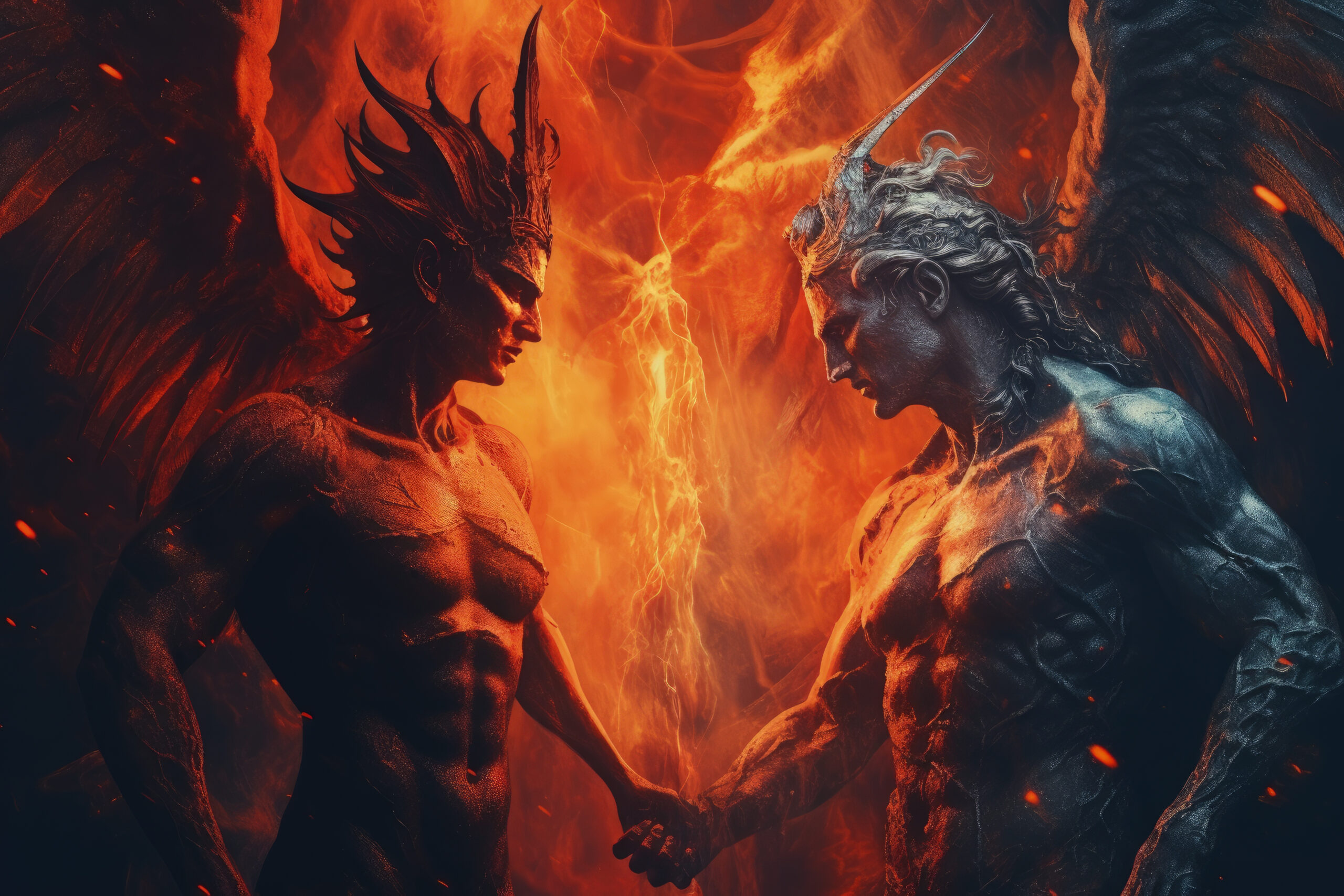
The Antichrist, a figure prophesied in the New Testament, is often associated with Satan in Christian eschatology. However, the Bible makes it clear that Satan and the Antichrist are distinct entities.
The Antichrist is described as a false messiah who will deceive many, but he is not directly equated with Satan in the scriptures.
During the medieval period, the idea emerged that the Antichrist would be the opposite of Christ in every way, with Satan acting as his father.
Conclusion
Satan, as a figure of evil, continues to captivate our imaginations and provoke theological debates.
Whether in religious texts, folklore, or modern media, the mysteries surrounding Satan’s nature, power, and role in the universe are far from being resolved.
As we explore these mysteries, one thing remains certain: Satan’s influence, real or symbolic, is an integral part of human history and belief.