President Donald Trump’s decision to nominate former Oklahoma state trooper Lance Schroyer as director of Immigration and Customs Enforcement is more than a routine leadership announcement.
It places a little-known but deeply experienced law enforcement figure at the center of one of the most heated immigration battles in America.
Schroyer’s nomination matters because ICE has gone years without a Senate-confirmed director, even as the agency has become one of the most powerful and controversial arms of federal immigration enforcement. His background in Oklahoma law enforcement, military service, emergency operations, and coordination with local agencies gives the nomination a clear message: Trump wants ICE led by someone shaped by field operations, not Washington politics.
The nomination gives Trump a candidate with nearly three decades of law enforcement experience, deep Oklahoma ties, military service, and hands-on work with state and federal partners. It also gives the administration a chance to argue that ICE needs an operational leader, not another political lightning rod.
But Schroyer’s low public profile may also make his confirmation hearing more important. Senators will not simply be asking who he is. They will be asking what kind of ICE he intends to lead.
A Low-Profile Pick for a High-Pressure Agency
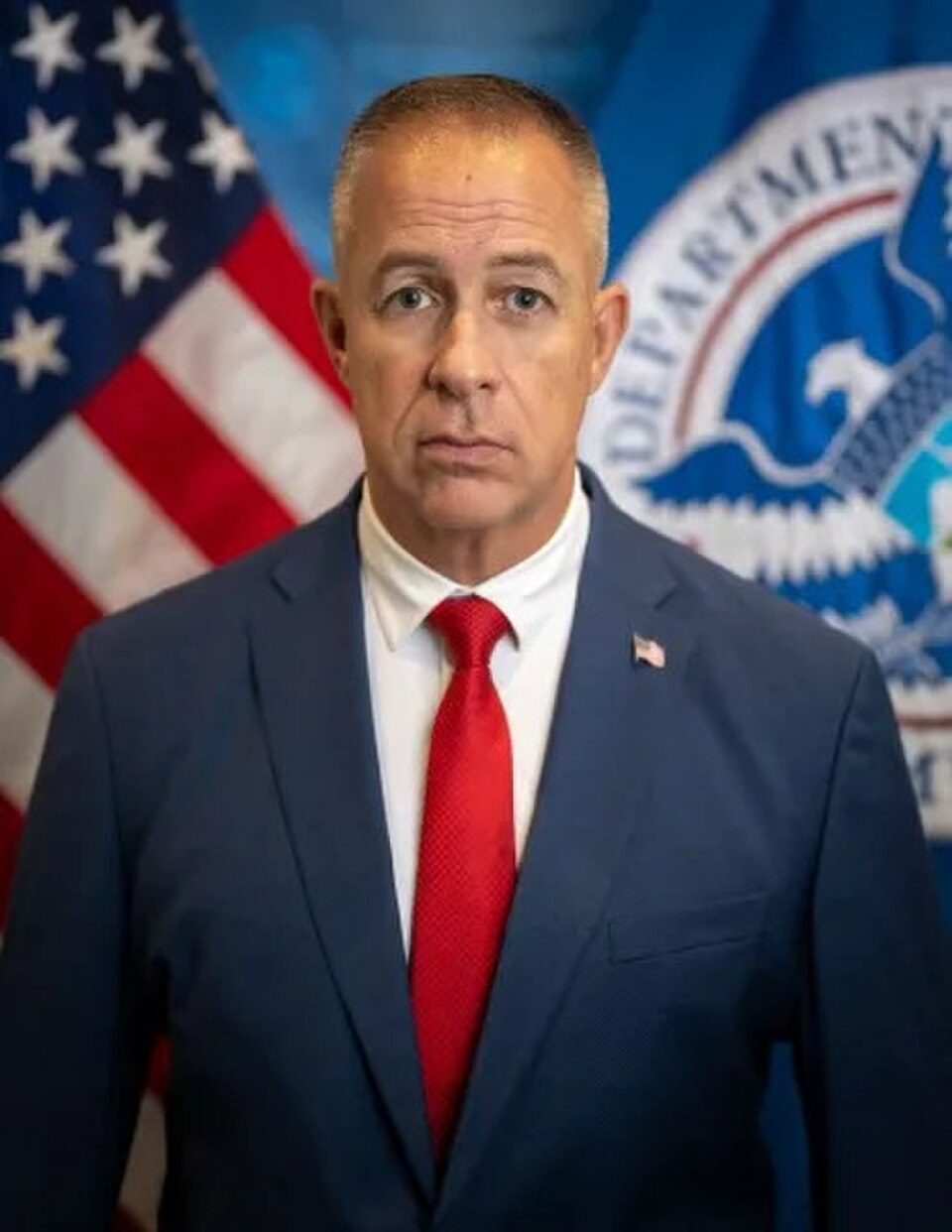
According to the Department of Homeland Security, Schroyer currently serves as a senior adviser to Homeland Security Secretary Markwayne Mullin. In that role, he has worked on immigration enforcement coordination and served as a bridge between local, regional, and federal law enforcement agencies.
That detail matters because it points to one of the administration’s biggest enforcement strategies: making immigration enforcement less dependent on federal agents alone and more connected to state and local police.
Schroyer previously served as a major in the Oklahoma Department of Public Safety’s Emergency Services Unit. DHS says his work included specialized operations involving disaster response, civil unrest, and immigration enforcement.
In other words, his background is not only traffic stops and patrol work. It includes large-scale coordination, public safety planning, and high-pressure operations where law enforcement agencies must work together quickly.
Trump praised Schroyer as a proven leader and urged the Senate to confirm him quickly. Mullin also called the nomination a strong choice, arguing that Schroyer’s experience in the field would help ICE carry out deportations, secure the homeland, and support the agency’s officers.
That message is simple: the administration wants to sell Schroyer as a field-tested lawman, not a bureaucrat. For Trump supporters, that may be the appeal. ICE has become a symbol of the administration’s promise to enforce immigration law aggressively.
A former Marine and state trooper from Oklahoma fits the image of discipline, toughness, and direct action that Trump often favors in law enforcement appointments.
For critics, the same background will raise different questions. They will want to know whether Schroyer can lead an agency accused of overreach, excessive force, poor detention conditions, and strained relationships with immigrant communities.
Why the 287(g) Program Is Central to This Story
One of the most important parts of Schroyer’s record is his connection to the 287(g) program. That program authorizes trained state and local law enforcement officers to perform certain immigration enforcement duties under federal supervision.
To supporters, 287(g) is a force multiplier. It allows local agencies to help identify and process people who may be removable from the United States, especially when those individuals are already in custody or connected to criminal cases.
To opponents, it is one of the most controversial tools in immigration enforcement. Civil rights groups have long warned that such partnerships can blur the line between local policing and federal immigration enforcement, making immigrant communities less likely to report crimes, cooperate with police, or seek help when they need it.
That is why Schroyer’s nomination is bigger than one résumé. It suggests the Trump administration may continue to lean hard into local and state partnerships to expand immigration enforcement without relying solely on federal staffing.
This approach is politically powerful because it brings the fight closer to governors, sheriffs, city councils, and county jails. It also makes it harder to separate immigration enforcement from ordinary policing. A traffic stop, jail booking, or local arrest can become the first step in a federal immigration case.
If Schroyer is confirmed, one of the biggest questions will be how far ICE pushes that model and what safeguards, if any, he promises to maintain.
ICE Has Been Running Without a Confirmed Leader for Years
Another reason this nomination matters is the job’s history. ICE has not had a Senate-confirmed director since the Obama administration. For years, the agency has been led by acting officials, even while immigration enforcement remained one of the most divisive issues in American politics.
That long leadership gap has consequences. Acting leaders can run agencies, but they often lack the same political authority, public mandate, and congressional accountability that comes with Senate confirmation.
A confirmation hearing forces answers. It gives senators a chance to press a nominee on priorities, detention standards, use of force, workplace raids, cooperation with local police, deportation targets, legal compliance, and treatment of detainees.
That is why Trump’s call for quick confirmation may run into a much larger debate. Republicans are likely to frame Schroyer as the leader ICE needs after years of instability.
Democrats and civil liberties groups are likely to treat the hearing as a chance to scrutinize not just Schroyer, but Trump’s entire deportation agenda.
The politics will be intense because ICE is not a quiet agency. It is a frontline symbol of federal power.
For some Americans, it represents law and order. For others, it represents fear, family separation, and government overreach.
Schroyer will have to answer for both perceptions.
A Nomination After a Chaotic Year for DHS
The timing also matters. ICE and DHS have faced a turbulent year, marked by leadership turnover, protests, public criticism, and questions about how immigration operations are conducted.
Former acting ICE director Todd Lyons stepped down in the spring after overseeing parts of the administration’s mass deportation plan. Longtime immigration official David Venturella has been serving as acting director. Now, Trump is turning to Schroyer as the person he wants to put a more permanent stamp on the agency.
Mullin’s role adds another layer. The Homeland Security secretary is also from Oklahoma and has become one of the administration’s most visible defenders of stricter immigration enforcement.
His backing of Schroyer makes the nomination feel less like a random personnel choice and more like a coordinated attempt to build an enforcement team with shared instincts.
At the same time, Mullin has previously suggested that ICE should shift in some areas, saying during his confirmation hearing that he would like to see ICE function more as a transport force than always being on the front line.
That comment could become important if senators ask whether Schroyer will expand street-level enforcement or support a more restrained operational model.
That tension may define the confirmation battle. Is Schroyer being brought in to intensify ICE’s footprint across the country, or to professionalize an agency under pressure? The administration will likely argue he can do both. Critics will likely argue that those goals are in conflict.