A disturbing message reportedly written in blood on the Washington Monument has pushed a summer of National Mall vandalism into a sharper national spotlight. We are no longer looking at a single damaged landmark or a routine cleanup problem in Washington, D.C. We are looking at a growing security concern around some of America’s most symbolic public spaces, from the Washington Monument to the Lincoln Memorial Reflecting Pool and the grass lawns that frame the capital’s most photographed views.
Federal officials say the incidents include several “8647” markings, damage around the Lincoln Memorial Reflecting Pool, cut fuel lines connected to Great American State Fair preparations, and a separate case in which a person allegedly used their own blood to write words on the Washington Monument. Fox News Digital reported, citing a police report it reviewed, that the phrase written on the monument was “I’ve come.”
President Donald Trump has responded by demanding tougher action against vandals, framing the incidents as deliberate attacks on the capital’s landmarks. The controversy comes just as Washington, D.C., prepares for large Independence Day crowds and events tied to America’s 250th anniversary, making the timing especially sensitive for federal law enforcement, the National Park Service, tourists, and local residents.
Washington Monument Blood Message Turns Vandalism Into a National Security Concern
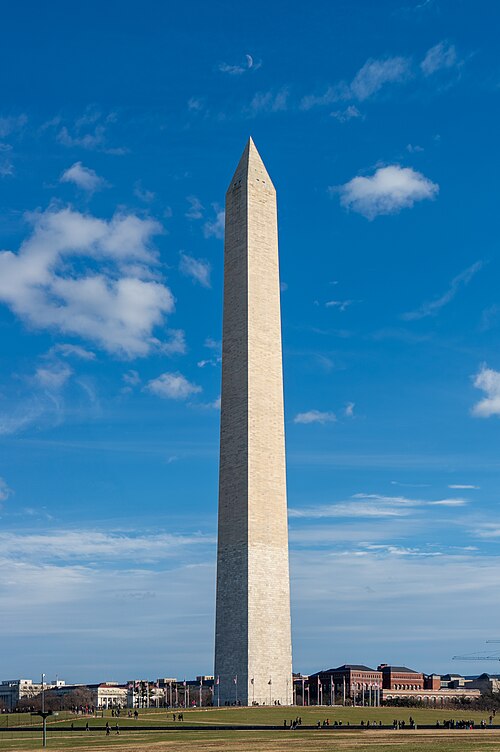
The Washington Monument is not an ordinary public structure. It is a 555-foot marble obelisk built to honor George Washington, the first U.S. president, and it remains one of the most recognizable landmarks in the country. The National Park Service describes it as one of the nation’s most iconic structures on the National Mall.
That symbolism is why the reported blood-written message has drawn such attention. A scrawled phrase on a city wall would already raise concern, but a message allegedly written in blood on the Washington Monument carries a far heavier public meaning. It suggests not just property damage, but a calculated attempt to shock, disturb, and dominate public attention.
Officials have not publicly identified a suspect in that specific incident, and the full investigative record has not been released. That matters. At this stage, we can say the blood-message allegation has been reported by Fox News Digital based on a police report it reviewed, and that Interior Department officials have included it in a broader pattern of recent National Mall vandalism.
The unanswered questions are central to the story. Was the person acting alone? Was the message political, personal, symbolic, or unstable? Was the Washington Monument chosen because of its visibility, its history, or its proximity to other recent incidents? Those questions now sit at the center of a broader federal investigation.
The “8647” Markings Added a Political Charge to the National Mall Vandalism Story
The blood-message report followed another alarming incident involving the numbers “8647” marked into the grass of the National Mall. Federal authorities began investigating after the numbers appeared on the west lawn near the Washington Monument. The Guardian reported that U.S. Park Police responded around 11:30 a.m. to a vandalism report and collected grass samples for testing because the cause of the discoloration had not yet been determined.
The numbers immediately drew attention for their possible political significance. “86” is commonly used in restaurants and service work to mean removing or getting rid of something, while “47” has been interpreted as a reference to Trump as the 47th president. Federal officials have treated the marking seriously because of that possible implication, especially in a period of heightened concern over political threats and public violence.
Still, interpretation is not the same as proof of intent. The existence of the numbers is under investigation, but investigators have not publicly explained who made them, how they were made, or whether the person responsible intended a threat. That uncertainty is part of what makes the case volatile. The message is simple enough to spread quickly online, but ambiguous enough to fuel competing claims.
For Washington locals and tourists, the effect is more immediate than the political debate. The National Mall is a public gathering place, a protest stage, a school-trip destination, and a memorial corridor. When large markings appear in the grass near the Washington Monument, the damage is not only visual. It disrupts the sense that these spaces belong safely to the public.
Trump’s Reflecting Pool Renovation Is Now Tangled in Vandalism, Algae, and Political Scrutiny
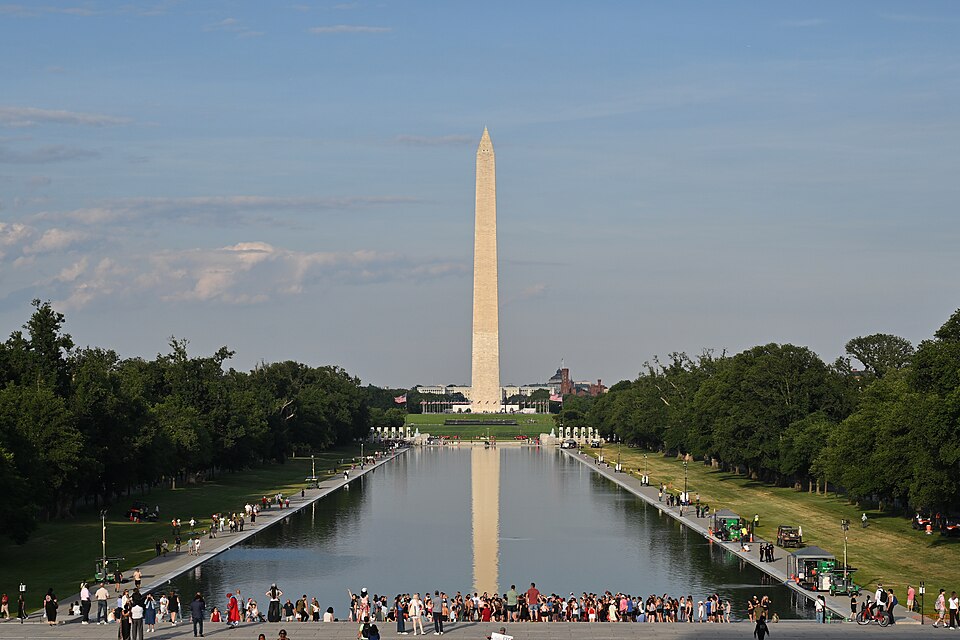
The vandalism controversy has grown around another highly visible problem: the Lincoln Memorial Reflecting Pool. The pool, located between the Lincoln Memorial and the Washington Monument, recently underwent a roughly $14 million renovation tied to preparations for the nation’s 250th anniversary. Reuters reported that the project has drawn scrutiny after algae growth, peeling surface material, and visible deterioration appeared only weeks after completion.
Trump has blamed saboteurs for the pool’s problems, including claims that vandals damaged the liner. Reuters reported that while no evidence had emerged to support Trump’s specific claim of a 350-foot gash, a National Park Service official said in a sworn court statement that U.S. Park Police examined apparent intentional damage to the pool on June 9.
A senior National Park Service official later said in a court filing that damage included caulk over foam sealant cut with a sharp knife or razor, destruction of delaminating surface material, and about 70 fence post tops thrown into the water. The same filing said the National Park Service planned to begin draining the pool after Independence Day celebrations to assess and repair damage to the lining.
That distinction is important. We can separate three issues: reported intentional damage, visible maintenance problems, and political blame. The public has seen algae and peeling material. Officials have alleged certain forms of vandalism. But the full relationship between vandalism, algae, coating failure, and renovation quality remains contested.
How Federal Officials Are Framing the Vandalism Pattern
Interior Department communication director Katie Martin told Fox News Digital that the summer had seen a “significant increase” in vandalism to the National Mall, citing the “8647” markings, the blood-written words on the Washington Monument, and fuel-line cutting around the Great American State Fair.
That framing presents the incidents as part of a pattern rather than isolated episodes. It also connects symbolic vandalism, infrastructure damage, and event-related security concerns. If officials are correct, the National Mall is dealing with both expressive defacement and practical sabotage.
The Reflecting Pool case adds another layer. Fox News Digital reported that Interior officials said the first known incident targeting the pool occurred June 9, the same day the pool reopened after restoration and repainting. The outlet reported that police records described razor-blade-like slashes along the liner in the southern middle section of the pool.
Federal officials have reason to avoid publicizing every detail too quickly. Publicity can inspire copycats, especially when vandalism is designed to attract attention. But silence also creates suspicion, especially when a high-profile renovation is already under criticism. The administration now faces pressure to prove what was vandalism, what was construction failure, and what may have been worsened by environmental conditions.
The Local Washington, D.C., Angle: Residents, Workers, and Visitors Inherit the Disruption

For people outside the capital, the story may look like another Trump-era political fight. For people in Washington, D.C., it is also a local disruption. The National Mall is part of everyday city life. Residents jog there, workers cross it, vendors depend on visitor traffic, and families use it as one of the most accessible open spaces in the city.
Security fencing, cleanup crews, police activity, closed areas, and damaged lawns affect how people move through the city. Tourists arriving for the Fourth of July may see a different Mall than the one shown in postcards. Local workers may deal with rerouted pedestrian paths, increased security, and a tenser atmosphere around major public events.
The timing raises the stakes. Reuters reported that Trump said repairs to the reflecting pool would happen after July 4, while the site remained under heightened security and surveillance. That means Washington may move through one of its busiest holiday periods with a landmark still under scrutiny and a vandalism investigation still unfolding.
What Investigators Still Need to Answer
The public record leaves several major questions unresolved. The Washington Monument blood-message case remains especially incomplete because officials have not publicly released the full police report, identified a suspect, or explained whether the person responsible has been detained.
The “8647” marking case also remains open. Authorities have collected grass samples, but the cause of the discoloration and the identity of the person or group behind it have not been publicly confirmed.
The Reflecting Pool case is more complicated because the visible damage overlaps with questions about renovation design, algae growth, coating durability, and alleged vandalism. The National Park Service has documented planned closures for cleaning, joint repair, and lining installation as part of the pool work, but the controversy now centers on what happened after the renovation was substantially completed.
The key investigative questions are straightforward: who damaged what, when it happened, what evidence proves intent, and how much of the pool’s condition can fairly be blamed on vandalism rather than on maintenance or construction problems?
Read the original story on Crafting Your Home