
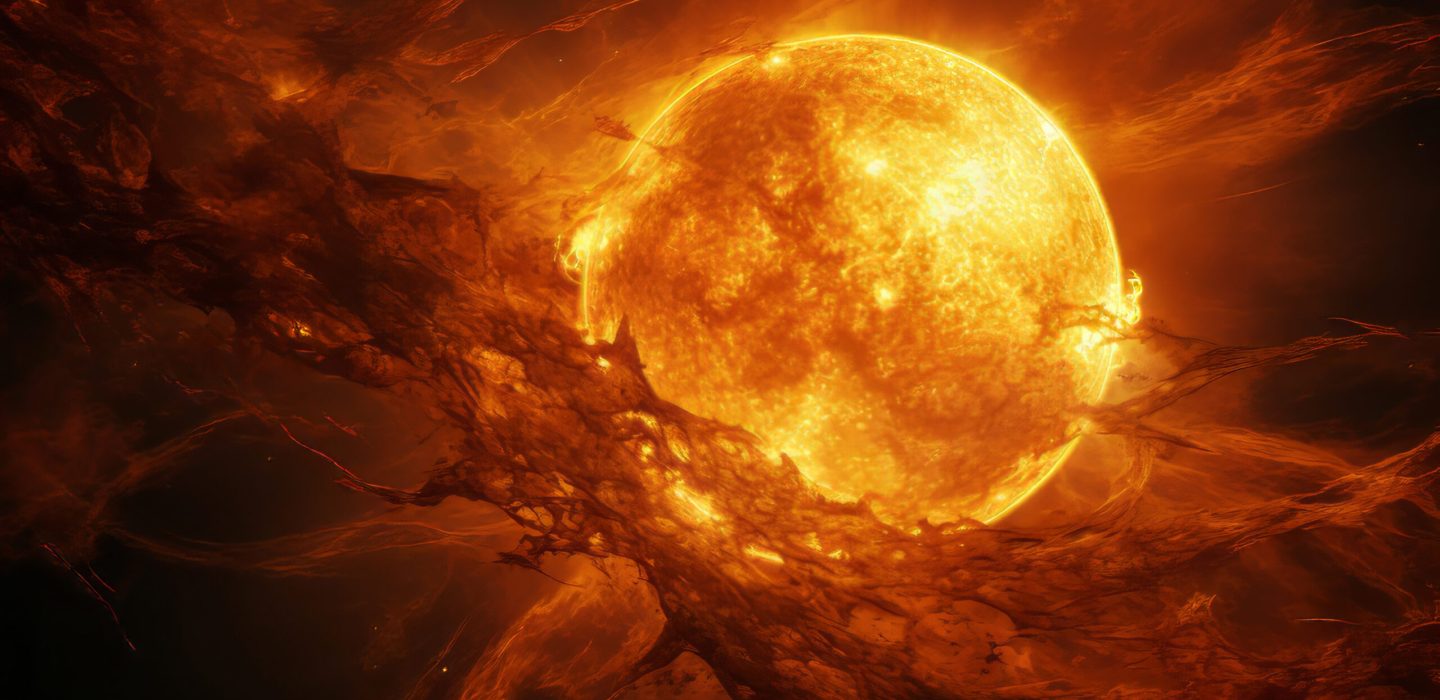

The Sun, a constant presence in our sky, has been at the center of our solar system for over 4.5 billion years. However, as every star does, it will one day meet its inevitable demise.
This event, while millions of years away, is a fascinating subject to explore. What exactly will happen once the Sun reaches the end of its lifecycle?
In this article, we delve into the various stages and catastrophic changes that will unfold, offering a glimpse of how the death of our Sun will impact the solar system, Earth, and beyond.
The Sun’s Aging Process

The Sun is a middle-aged star, currently in a stable phase where it fuses hydrogen into helium in its core.
This process, known as nuclear fusion, has been occurring for billions of years and will continue for approximately another 5 billion years. As the Sun nears the end of its hydrogen supply, it will undergo dramatic transformations.
In its current state, the Sun is considered a “main-sequence” star. However, it is slowly using up its hydrogen fuel, and once this fuel is depleted, it will no longer be able to sustain nuclear fusion.
The Greenhouse Effect Intensifies
As the Sun ages, it will begin to shine brighter, emitting more radiation. This increase in brightness will lead to a dramatic rise in temperatures across the solar system. The Earth will start to experience a runaway greenhouse effect, similar to what we see on Venus today.
The Earth’s atmosphere, primarily composed of carbon dioxide, methane, and nitrous oxide, will trap increasing amounts of solar energy. As a result, the planet will heat up significantly.
Oceans will begin to evaporate, forming thick clouds of water vapor, which will initially shield the planet’s surface from the Sun’s intensifying radiation.
The Sun Becomes a Red Giant
