The post The Real Reason Tipping Became an American Custom first appeared in Crafting Your Home.
Americans once disliked tipping so much that several states tried to ban it. Today, leaving extra money after a restaurant meal feels like an ordinary part of dining out. So how did a practice that many Americans once considered unfair become such a familiar custom?
The answer is more complicated than simply rewarding good service. Tipping arrived from Europe, faced considerable resistance, and eventually became deeply connected to how certain American businesses paid their employees.
Understanding that history helps explain why tipping remains so controversial today, especially as more businesses ask customers to leave gratuities.
Tipping Was Originally a European Custom

Believe it or not, Americans didn’t invent tipping.
The practice had roots in European traditions, where wealthy individuals gave extra payments to servants who attended to their needs. In England, these payments were sometimes called vails.
Following the Civil War, wealthy Americans who had encountered tipping while traveling in Europe helped introduce the custom more widely in the United States.
For some travelers, tipping reflected the sophisticated customs they had experienced abroad. However, not everyone welcomed the practice.
The idea that one person should give another a small payment for personal service reminded many Americans of the social divisions associated with Europe’s class system.
That uncomfortable association would eventually fuel a movement against tipping.
Many Americans Considered Tipping Un-American
Here’s the surprising part: Americans didn’t immediately embrace tipping as a polite gesture.
During the late nineteenth and early twentieth centuries, critics argued that tipping created an unequal relationship between customers and workers.
They believed the practice encouraged a social hierarchy in which the person giving money appeared superior to the person receiving it.
This criticism reflected a broader disagreement about what fair treatment should look like in everyday business transactions.
The opposition became serious enough that state governments attempted to intervene.
Between 1909 and 1915, six states enacted anti-tipping laws. Arkansas, Iowa, Mississippi, South Carolina, Tennessee, and Washington were among those that tried to prohibit the practice.
However, these restrictions ultimately failed. By 1926, the state anti-tipping laws had been repealed.
America had tried to reject tipping, but the custom continued to spread.
The Practice Became Connected to Racial Discrimination
One of the most troubling chapters in American tipping history involves the treatment of Black workers after slavery ended.
As tipping expanded, certain industries employed Black Americans in service positions where gratuities played an important role in their earnings.
A particularly notable example involved the Pullman Palace Car Company, which hired Black porters to assist passengers aboard railroad sleeping cars.
These workers faced discriminatory treatment while performing demanding service responsibilities.
The company used the possibility of passenger tips to justify paying low wages, leaving porters dependent on money from travelers.
This connection is important because tipping wasn’t simply an innocent tradition of thanking someone for excellent service.
In certain workplaces, it became part of a compensation system shaped by racial inequality.
However, tipping itself did not originate with American slavery. Its European history came earlier, even though discrimination significantly influenced how the custom developed in the United States.
Related Post:7 Things People Are Finally Refusing to Tip For, and Why the Tipping Culture Debate Is Growing
Employers Discovered That Tipping Could Reduce Wage Costs
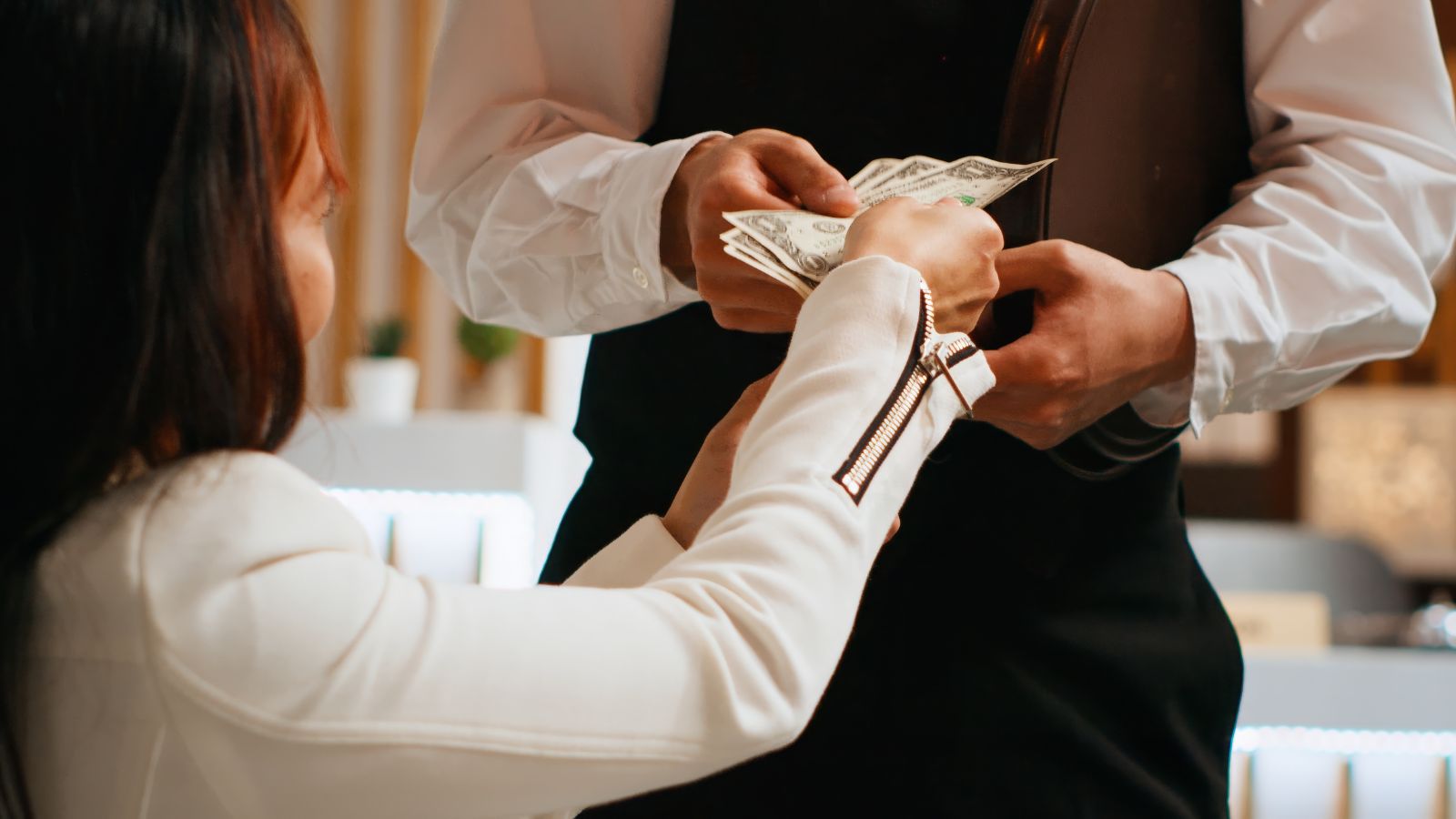
Why did tipping survive when so many people opposed it?
One major reason was economic.
Businesses recognized that when customers contributed directly to employees’ earnings, employers could reduce the amount they paid in wages.
What customers might have considered a voluntary reward could therefore become an important part of a worker’s income.
This created an arrangement that benefited employers financially while making some workers more dependent on customer generosity.
It also changed the meaning of tipping.
Instead of remaining exclusively an extra payment for exceptional service, gratuities became closely connected to ordinary earnings in certain industries.
That relationship between tipping and wages helps explain why the practice became so difficult to eliminate.
Federal Law Eventually Recognized Tips as Part of Wages
Tipping became even more firmly established when federal wage rules incorporated the practice.
In 1966, Congress introduced a provision allowing eligible employers to count a portion of employees’ tips toward their federal minimum wage obligations.
This arrangement became known as the tip credit.
Under federal rules, an employer using the maximum permitted tip credit may pay a qualifying tipped worker a direct cash wage of $2.13 per hour.
However, that figure does not represent the worker’s total required compensation.
The employee’s direct wages and tips must combine to reach at least the federal minimum wage of $7.25 per hour. If the combined amount falls short, the employer must make up the difference.
Some states have higher wage requirements or do not permit employers to use tip credits.
These rules demonstrate how tipping evolved from a social custom into an established component of employment practices.
Related Post: Why Everyone Is Talking About “Tipflation” and What Is Really Happening With American Tipping Culture
Americans Didn’t Always Consider 20% a Normal Tip
If you’ve ever wondered how much you’re supposed to leave after a meal, you’re not alone.
The amount considered customary has changed over time.
During the first half of the twentieth century, a restaurant tip of approximately 10% was commonly accepted.
By the 1980s, 15% had become a more familiar standard. In more recent years, 20% has increasingly been treated as a customary amount.
This gradual shift reveals something interesting about tipping traditions.
Even though the practice has become deeply familiar, the expectations surrounding it are not fixed.
What one generation considered generous might look different to another.
That changing standard also helps explain why tipping continues to provoke disagreements between customers.
Digital Payment Screens Have Made Tipping More Confusing
Tipping is no longer a conversation limited to restaurant tables.
Digital payment screens increasingly ask customers to consider leaving gratuities in situations where tipping may not previously have been common.
That expansion has created considerable uncertainty.
According to a 2023 Pew Research Center survey, 72% of Americans believed tipping was expected in more places than five years earlier.
However, only 34% said it was extremely or very easy to understand when tipping was expected.
Just 33% said it was equally easy to determine how much they should leave.
These findings suggest that although Americans are accustomed to tipping, many remain unsure about the unwritten rules.
For customers, the challenge isn’t necessarily deciding whether good service deserves appreciation. It’s deciding when an additional payment becomes expected.
So Why Does America Still Tip?
The history of American tipping reveals that the custom survived for several reasons.
Wealthy travelers helped introduce it from Europe. Employers recognized the financial advantages, workers became dependent on gratuities, and federal wage rules eventually treated tips as part of compensation.
Over time, something Americans once strongly resisted became an everyday expectation.
Yet the debate hasn’t disappeared.
Today’s conversations about tipping still involve many of the same underlying questions about fair wages, customer responsibility, and the relationship between employers and employees.
And perhaps that’s what makes the history so fascinating. A custom once criticized as contrary to American values is now one of the country’s most recognizable everyday practices.
Other Posts You Might Like
If you like what you just read, then subscribe to our newsletter andfollow us on social media.