


The post The Countries Where Most Babies Are Born Outside Marriage , And What the Numbers Really Mean first appeared on Crafting Your Home.
When people hear the phrase “babies born outside marriage,” they often picture a very specific story, a single parent raising a child alone. But the real picture is much more interesting , and much more complicated. The latest international comparisons show that in some countries, a large majority of babies are born to mothers who are not legally married at the time of birth.
However, this statistic doesn’t directly measure single parenthood. Many of these births happen within stable relationships where couples live together but have chosen not to marry. So what does the data actually tell us? It shows how marriage fits into modern family life, and in many countries, marriage is no longer the only path to starting a family.
According to the OECD Family Database comparison, the countries with the highest shares of births outside legal marriage include Colombia, Chile, Costa Rica, Mexico, Iceland, Norway, Bulgaria, Portugal, France, and Sweden. The ranking uses the latest available data for each country, meaning the years are not identical across the list.
Colombia, A major shift away from traditional marriage
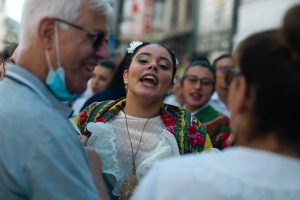
Colombia sits at the top of the ranking, with 87% of live births in 2023 occurring to mothers who were not legally married at the time of birth. The country recorded more than 510,000 registered births that year. But the number needs context. Colombia’s high percentage does not mean that 87% of children are being raised without a partner or without an involved parent.
The data includes many couples who live together in what are often called consensual or “free” unions. Colombian statistics distinguish between different situations, including unmarried mothers living with partners and mothers without partners.
In other words, Colombia’s story is less about the disappearance of families and more about changing definitions of family.
Chile and Latin America’s changing family patterns
Chile ranks second, with 78.06% of births outside marriage in the latest OECD comparison (2022). Like Colombia, Chile shows how marriage and parenting have become less closely connected. More couples are choosing to live together without officially marrying before having children.
The OECD notes that in several Latin American countries, high levels of births outside marriage are closely linked to the growth of cohabiting relationships rather than simply a rise in single-parent households. Costa Rica and Mexico show similar patterns. Costa Rica recorded 74% of births outside marriage in 2023, while Mexico recorded 73.35%. Mexico’s data is especially revealing, among mothers reporting civil status, many were in “unión libre” (a free union/cohabiting relationship), showing why “unmarried” and “unpartnered” should not be treated as the same thing.
Europe’s surprising numbers

Many people might expect this trend to be mainly a Latin American phenomenon, but several European countries also rank highly.
Iceland ranks fifth, with 69.4% of births outside marriage, although this figure comes from 2019 rather than 2023. Norway follows with 61.18% in 2023, alongside more than 51,000 live births.
Bulgaria, Portugal, France, and Sweden also appear in the top 10. Bulgaria recorded 59.70%, Portugal 59.50%, France 58.50%, and Sweden 57.45% in the OECD-aligned comparison. In these countries, the numbers often reflect social acceptance of couples having children without formal marriage.
For example, Sweden has had births outside marriage exceeding births inside marriage for years, but this should not be interpreted as meaning most children have only one resident parent.
What the numbers do , and do not , tell us
Statistics like these are easy to misunderstand. A headline saying “X country has the highest rate of babies born outside marriage” can sound dramatic, but the reality is more nuanced. The measure counts whether a mother was legally married when she gave birth. It includes mothers who are single, divorced, widowed, or living with an unmarried partner.
So the better way to describe the statistic is,“X% of live births were to mothers who were not legally married at the time of birth.”
That wording may sound less sensational, but it is far more accurate. The big takeaway is that marriage and family formation are changing worldwide. In some places, couples marry before having children.
In others, living together and raising children without legal marriage has become normal. The numbers reveal a shift in social patterns , not a simple scorecard of whether families are succeeding or failing. Family life is changing, and these statistics are best understood as a window into those changes rather than a judgment on them.
Other Posts You Might Like
- weird-marriage-rules-boomers-lived-by-that-are-disappearing
- things-co-parenting-exes-do-that-quietly-hurt-their-kids
If you like what you just read, then subscribe to our newsletter and follow us on social media.


