


The post The 13 Dog Breeds That Live the Longest, According to a Study of 584,000 Dogs first appeared on Crafting Your Home
For dog owners, a birthday is never just a birthday.
It is another photograph, another favorite treat, another year of muddy walks, familiar routines, and the quiet companionship that makes a dog feel less like a pet than part of the household.
So when researchers analyzed the lifespans of 584,734 dogs in the United Kingdom, one question naturally stood out: Which breeds tend to live the longest?
The 2024 study, published in Scientific Reports, offers one of the largest examinations of canine longevity to date. Researchers analyzed dogs from 155 purebred groups, along with crossbred dogs, using information drawn from 18 organizations and data sources. Of the 584,734 dogs included, 284,734 were recorded as deceased.
The overall median survival was 12.5 years.
At the upper end, several breeds recorded median survival of 14 years or more.
But there is an important wrinkle: the researchers did not publish an official “top 13” ranking. Four breeds recorded a median of 14.2 years, while 10 breeds recorded 14.0 years. So the list below is best understood as 13 breeds selected from the highest longevity estimates in the study, not 13 statistically distinct places in a ranking. The Dogs Trust’s original breed table makes that distinction clear.
Related: 10 Celebrities Who Adopted Their Dogs From Shelters
Lancashire Heeler: 15.4 years
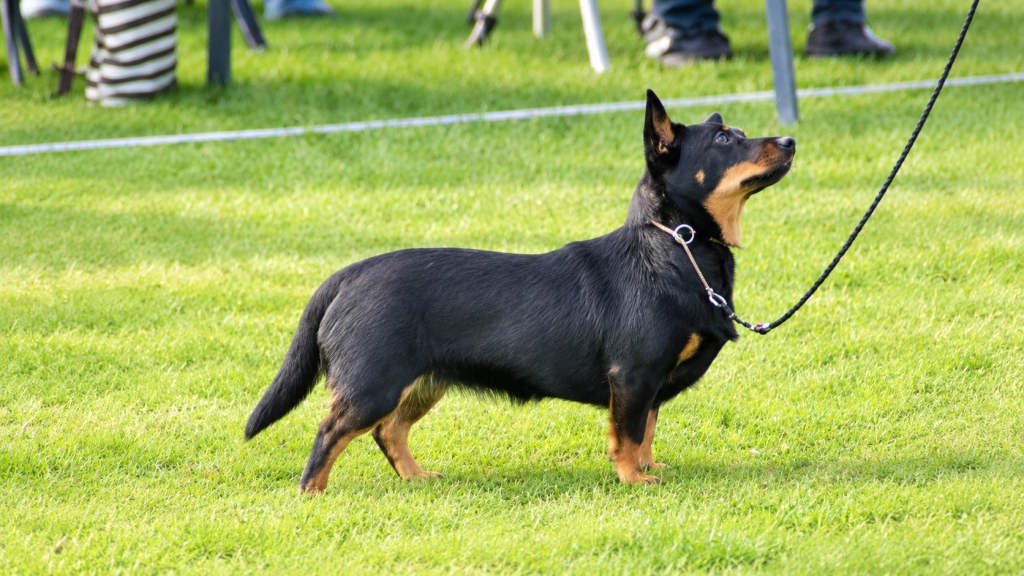
The Lancashire Heeler had the highest median survival reported in the study, at 15.4 years. The breed was represented by 241 dogs, including 110 recorded deaths. The 95% confidence interval was 14.7 to 15.9 years.
That number describes a population, not a promise. An individual Lancashire Heeler can live for less or considerably longer.
Tibetan Spaniel: 15.2 years

Tibetan Spaniels recorded a median survival of 15.2 years, with 351 dogs and 137 deaths represented in the study. Its confidence interval ran from 14.8 to 15.7 years.
The breed was therefore only a fraction behind the Lancashire Heeler in median survival.
Bolognese: 14.9 years

The Bolognese recorded a 14.9-year median survival. The study included 182 Bolognese dogs and 32 recorded deaths. Because the number of dogs was much smaller than for some of the better-represented breeds, the estimate should be read with appropriate statistical caution.
Shiba Inu: 14.6 years

The Shiba Inu had a 14.6-year median survival, based on 423 dogs and 91 deaths. Its 95% confidence interval was 14.0 to 15.1 years. The result is notable because the Shiba Inu’s longevity estimate sits near the top of the entire dataset despite the breed not being among the tiniest dogs.
Papillon: 14.5 years
Papillons recorded a 14.5-year median survival, with 1,115 dogs and 427 deaths represented.
The comparatively large sample gives this estimate a substantial base within the study.
Havanese: 14.5 years
Havanese dogs also recorded a 14.5-year median survival. The study included 381 Havanese and 56 recorded deaths. Because the Papillon and Havanese share the same median, calling one “fifth” and the other “sixth” is an editorial convenience, not a meaningful statistical distinction.
Lakeland Terrier: 14.2 years
The Lakeland Terrier recorded a 14.2-year median survival, with 1,068 dogs and 601 deaths in the Dogs Trust table. It belongs to a four-breed cluster at exactly 14.2 years.
Coton de Tulear: 14.2 years
The Coton de Tulear also recorded 14.2 years. The study included 319 dogs and 44 deaths. Its confidence interval was relatively broad because of the smaller number of dogs represented.
Border Terrier: 14.2 years
Border Terriers had a 14.2-year median survival, but unlike some smaller-sample breeds, the study contained a substantial number of them: 9,387 dogs and 2,427 deaths. That makes Border Terrier one of the most extensively represented breeds among the longest-lived group.
Schipperke: 14.2 years
The Schipperke also recorded a 14.2-year median survival. The dataset included 76 dogs and 28 deaths. Again, the identical median does not mean these four breeds have identical health profiles or individual outcomes.
Large Munsterlander: 14.1 years
The Large Munsterlander recorded a 14.1-year median survival, based on 139 dogs and 26 deaths.
Its inclusion is a useful reminder that longevity is not simply a matter of being small. Breed-specific factors also appear to matter.
Lhasa Apso: 14.0 years
The Lhasa Apso recorded a 14.0-year median survival, with 7,216 dogs and 2,723 deaths represented in the study.
It is important not to describe this as a statistically meaningful 12th-place finish. Several breeds had the same 14.0-year median.
Swedish Vallhund: 14.0 years
The Swedish Vallhund also recorded 14.0 years. The study included 61 dogs and 22 deaths for this breed. Other breeds sharing the 14.0-year median included the Poodle, Miniature Dachshund, Australian Cattle Dog, Cairn Terrier, Italian Greyhound and Welsh Springer Spaniel.
Size Matters: But It Isn’t the Whole Story
One of the clearest findings was the relationship between body size and longevity.
The study estimated median survival at 12.7 years for small breeds, 12.5 years for medium breeds and 11.9 years for large breeds. Researchers calculated that large dogs had a 20% increased risk of shortened survival compared with small dogs.
But the breed-level figures show why it would be misleading to reduce the findings to “small dogs live longer.”
Breed differences were much wider than the size categories alone suggest.
The study’s breed estimates ranged from 15.4 years for the Lancashire Heeler to 5.4 years for the Caucasian Shepherd Dog.
That is roughly a decade between the two median estimates.
Related: America’s Top Dog Breeds Are Revealed — And One Classic Breed Took the Biggest Tumble
The Face-Shape Finding Was Striking
The researchers also examined skull proportions.
Dogs classified as brachycephalic (broadly, flat-faced dogs) had a median survival of 11.2 years, compared with 12.8 years for mesocephalic, or medium-proportioned, dogs and 12.1 years for dolichocephalic, or long-headed, dogs.
The study reported that brachycephalic dogs had a 40% increased risk of shortened lifespan compared with mesocephalic dogs.
That is an association, not proof that facial shape alone causes an individual dog’s death at a particular age.
The researchers also found a smaller difference by sex: female dogs had a median survival of 12.7 years, compared with 12.4 years for males.
Related: The ‘7 Dog Years’ Rule Is Wrong — Here’s How Scientists Now Calculate Your Dog’s Age
Why the 584,000 Dog Figure Matters
The strength of this research is its scale.
Rather than relying on a small owner survey, researchers assembled information from 18 organizations and sources, including animal charities, veterinary organizations, insurers, universities, and The Kennel Club.
That allowed the researchers to examine longevity across a much broader range of breeds than many earlier studies.
Still, large does not mean perfect.
The researchers stressed that the results are specific to the UK canine population and may not apply identically to dogs in other countries. They also noted that the study identifies associations rather than proving direct causes of early death.
There was another important post-publication correction. In April 2024, Scientific Reports corrected a figure in the original paper that had listed the Miniature Dachshund’s median survival as 12.2 years. The corrected figure is 14.0 years.
That correction matters because it is a reminder to rely on the original research and corrected data rather than copied internet lists.
The Number Is Useful. The Individual Dog Is Complicated.
A lifespan table can tell us something meaningful about populations.
It cannot tell an owner exactly how long a puppy will live.
The researchers found associations between longevity and breed, body size, facial shape, sex, and ancestry. But those factors do not determine an individual dog’s future with certainty. Dogs are living animals, not entries in a spreadsheet.
For prospective owners, the study offers useful information, particularly when considered alongside health testing, breed-specific health concerns, responsible breeding, and the realities of caring for a particular dog.
But the most revealing finding is not that one breed reached 15.4 years.
It is that breed longevity varied dramatically across the population studied.
A statistic can tell us where the averages fall.
It cannot capture the dog who waits by the door every evening, the companion who knows exactly when its owner needs company, or the family member whose paw prints seem to remain long after the final walk.
The research can estimate how long dogs tend to live. It cannot measure how much a single dog can mean to the people who love it.
Other Posts You May Like
About 1 in 4 People Are ‘Supertasters’ — 7 Surprising Things Research Has Found
The 9 Things Couples Argue About Most During the Holidays
12 Age-by-Age Chores Kids Can Actually Handle
If you like what you just read, then subscribe to our newsletter and follow us on social media.


