

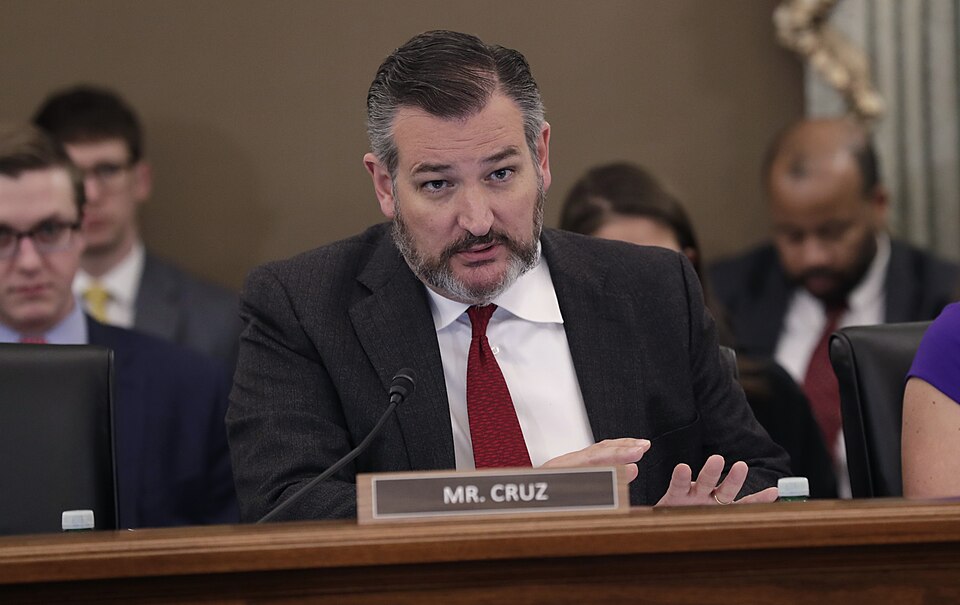
We are still years away from the 2028 presidential election, but the Republican shadow primary is already taking shape in public view. Sen. Ted Cruz of Texas has not announced a campaign yet, but his name keeps returning to the national conversation because of his past presidential run, his strong conservative media presence, his donor network, and his long-standing ambition within the Republican Party.
That speculation grew louder after Sen. John Cornyn, Cruz’s fellow Texas Republican, openly suggested that Cruz still wants the White House. Cornyn did not frame Cruz as a casual possibility or a distant maybe. He described him as someone with clear presidential interest, adding fuel to a conversation that had already been building around the GOP’s post-Trump future.
The timing matters. Early polls show that Republican voters are not currently gathering around Cruz. Instead, the early 2028 Republican field appears to be dominated by Vice President J.D. Vance and Secretary of State Marco Rubio, two figures who are better positioned to inherit different parts of the modern conservative coalition.
For Cruz, that creates a strange political moment. He remains famous, influential, combative, and deeply familiar to Republican voters. Yet the early numbers suggest that name recognition alone may not be enough to make him a top-tier contender in the next GOP presidential race.
Why Ted Cruz Is Still Part of the 2028 Republican Conversation

Cruz has been part of national Republican politics for more than a decade. He entered the Senate as a Tea Party-aligned conservative, became a household name during high-profile fights over Obamacare, and then ran for president in 2016. In that race, he became Donald Trump’s last major rival for the Republican nomination and won the Iowa caucuses before Trump eventually captured the party.
That history gives Cruz something many potential 2028 candidates lack: experience running a national presidential campaign. He knows the pressure of early states. He knows how conservative activists organize. He knows how donor networks operate. He also understands the value of being a media personality as much as a lawmaker.
Cruz has kept himself highly visible through his podcast, “Verdict with Ted Cruz,” cable news appearances, Senate hearings, and public clashes with figures inside and outside the conservative movement. His chairmanship of the Senate Commerce Committee also gives him a platform on technology, transportation, consumer safety, online speech, and other issues that could become important in a national campaign.
That combination explains why Cruz is still discussed as a possible 2028 contender. He is not a newcomer. He is not unknown. He is not searching for a political identity. He already has one.
The challenge is that the Republican Party he may want to lead in 2028 is not the same party he tried to lead in 2016.
Polls Show J.D. Vance and Marco Rubio Far Ahead
The early polling picture is the clearest problem for Cruz. Emerson College Polling found Vance and Rubio essentially tied at the top of a hypothetical 2028 Republican primary field, with Vance at 36 percent and Rubio at 35 percent. Ron DeSantis and Nikki Haley were far behind at 5 percent each, while other Republicans trailed lower.
That survey shows a Republican race currently centered around Vance and Rubio, not Cruz. It also suggests that Republican primary voters are already sorting the field into two main camps: a Vance camp that represents direct Trump succession, and a Rubio camp that may appeal to voters who want Trump-aligned politics with a more traditional governing style.
Overton Insights showed an even harsher picture for Cruz. In its 2028 Republican primary question, Vance led with 39 percent, Rubio followed with 32 percent, Ron DeSantis had 9 percent, Nikki Haley and Josh Hawley each had 4 percent, and Cruz registered 0 percent.
That does not mean Cruz has no path. Early polls often measure name recognition, media attention, and temporary political mood more than final voter decisions. Still, when a well-known senator and former presidential candidate polls near the bottom, the message is hard to ignore.
Cruz is not fighting to be introduced to Republican voters. He is fighting to persuade them to see him as the future again.
Why Cruz’s Low Polling Numbers Are Politically Important
Low early polling can be dismissed when a candidate is unknown. It is harder to dismiss when the candidate is Ted Cruz.
Cruz has been a senator since 2013. He has run for president before. He has built a national conservative brand. He has a podcast audience. He appears often in national political media. He has relationships with activists and donors. He is not suffering from obscurity.
That is why these numbers are more than a simple snapshot. They raise a deeper question about whether Cruz’s political brand has reached a ceiling with Republican voters. Many conservatives know him, respect his debating skills, and agree with his positions. But knowing a candidate is different from wanting that candidate to lead the next presidential ticket.
Cruz’s challenge is not awareness. It is urgency.
To climb into the top tier, he would need to convince voters that he offers something Vance and Rubio do not. That could mean presenting himself as the strongest constitutional conservative, the sharpest fighter against Democrats, the most reliable voice on Israel and foreign policy, or the candidate with the best record of challenging Washington from inside Washington.
But each of those lanes has competition. Vance can claim proximity to Trump. Rubio can claim governing seriousness. DeSantis can still claim executive experience. Haley can still appeal to some traditional Republicans. Hawley can compete for populist conservative voters. Cruz would need to sharpen his case quickly if he wants to avoid being squeezed.
John Cornyn’s Comment Exposes Texas GOP Tensions

Cornyn’s remark also matters because it came from inside Texas Republican politics. Cruz and Cornyn have shared a state, a party, and a Senate delegation, but their styles have always been different.
Cornyn has long been associated with institutional Republican politics. Cruz built his national brand by challenging party leadership and presenting himself as a conservative insurgent. That contrast has followed both men for years.
Cornyn’s comment about Cruz wanting to be president landed with extra force because it did not sound like praise or an endorsement. It sounded like a veteran Republican saying out loud what many political insiders already assume. Cruz may not have announced anything, but few people believe he has closed the door on another White House bid.
Cornyn also noted that Cruz did not endorse him during his reelection fight, while describing politics as intensely competitive. That detail adds a personal and strategic layer to the story. In the modern GOP, ambition, loyalty, and survival often collide. Cornyn’s words placed Cruz’s ambition in that broader context.
For Cruz, the risk is that presidential speculation can become a distraction before it becomes a campaign. If voters think a senator is already looking beyond his current job, rivals can use that perception against him. If donors think he is serious, however, it can also help him quietly build the early structure needed for a national run.
Cruz’s Strongest Asset May Still Be Conservative Media
Cruz understands conservative media better than most senators. His podcast gives him a direct channel to politically engaged listeners. His sharp speaking style performs well in short clips. His confrontational moments in the Senate travel easily across social platforms.
That matters because modern presidential campaigns no longer begin only in Iowa diners or New Hampshire town halls. They begin on podcasts, livestreams, viral clips, donor calls, email lists, and friendly media appearances. A candidate who can speak directly to the base without waiting for traditional press coverage already has an advantage.
Cruz has also shown a talent for picking fights that energize conservative audiences. His public clashes with commentators, Democrats, and even some Republicans help keep him in the conversation. In a crowded 2028 field, attention will be valuable.
But attention can cut both ways. Cruz’s style can excite loyal conservatives while alienating voters who see him as too combative or too familiar. He can dominate a news cycle, but domination is not the same as persuasion. A successful 2028 campaign would require Cruz to expand beyond the voters who already like him.
That may be his biggest test.
The Vance and Rubio Problem
Cruz’s path becomes especially difficult because Vance and Rubio are not just polling ahead. They represent two powerful stories about where the GOP could go next.
Vance offers continuity. As vice president, he has the clearest claim to the Trump political inheritance. If Republican voters want the next nominee to carry forward Trump’s movement in a direct line, Vance begins with a major advantage.
Rubio offers a different kind of continuity. He can appeal to Trump-era voters while also reassuring Republicans who prefer a more disciplined, polished, foreign policy-focused candidate. His rise in recent polling suggests that many GOP voters are at least open to a Rubio-style alternative.
Cruz must find a way to make both men look incomplete. Against Vance, he could argue that he has deeper conservative roots, a longer record, and sharper ideological consistency. Against Rubio, he could argue that he is more battle-tested with the grassroots and less tied to establishment politics.
That argument may work with some voters. But Cruz would need more than contrast. He would need momentum.
Cruz Still Has Influence Even If He Never Runs
The 2028 speculation should not be read only as a campaign story. Cruz can shape the Republican race even if he decides not to run.
He has a platform. He has an audience. He has relationships with conservative donors and activists. He can influence debates on foreign policy, technology regulation, border security, religious liberty, and the direction of the post-Trump GOP. Candidates may seek his support, fear his criticism, or try to win over his listeners.
That gives Cruz leverage. In presidential politics, leverage matters even before a candidate files paperwork.
If Cruz runs, he becomes a contender trying to climb from behind. If he does not, he remains a powerful conservative voice in a party still deciding what comes next.
What the Polls Really Say About Ted Cruz’s 2028 Future

The current message from early polling is simple: Cruz is visible, but he is not leading. He is respected by parts of the conservative base, but he is not yet the preferred successor. He has experience, but other Republicans have fresher claims to the future.
That is the bad news for Cruz.
The better news is that presidential races can change quickly. Voters are not locked in. Candidates make mistakes. World events reshape priorities. Early state organizing can rewrite national assumptions. A strong debate, a major endorsement, or a sharp contrast with Vance and Rubio could give Cruz a new opening.
Still, the burden is on him. Cruz cannot rely on familiarity. He cannot simply replay 2016. He cannot assume that conservative voters will naturally return to him because they remember his past campaign.
He would need to prove that he is not just a former Trump rival, not just a Senate fighter, and not just a conservative media figure. He would need to prove that he is the Republican most capable of leading the party after Trump.
Right now, the polls suggest Republican voters are looking elsewhere first.
Read the original story on Crafting Your Home


