


Colorful language has a reputation problem. Cursing is treated as a shortcut for people who ran out of better words, and a grandmother’s raised eyebrow is the usual penalty.
Psychology labs have been poking at that assumption for years, and the results are more flattering than the stereotype suggests. These 3 findings in particular tend to surprise people, along with a few caveats that keep the story honest.
Thing 1: A Healthy Vocabulary

The first surprise concerns verbal fluency. Psychologists Kristin Jay and Timothy Jay tested the “poverty of vocabulary” idea in a study in Language Sciences, which the British Psychological Society’s Research Digest covered in December 2015. Volunteers had one minute to name as many swear words as possible, then one minute each to name animals and non-swear words starting with a given letter.
People averaged about 9 swear words, 14 non-swear words and 22 animal words in a minute. The interesting part is the pattern: those who named more swear words also named more animal words and more non-swear words. A separate study on swearing and honesty has drawn plenty of attention for a similar reason, since it also cuts against the rude-equals-shallow assumption.
The same pattern held when participants wrote words down instead of speaking them, according to the Digest. The authors’ summary, as the piece quotes it, is that “fluency is fluency.” Old social norms about polite speech tend to assume the opposite.
Plenty of context belongs here. The Digest cautions that the study measured how many swear words people could produce, not how often they swear in daily life, and it did not test whether frequent swearers have smaller vocabularies. The caveats echo themes in a list of common adult regrets, where hasty words feature often. Details from a PsyPost write-up add that the work included 43 college students in the first experiment and 49 in the second, so the samples were small and student-based. A related PsyPost report on the paper also noted that higher taboo-word fluency was linked with higher neuroticism and openness and with lower agreeableness and conscientiousness, which complicates any tidy halo.
Thing 2: A Longer Hold in a Lab Test
The second finding comes from Keele University in England, where psychologist Richard Stephens has studied swearing for years. In one experiment, volunteers kept a hand in iced water for as long as they could while repeating either a swear word or a neutral word. According to Keele’s own summary, those who swore lasted longer and rated the discomfort as less intense.
Quirky science of this kind is a recurring theme, from messy-desk experiments to habits that boomers brought back. The swearers also showed a bigger rise in heart rate. The researchers suggest swearing may set off an emotional, fight-or-flight type response, which would explain the odd result. That is a lab curiosity about one cold-water task and not advice for any situation; the experiment says nothing about whether a habit of cursing is good or bad for anyone.
Everyday quirks get the same scrutiny, and people who write everything down and forgotten decades-old rituals have both had their turn. Still, several habits that seem annoying turn out to travel with a sharp mind.
Thing 3: A Close Link With Emotion
The third surprise is that swearing is deeply tied to feeling. In a Keele experiment described in the same release, participants played either a first-person shooter or a golf video game for ten minutes. Those who played the shooter reported feeling more aggressive, and afterward they listed more swear words in a one-minute swearing-fluency task than the golf players did.
The authors read that as evidence of a two-way street: swearing provokes emotion, and emotional arousal increases swearing fluency. Timothy Jay has made a related argument for years, that taboo language probably developed partly as an emotional release valve. Anyone who has stubbed a toe in a dark hallway has run the same experiment at home.
The emotional angle also explains why swearing is a cultural lightning rod. Words carry more punch when they carry more feeling, which is why the same syllables land differently at a funeral than at a ball game. A host of common adult regrets involve words said in the heat of the moment, not the quiet ones.
What the Findings Do Not Say
None of this amounts to a license to curse at the dinner table. The ScienceAlert summary of the fluency study, written by Bec Crew in December 2015, stresses that the sample was small, with 43 participants aged 18 to 22 in the first experiment. The researchers’ conclusion was modest: a large taboo vocabulary may reflect healthy verbal ability rather than a cover for deficiencies.
The original paper, “Taboo word fluency and knowledge of slurs and general pejoratives: deconstructing the poverty-of-vocabulary myth,” is available through its DOI record. Its findings are correlational, so they cannot say whether a rich vocabulary leads to swearing, whether swearing builds vocabulary or whether something else explains both.
Context still matters in everyday life. Habits like the ones in the messy-desk experiments and older household customs show how often a trait that looks like a flaw turns out to have a more interesting story. Swearing joins that list, with the usual footnote that a workplace, a classroom and a living room each have different rules.
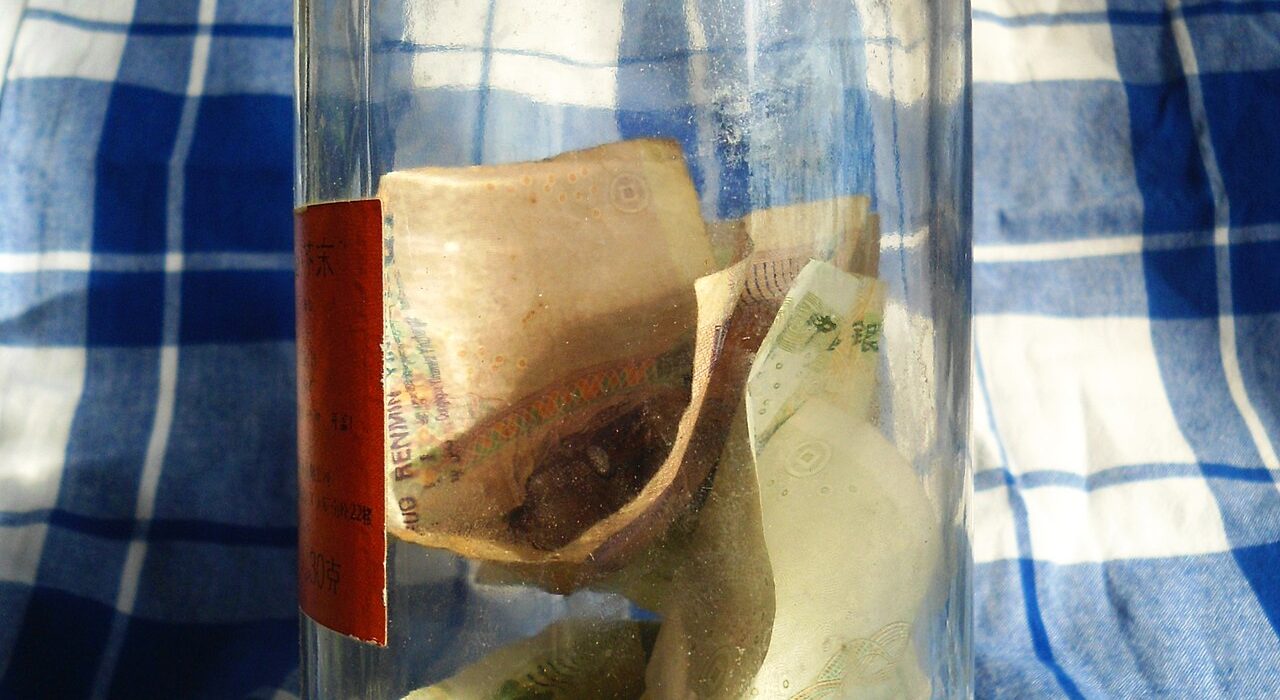
The picture that emerges is gentler than the stereotype. People with a rich supply of colorful words tend to have a rich supply of ordinary ones, emotion tends to ride along with the language, and a swear jar is better understood as a tool for manners than as a measure of intelligence.
Get stories like this by email. Sign up for Crafting Your Home.
This article was produced with AI assistance and edited for accuracy against the sources linked above.


