


The post 10 Road Trip Habits That Make Passengers Miserable first appeared on Crafting Your Home.
A road trip can start with snacks, playlists, and good intentions, then unravel a few hours later because someone refuses to stop, drives like every lane change is a race, or keeps the music loud enough to shake the doors. Most miserable road trips are not ruined by the destination.
Small habits, repeated mile after mile, ruin them. Some of those habits are simple etiquette problems. Others can cause motion sickness, fatigue, stress, or real safety risks.
The difference matters. A passenger who dislikes your playlist is annoyed. A passenger watching you text at highway speed may have a very good reason to feel unsafe. Here are 10 road trip habits that can make a long drive much worse for everyone else in the car.
Driving aggressively or jerkily

Hard braking, sudden acceleration, tailgating, sharp turns, and constant lane changes can make passengers physically tense. Research on passenger comfort has linked stronger acceleration and rapid changes in acceleration with higher physiological signs of anxiety and lower reported comfort.
In one controlled study, 16 of 20 participants reported discomfort or apprehension around stopping events. Jerky driving may also make motion-sensitive passengers feel worse. The better approach is simple: accelerate gradually, brake earlier, leave more following distance, and make smoothness the goal.
Driving tired and refusing to stop
Few things make passengers more uneasy than a visibly exhausted driver insisting, “I’m fine.” AAA Foundation research estimates that drowsiness is involved in about one in six fatal crashes and one in eight crashes that result in hospitalization. AAA recommends planning a break about every two hours or 100 miles and stopping sooner whenever drowsiness appears.
Those stops help passengers too. They provide time to use the bathroom, stretch, get food, breathe fresh air, or simply get out of the sitting position. If the driver is yawning repeatedly, missing exits, drifting, or cannot remember the last stretch of road, the answer is not louder music. It is rest or a driver change.
Making everyone listen to your audio at your volume
Music can help a road trip feel shorter. It can also become unbearable when one person controls the playlist and volume for eight straight hours. Research on music and driving is nuanced. Some music can reduce stress, while certain high-engagement listening conditions may also affect driver attention or performance.
For passengers, the bigger issue is often simpler: they cannot leave. Set a reasonable shared volume, rotate music choices, and build in quiet periods. That is especially useful when someone is trying to sleep, managing motion sickness, or traveling with young children.
Using a phone while driving
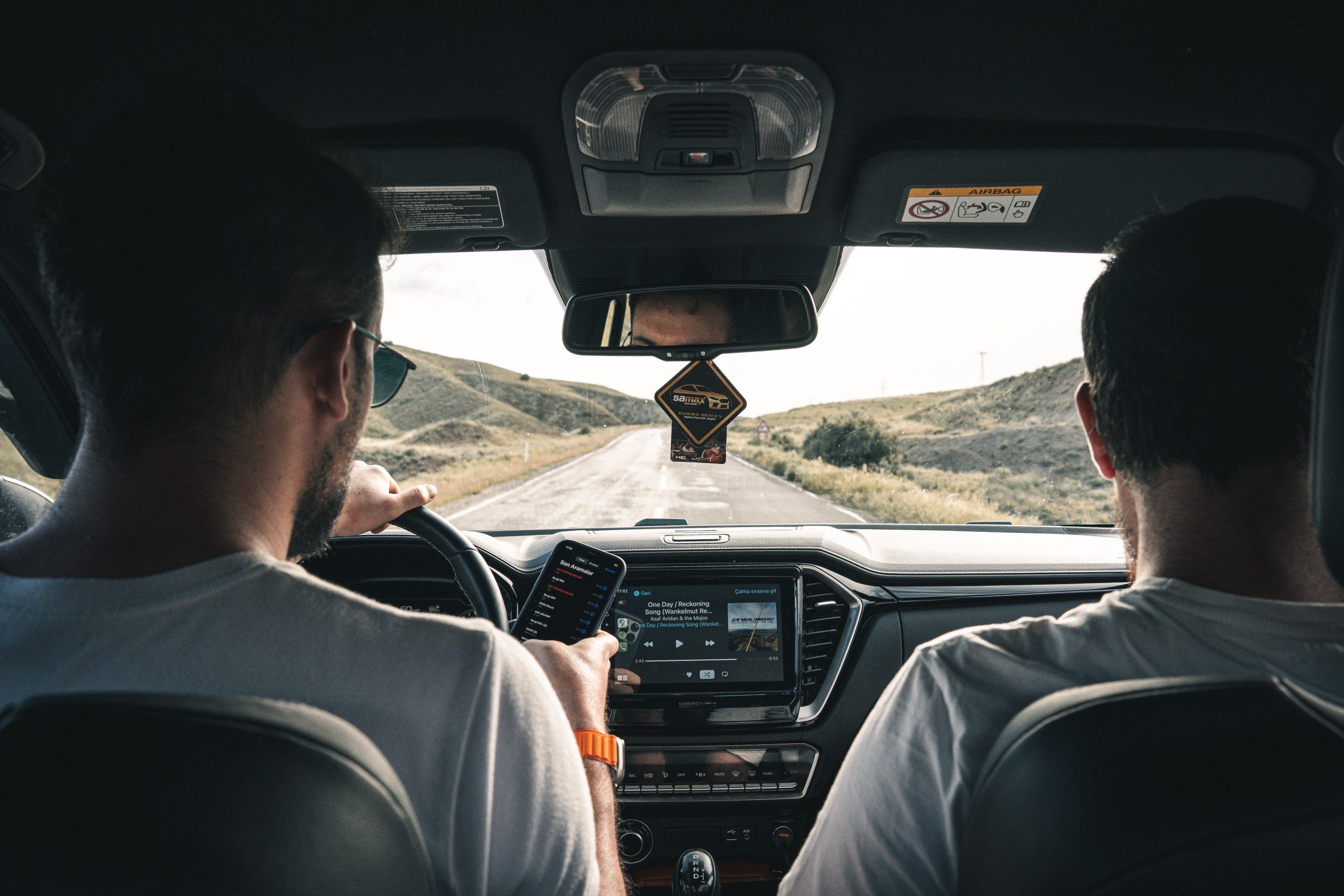
Passengers notice when a driver keeps looking down. NHTSA reported that 3,208 people were killed in crashes involving distracted drivers in 2024, while an estimated 315,167 were injured. The agency also notes that reading or sending a text can take a driver’s eyes off the road for about five seconds.
At highway speed, five seconds is a long time to stop actively watching traffic. Set navigation, music, and climate controls before leaving. If something needs more than a quick voice command, pull over or let a passenger handle it.
Turning navigation into an argument
“Why didn’t you turn there?” “That was the exit.” “You’re going too fast.” Constant commentary can make a car feel emotionally claustrophobic, especially when the driver becomes defensive.
NHTSA includes passenger conversations and navigation-system manipulation among activities that can become distracting by pulling attention away from driving. Research has also linked driver stress with harsher acceleration and braking.
Choose the route beforehand, designate one navigator, and give directions early and calmly. A passenger should absolutely speak up about a real hazard. But narrating every driving decision is different from preventing an accident.
Ignoring motion sickness
Telling a nauseated passenger to “just look at your phone” may make the situation worse. The CDC explains motion sickness as a mismatch between sensory signals about movement. Reading, scrolling, watching videos, or looking down at a map can intensify the problem because the eyes may report stillness while the inner ear detects motion.
A better plan is to let the motion-sensitive passenger look forward, focus on the horizon, support their head, and take regular breaks. Passengers often feel sicker than drivers because drivers can anticipate turns and control the vehicle. That sense of control may help explain why some people feel fine behind the wheel but miserable in the passenger seat.
Treating the temperature like the driver gets the only vote
One person is freezing. Another is sweating. Someone has an air vent blasting directly into their face. Vehicle-cabin research shows that temperature, humidity, sunlight, seating position, and airflow all affect thermal comfort.
No universal perfect temperature exists, but there is a simple fix: ask. Use zoned climate controls when available, adjust vents, bring layers, and, when possible, pre-cool or pre-heat the car before departure. Temperature disagreements become much less dramatic when you address them before someone has been uncomfortable for an hour.
Packing the passenger area until nobody can move
A cooler under someone’s feet, jackets piled between seats, bags wedged around legs, and loose gear everywhere can make a long ride exhausting. Ergonomic guidance for long car trips emphasizes posture, legroom, lumbar support, and getting out periodically to move. Sitting in an awkward position for hours can contribute to stiffness and soreness.
Treat the passenger compartment as a people-first space. Put heavy luggage in the trunk or cargo area, secure loose items, keep footwells clear, and give each passenger access to essentials such as water, medication, and a small personal bag.
Smoking or vaping inside the car

This one goes beyond preference. The CDC says smoking inside vehicles can produce very high secondhand-smoke concentrations because cars have such a small air volume. Research summarized by the agency found that one cigarette smoked in a closed vehicle can produce fine-particle concentrations more than 100 times the EPA’s 24-hour recommended exposure limit.
Opening a window does not eliminate the exposure. The simplest rule for a shared road-trip car is to keep it smoke-free and vape-free. Stop somewhere safe if someone needs to smoke or vape outside.
Acting like passengers have no say
The driver controls much of the experience: route, speed, temperature, stops, music, and timing. That does not mean everyone else should be treated like cargo. Research on motion sickness supports the broader idea that passengers can feel worse when they lack control over movement, while ordinary travel etiquette suggests that ignoring basic passenger needs reliably creates resentment.
Before leaving, agree on a rough stop schedule, food plan, music expectations, and arrival goal. During the drive, a simple question every couple of hours can prevent a lot of misery: “Bathroom, water, stretch, air, or quiet?”
The Best Road Trip Drivers Make the Miles Easier
A good road-trip driver does more than reach the destination quickly. They drive smoothly. They put the phone away. They stop before fatigue becomes dangerous.
They listen when someone feels nauseated, overheated, cramped, or simply desperate to use the bathroom. AAA’s two-hours-or-100-miles guideline is a useful planning benchmark, but passengers should not have to wait for the schedule if someone genuinely needs a break.
The same goes for music, temperature, luggage, and conversation. Small compromises matter more when everyone is sharing a confined space for hours. Passengers are not cargo. The best road trips work because everyone in the car remembers that before the first mile and long before the last one.
Other Posts You Might Also Like
- 8-things-boomers-did-on-family-road-trips-that-families-rarely-do-now
- 12-dreamy-road-trips-to-take-in-retirement-that-youll-never-forget
- skipping-these-12-items-could-turn-your-summer-road-trip-into-a-disaster
If you like what you just read, then subscribe to our newsletter and follow us on social media.


