

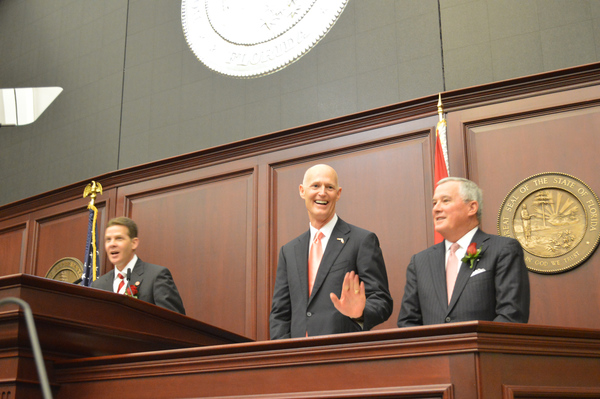
Sen. Rick Scott is turning up the pressure on the Senate at a moment when Washington’s voting-rights fight is no longer just about ballots. It is about power, trust, turnout, and the political rules that could shape the 2026 midterm elections.
The Florida Republican is urging Senate colleagues to move on the SAVE America Act, a Trump-backed election bill that would require documentary proof of U.S. citizenship to register for federal elections and impose stricter voter ID rules. Supporters call it a common-sense election security measure. Critics call it a sweeping federal rewrite of voting access that could block eligible Americans from registering to vote.
For Democrats and voting-rights groups, the warning is just as blunt: the bill could create new hurdles for millions of legal voters who lack easy access to the required documents. That clash is now landing directly in the Senate, where the bill faces its toughest test.
Scott Wants Action, but the Senate Math Is Brutal

Scott has framed the issue as one that should unite voters across party lines. Voter ID, he argues, is popular with Republicans, Democrats, and independents. Polling has shown broad public support for photo identification at polling places, which gives Republicans a strong talking point as they accuse Democrats of standing against election security.
Even if most Republicans want the bill, they need more than party unity. They need a path around Senate rules or a group of Democrats willing to cross over. So far, that path has been narrow.
Senate Republican leaders have also been cautious about changing filibuster rules, even as Trump has pressed harder. That puts Scott and other conservative senators in a familiar position: they can make the case loudly, but leadership still has to count votes quietly.
What the Bill Would Change
At the center of the debate is a requirement that people registering to vote in federal elections provide documentary proof of U.S. citizenship. That could include documents such as a passport, birth certificate, naturalization papers, or other approved proof.
The bill would also require states to take additional steps to identify and remove noncitizens from voter rolls. Supporters say this is necessary to protect the integrity of elections and reassure voters who no longer trust the system.
But opponents argue that noncitizen voting in federal elections is already illegal and rare. Their concern is not about whether citizens should be the only people voting. Nearly everyone agrees on that. The real argument is over who carries the burden of proof.
Critics say the SAVE America Act places a heavy burden on voters. People who have moved, changed their names after marriage, lost documents, live far from government offices, or lack an up-to-date passport could face new complications. Voting-rights groups have also warned that rural voters, elderly voters, low-income voters, students, tribal voters, and naturalized citizens could be hit especially hard.
Supporters reject that framing. They argue that showing identification is already part of everyday American life, from boarding a plane to opening a bank account. To them, voting should not be subject to a weaker standard than that applied to ordinary transactions.
That argument is politically powerful because it sounds simple. But election administration rarely is. States run elections differently.
Some already have voter ID laws. Others rely on different systems to verify eligibility. A national rule would push every state toward the same baseline, which supporters see as consistency and opponents see as federal overreach.
The Midterm Battle Is Already Here
The timing explains why the fight feels so intense. The 2026 midterms are not far away, and control of Congress could depend on narrow margins in a handful of states. Voting rules, turnout, registration deadlines, mail ballots, and voter confidence could all become campaign issues long before Election Day.
Trump has made the SAVE America Act a priority, and his pressure has created headaches for Senate Republicans. Reports have said he has even tried to tie the voting bill to other major legislation, including national security matters. That strategy raises the stakes, but it also risks frustrating Republicans who do not want unrelated bills dragged into an election-law standoff.
Scott appears willing to keep the issue alive. For him, the politics are clear: Republicans can run on election security, accuse Democrats of resisting basic safeguards, and energize voters who remain suspicious of the system.
Democrats see a different opening. They can argue that Republicans are trying to change election rules before a major national vote, making it harder for eligible people to participate while claiming to solve a problem that evidence shows is limited. That is why this debate is about more than one bill.
It is about whether Republicans can turn voter ID into a winning national midterm message. It is about whether Democrats can convince voters that access, not fraud, is the bigger threat. And it is about whether the Senate can function when election law becomes a loyalty test inside the president’s own party.
As the midterms draw closer, expect the argument to grow louder, sharper, and more personal. Republicans will say they are protecting the vote. Democrats will say they are protecting voters. And in the middle will be millions of Americans watching another election-year battle unfold before a single ballot is cast.


