


The post Professor in University of California, Berkeley Is Going Old School to Fight AI Cheating With In-Person Exams and No Devices first appeared on Crafting Your Home.
A correct answer used to be a reasonable indication that a college student understood the material. Artificial intelligence has complicated that assumption, leaving professors struggling to determine whether students can solve problems independently or simply know how to obtain answers from a chatbot.
At the University of California, Berkeley, mathematician Richard Borcherds has responded by changing how he grades his students. The Fields Medal winner has stopped grading homework primarily for correctness and now bases course grades mainly on in-person examinations where electronic devices are prohibited. He told the California Post that rising scores on online tests have made him question whether those assessments accurately reflect what students know.
Borcherds is an influential figure to watch. UC Berkeley’s historical announcement records his receipt of the 1998 Fields Medal for his work in algebra and geometry, placing him among mathematicians recognized for exceptional contributions to the discipline.
Grading homework has become a problem of trust
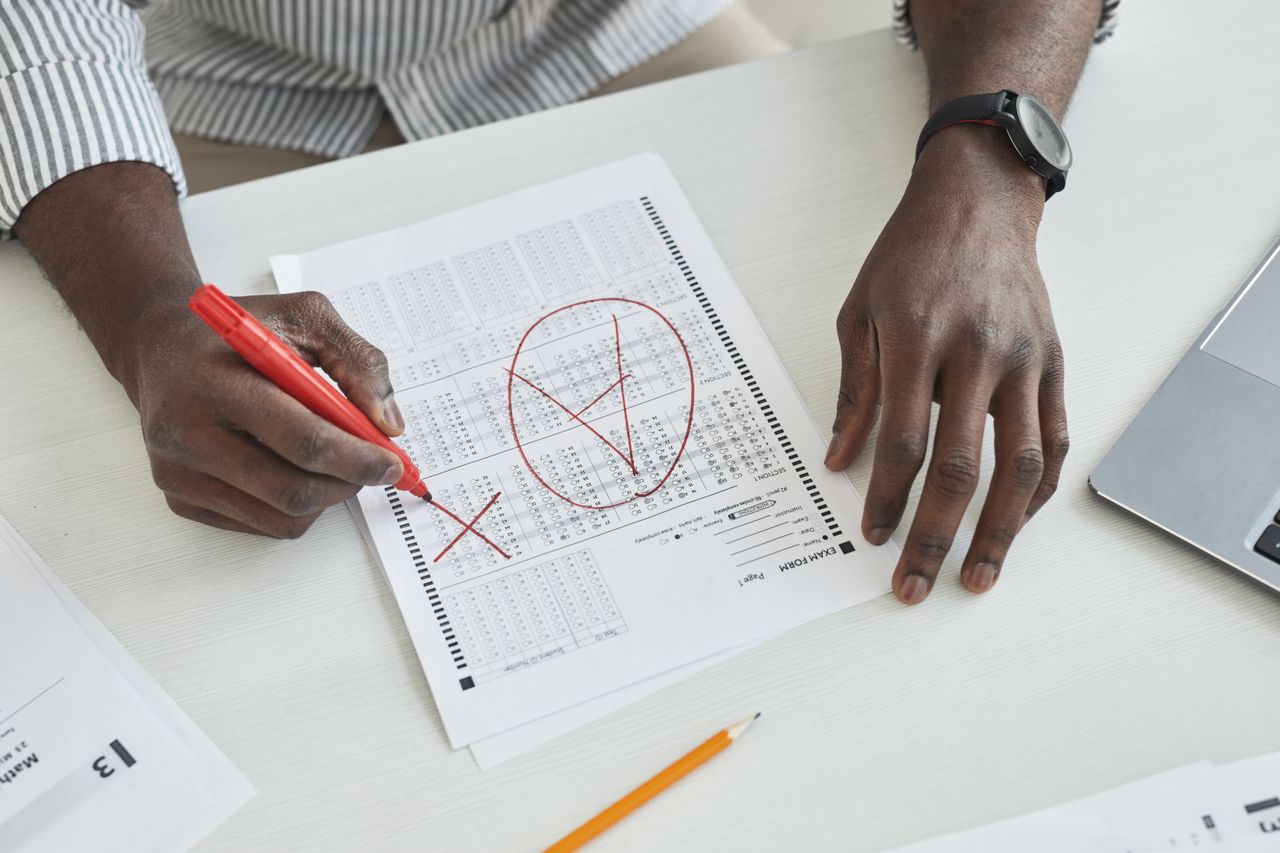
Borcherds’ decision addresses a problem that automated writing and problem-solving tools have made harder to ignore. When students submit answers from home, instructors may struggle to determine how much independent work went into producing them.
Grading every solution for accuracy also creates an uncomfortable incentive. Students who rely on AI can submit correct answers, while classmates who work through difficult problems themselves may receive lower marks. In Borcherds’ assessment, grading for correctness under those conditions can penalize the students the system is supposed to reward.
His response has been to award credit for completing homework rather than judging every answer for accuracy. He has acknowledged the limitations of that arrangement, and the change leaves a legitimate question about how students receive detailed feedback on their mistakes.
Completion-based grading also changes what a homework grade communicates. A submitted assignment can demonstrate participation and willingness to engage with a problem, but the grade provides less information about whether the student has mastered the material. For a mathematics course, where the reasoning behind a solution matters, that distinction has considerable weight.
Borcherds’ move toward supervised examinations therefore addresses a specific weakness in his assessment system. Watching students work independently gives him a more direct opportunity to evaluate their mathematical understanding.
Related Post: AI Is Becoming Part of Everyday Life as More Americans Turn to Chatbots
AI use is already common among American college students
The scale of adoption makes the issue relevant far beyond a single mathematics department. In an April 2026 report, Gallup and the Lumina Foundation found that 57% of American college students used artificial intelligence for coursework at least weekly, including approximately one in five who used it daily.
The survey, conducted in October 2025, covered 3,801 students pursuing associate or bachelor’s degrees. Gallup also found that 64% used AI weekly or daily to get help with coursework they did not understand, while 60% used it to check answers on homework or classroom assignments.
Those figures describe how students use AI, not how many cheat. A student who asks a chatbot to explain a difficult mathematical concept is using the technology differently from someone who submits a generated solution as independent work.
Instructors need to identify the knowledge students must demonstrate independently, then establish clear boundaries around the assistance permitted during each task. A general prohibition can be difficult to apply consistently when one course uses AI for learning exercises and another expects students to solve every assessed problem without it.
The more pressing concern is what happens when the resulting grades stop reflecting those distinctions. If students can routinely earn high marks without acquiring the underlying skills, academic records become less informative for faculty members, students, and anyone evaluating their qualifications.
Related Post: What Could Happen If Robots Become More Powerful and Intelligent Than Humans?
A Brown University examination exposed a similar problem
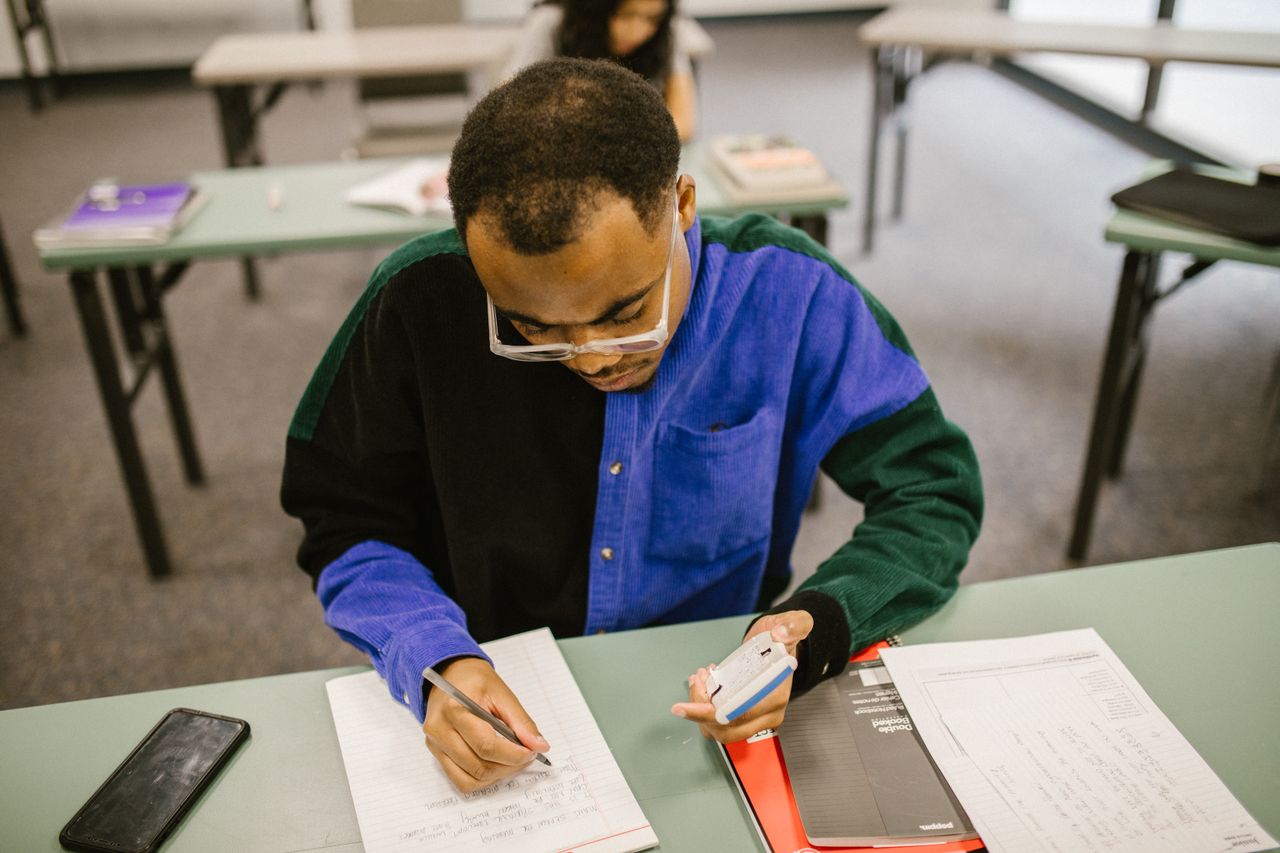
Borcherds is not the only professor who has reconsidered take-home assessments after seeing an unexpected pattern in student performance.
In July 2026, Inside Higher Ed reported on Roberto Serrano, an economics professor at Brown University who suspected extensive AI-assisted cheating after his Welfare Economics and Social Choice Theory class produced unusually high scores on a take-home midterm.
The class averaged 96% on that examination, compared with the historical midterm average of 65% to 80%. Serrano said the test was harder than earlier versions, which contributed to his suspicion that something unusual had happened. He subsequently moved the final examination into the classroom.
The final produced a substantially different result. According to the same report, the class averaged 48.6%, compared with the midterm’s 96%. Eighteen students dropped the course, while nine others remained enrolled but did not sit the final.
Those outcomes raised serious questions about the relationship between take-home performance and independent understanding. However, the scores alone cannot establish that every student who performed well on the midterm cheated, or that AI accounted for the entire difference. The change in examination conditions and the departures from the class complicate direct comparisons.
Research has raised questions about unmonitored online exams
Concerns about online examinations also predate the latest disputes over generative AI.
Alexander Stanoyevitch examined examination results from an introductory statistics course in 2024. His observational analysis compared performance across periods when comparable examinations were administered in different settings, finding substantial increases in scores on online exams.
The paper examined the academic-integrity problems associated with assessments students complete without supervision. Its findings support caution when interpreting unmonitored exam scores, although score differences alone cannot establish that AI caused the changes. Other forms of outside assistance can also affect performance.
For professors, the practical problem is one of assessment design. A student taking an unsupervised exam may have access to online explanations, saved notes, outside assistance, and AI tools. Unless those resources are explicitly permitted and accounted for in the assessment, the instructor has limited control over the conditions under which students produce their answers.
An in-person examination removes many of those opportunities. Students work under the same basic restrictions, and professors can evaluate their responses with greater confidence that the work reflects their individual performance during the test.
That approach remains imperfect. Examination anxiety, time constraints, and the narrow range of tasks that fit into a timed test can all affect results. Universities must consider those limitations when deciding how much weight examinations should carry in a final grade.
AI detectors have their own weaknesses
Automated detection might appear to offer a convenient solution for professors who want to continue accepting online submissions. Research has demonstrated significant problems with that approach, however.
In a 2023, researchers Weixin Liang, Mert Yuksekgonul, Yining Mao, Eric Wu, and James Zou examined seven AI-writing detectors. Their experiments found that the systems frequently misclassified essays written by non-native English speakers as AI-generated.
The findings highlighted a particular risk for students whose writing does not resemble the patterns the detectors associate with human authorship. The researchers reported that more than half of the tested essays from non-native English writers were misclassified in their evaluation.
The study evaluated specific detectors and samples, so its findings should not be interpreted as a universal error rate for every current detection system. It nevertheless illustrates why a software flag cannot reliably serve as conclusive proof that a student cheated.
False accusations carry consequences for students’ grades and academic standing. Professors also face the difficulty of explaining why a student has been accused when the available evidence comes primarily from a probabilistic tool.
Supervised examinations offer one alternative. Instead of trying to infer authorship from a finished submission, instructors can observe performance directly. The method may be particularly useful for subjects such as mathematics, where students must demonstrate how they arrive at a solution.
Colleges must decide what each assignment is meant to measure
UC Berkeley’s own classroom discussions illustrate the difficulty of establishing consistent expectations. In January 2026, The Daily Californian reported that its sample of courses showed different approaches to AI use. All the humanities classes in the sample prohibited AI, while almost 60% of the sampled courses permitted some use during the learning process. The report also described engineering courses in which AI use was encouraged.
Those findings reflect the courses examined by the student newspaper, rather than every class at Berkeley. They nevertheless show why a single rule may not suit every subject or assignment.
A mathematics professor assessing independent problem-solving has a strong reason to use controlled examinations. An instructor teaching students to evaluate AI-generated material may need assignments that explicitly require students to use those tools, explain their decisions, and identify errors.
The key is to make the purpose of each assessment clear. Homework can provide practice and reveal misconceptions during the learning process. Projects can test whether students apply concepts over time. Supervised exams can establish what they know and can do independently.
Borcherds’ decision exposes the cost of leaving that distinction unresolved. If professors cannot determine whether a correct answer reflects individual understanding, they have to reconsider the weight they give that answer when calculating grades.
American colleges now face a difficult choice about how to preserve the meaning of academic achievement while preparing students for workplaces where AI is increasingly available. In-person examinations without electronic devices provide one practical response, especially when independent mastery is the objective.
The larger challenge will be rebuilding assessments around the skills students are expected to acquire. A high score should give instructors a defensible reason to believe a student understands the material. Without that confidence, even an impressive transcript becomes harder to interpret.
Other Posts You May Like
If you like what you just read, then subscribe to our newsletter and follow us on social media.


